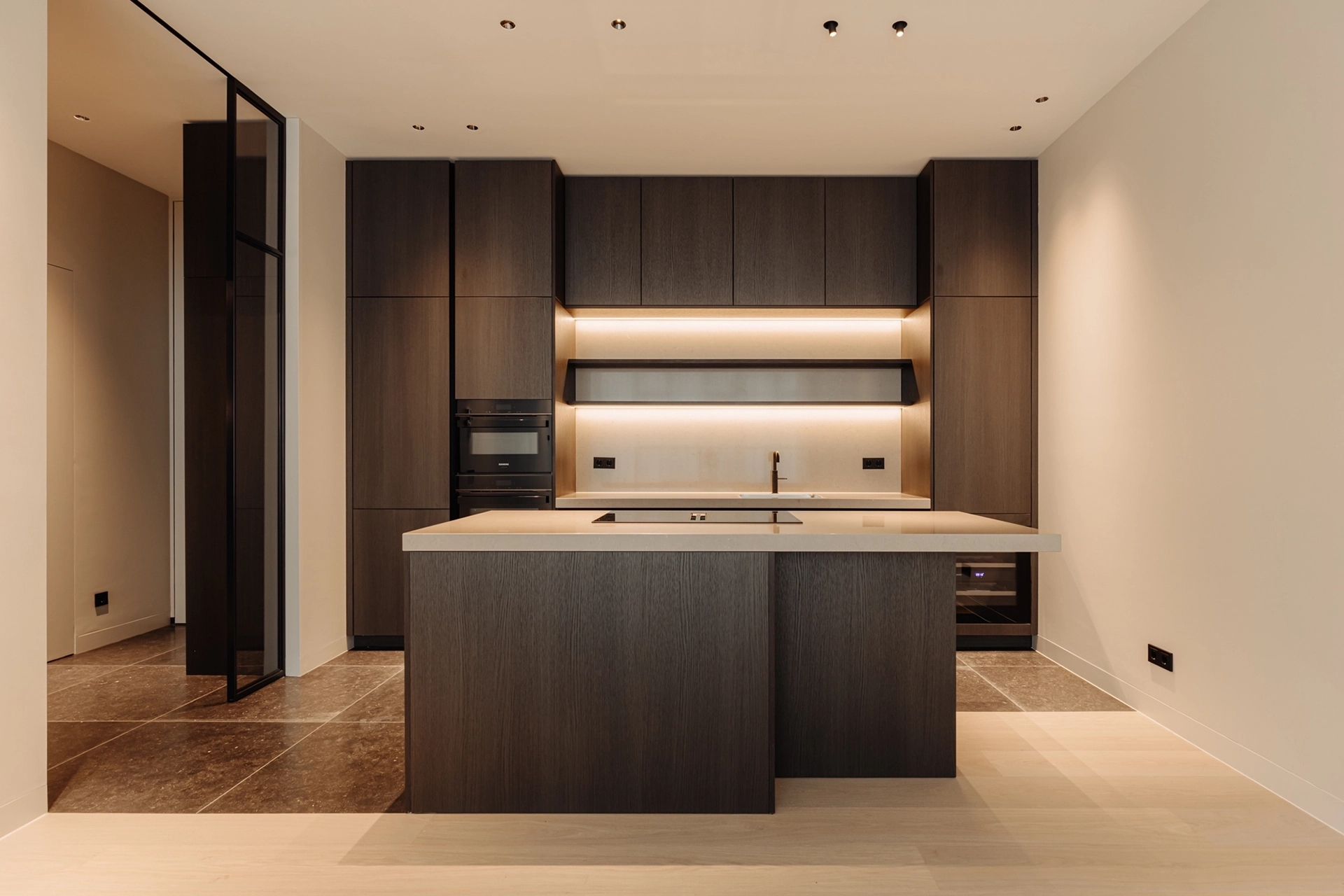
Wooden kitchens with a warm look
From light oak to dark walnut: wood gives every kitchen a unique look. The color and grain play a major role in this. Discover the differences between wood-look finishes and wood veneer, and see how you can combine wood with other materials.
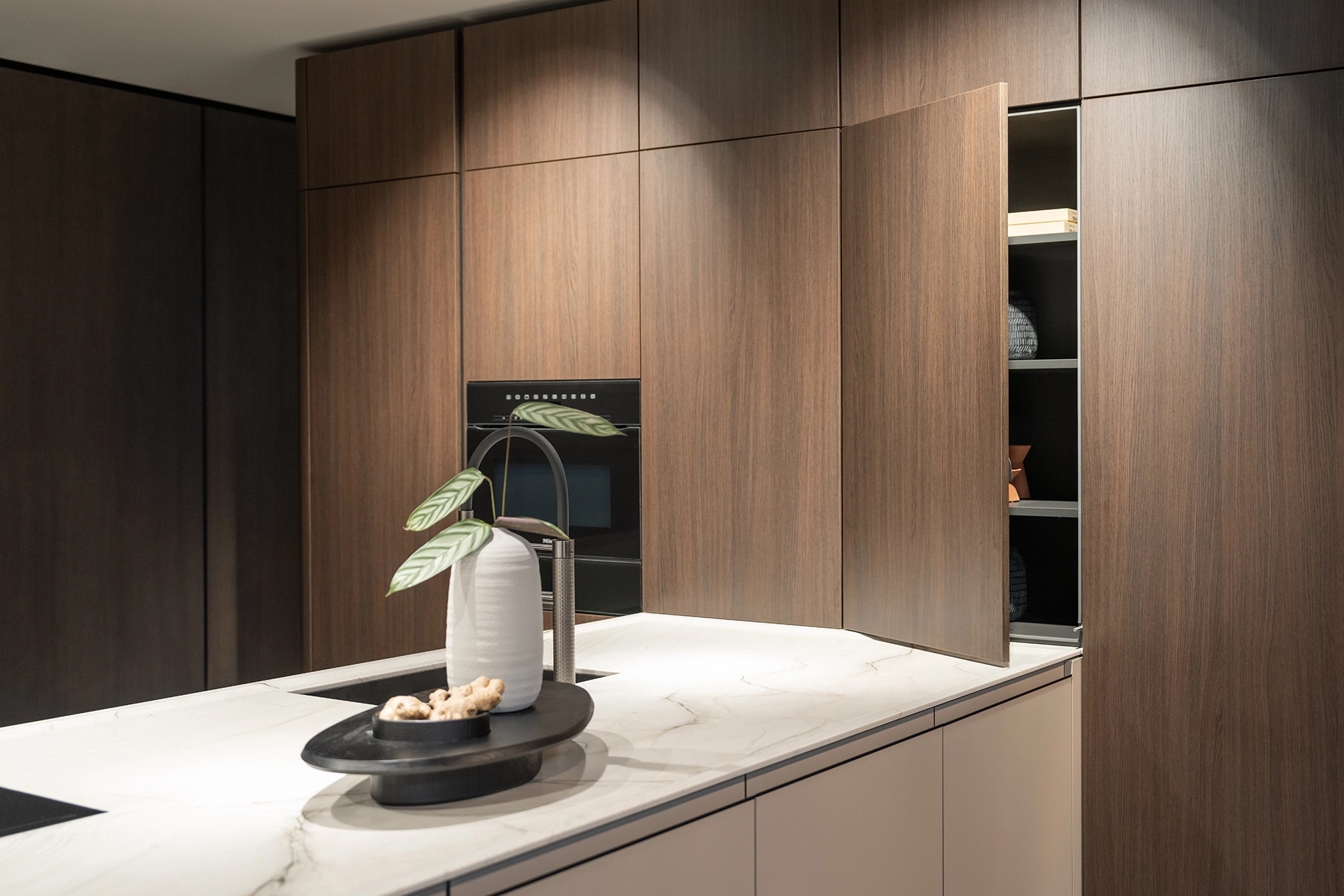
The warm appeal of wood in your kitchen
Wood is used in all kinds of kitchen styles. In a modern kitchen, for example, you often see flat wooden cabinet fronts with a continuous grain, while country-style kitchens also feature framed cabinet fronts and more pronounced wood textures. You don’t have to finish the entire kitchen in wood. A wooden cabinet wall can look beautiful next to a solid-color kitchen island. You can also opt for wooden base cabinets paired with a different material for the wall cabinets. The direction of the wood grain and the finish of the cabinet fronts help determine the overall look.
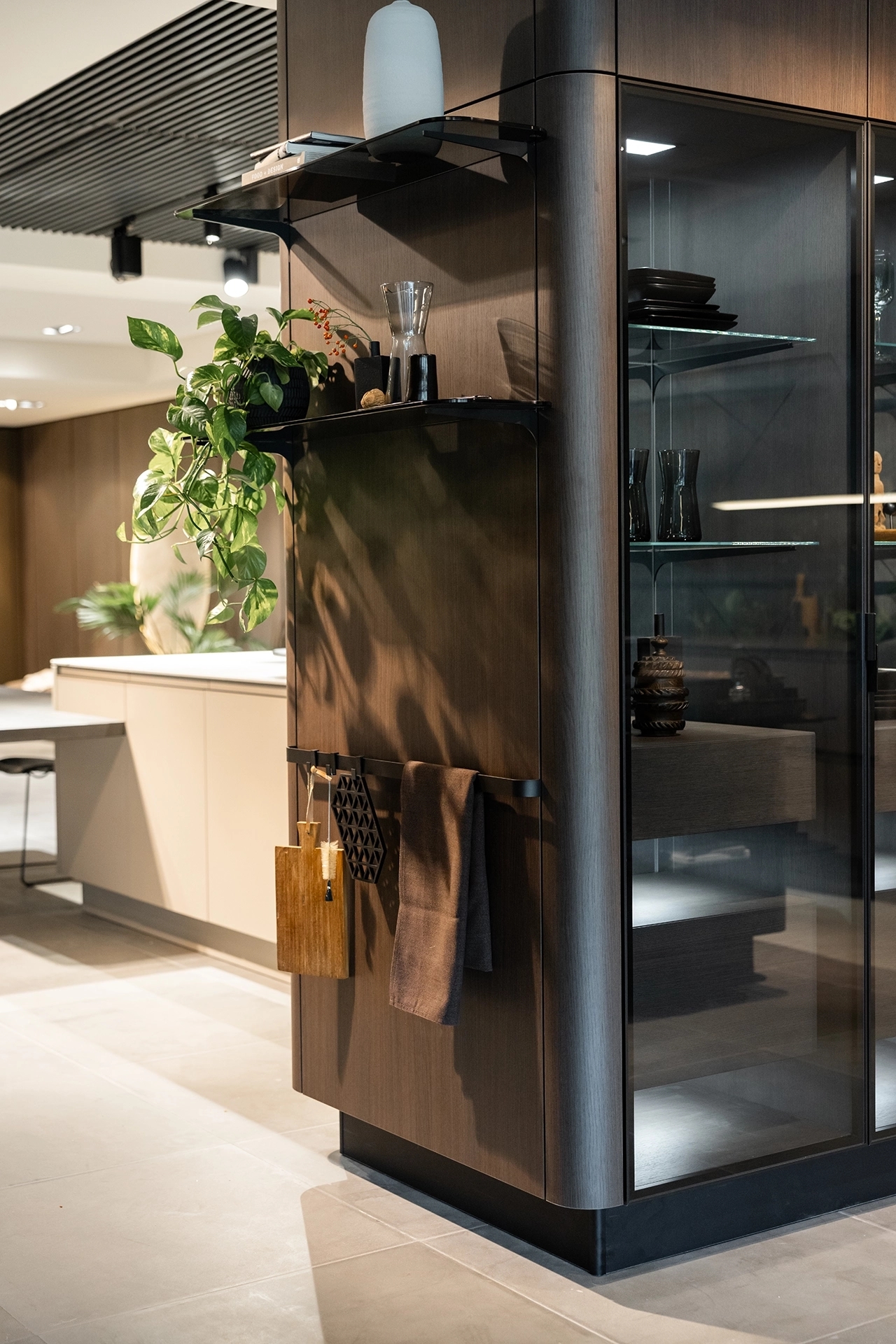
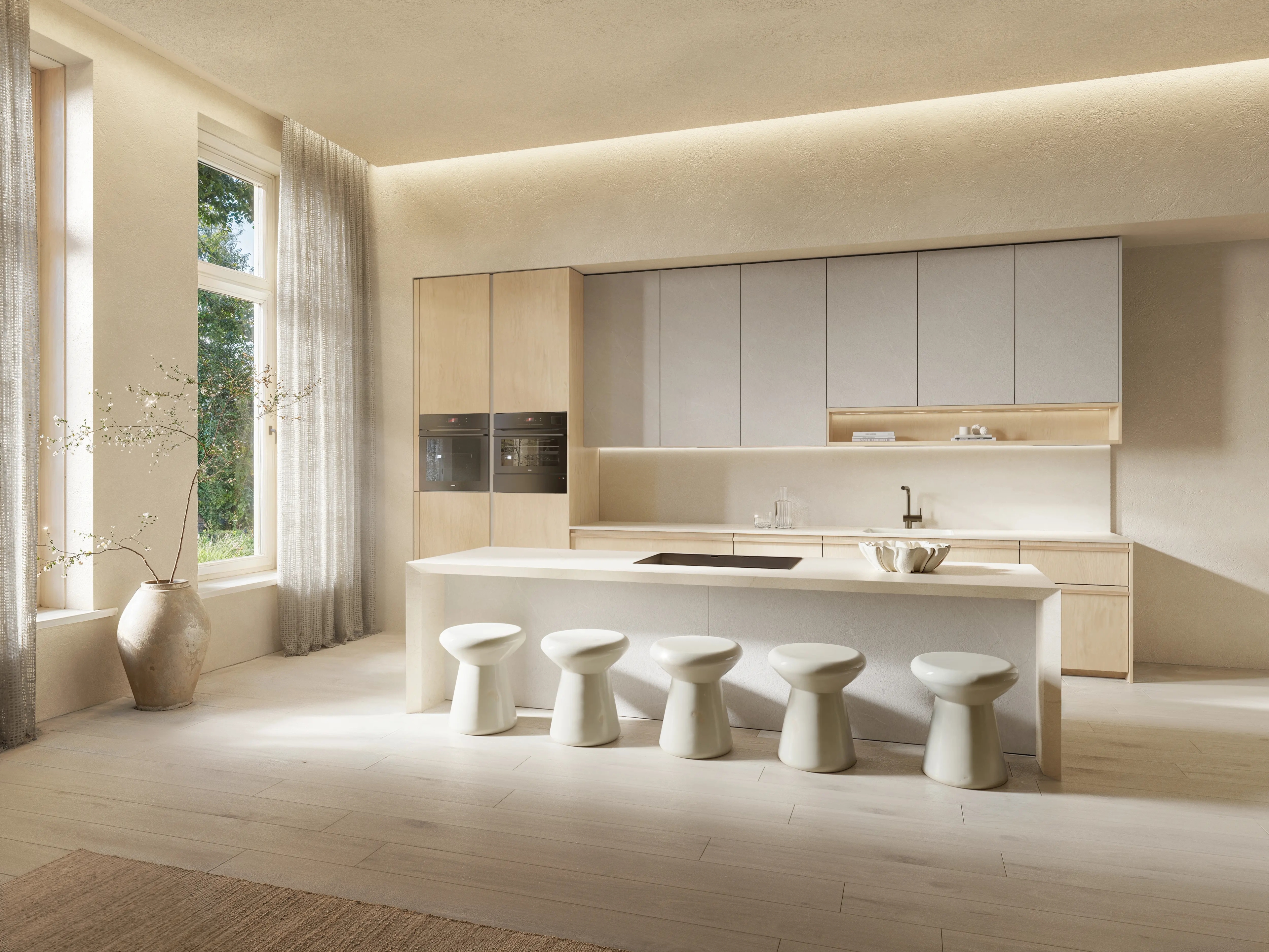
From light to dark wood-look kitchens
Light wood tones such as natural oak, sand-colored oak, and light ash pair well with white, beige, and greige kitchen cabinet fronts. The wood grain remains visible, but the color doesn’t immediately draw all the attention. This makes light wood finishes suitable for both modern and Japandi kitchens.
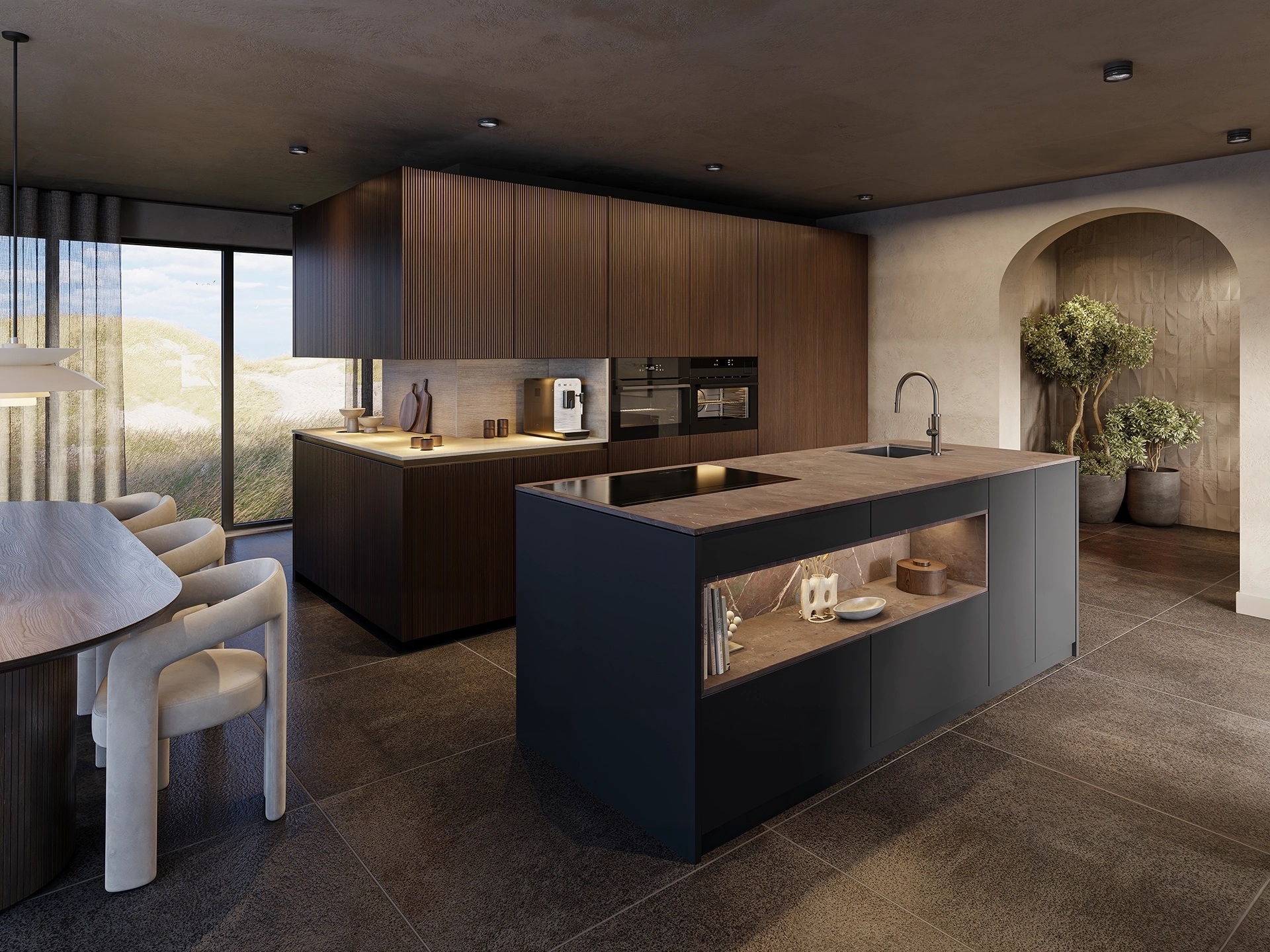
Dark wood tones create a completely different effect. Think walnut, smoked oak, or an almost black wood look. These colors are often paired with a light countertop or a cabinet wall in a muted shade. The undertone of the wood is also important. Some wood colors have a distinct yellow or red hue, while others have a grayish or brown undertone.
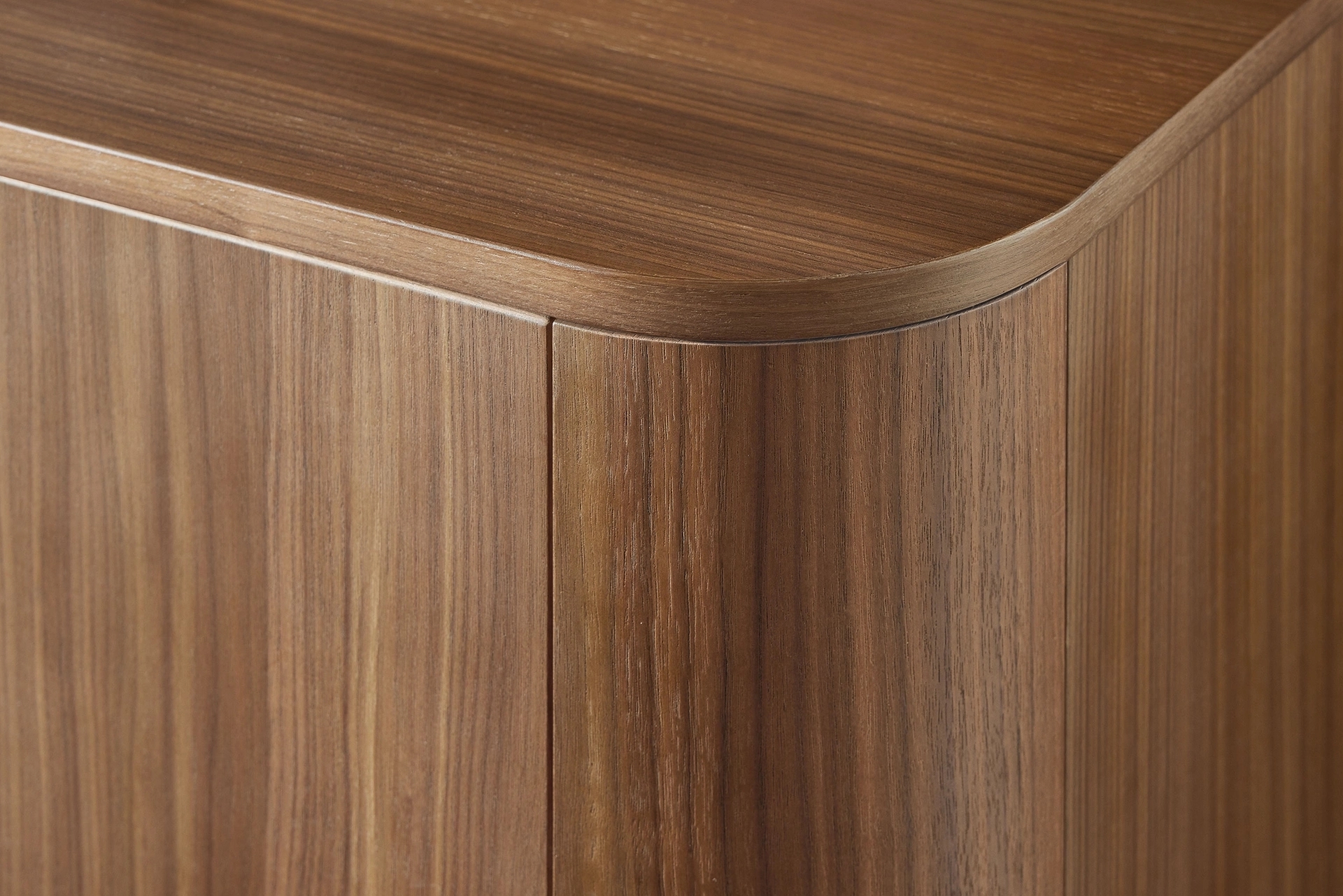
Wood-look or real wood veneer?
A kitchen with a wood-look doesn’t have to be made of solid wood. Wood-look cabinet fronts mimic the color and texture of wood, for example, with a decorative layer. This allows for a variety of wood colors and grain patterns. The properties vary depending on the material and finish. With real wood veneer, the visible top layer consists of real wood. As a result, each cabinet door has its own grain pattern, and slight color variations may occur. Real wood can also change color over time due to exposure to light and regular use. Which option you choose depends on your taste, budget, and maintenance preferences. In the showroom, you can see and feel wood-look and wood veneer side by side. This will help you better notice the difference between the materials.
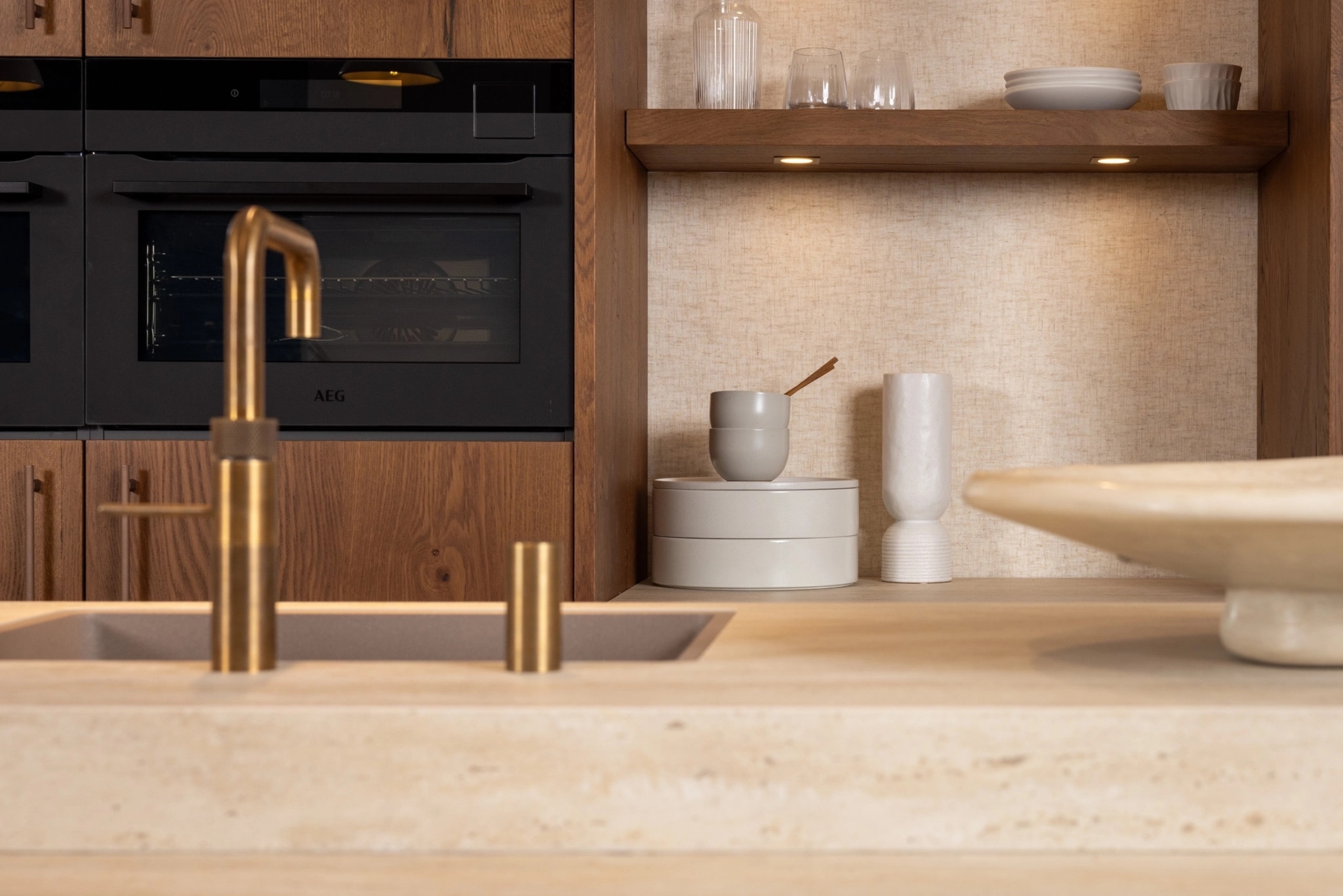
Combining a wood-look finish with other colors
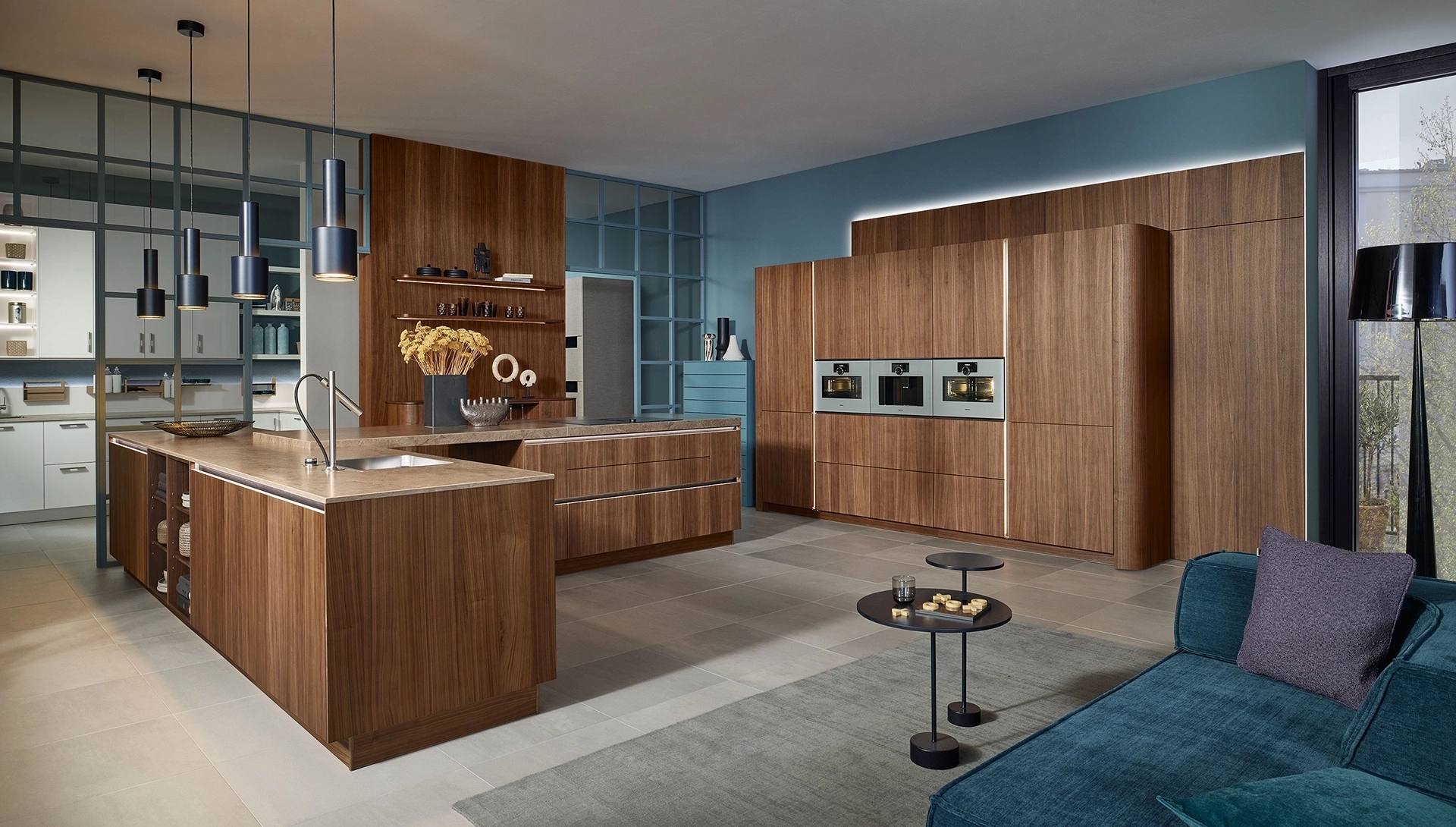
Wood pairs well with colored kitchen cabinet fronts. Light oak, for example, looks great alongside sand, beige, and soft green. Dark walnut, on the other hand, can make for an interesting combination with taupe, cream, or deep blue. When creating a combination, consider not only the color of the cabinet fronts but also the floor. A wood kitchen on a wood floor can be beautiful, but it does require careful attention to the different wood tones. Two types of wood with significantly different undertones don’t always go together naturally.
Would you prefer a more subdued color combination? Then beige, greige, and taupe are good colors to consider alongside wood.
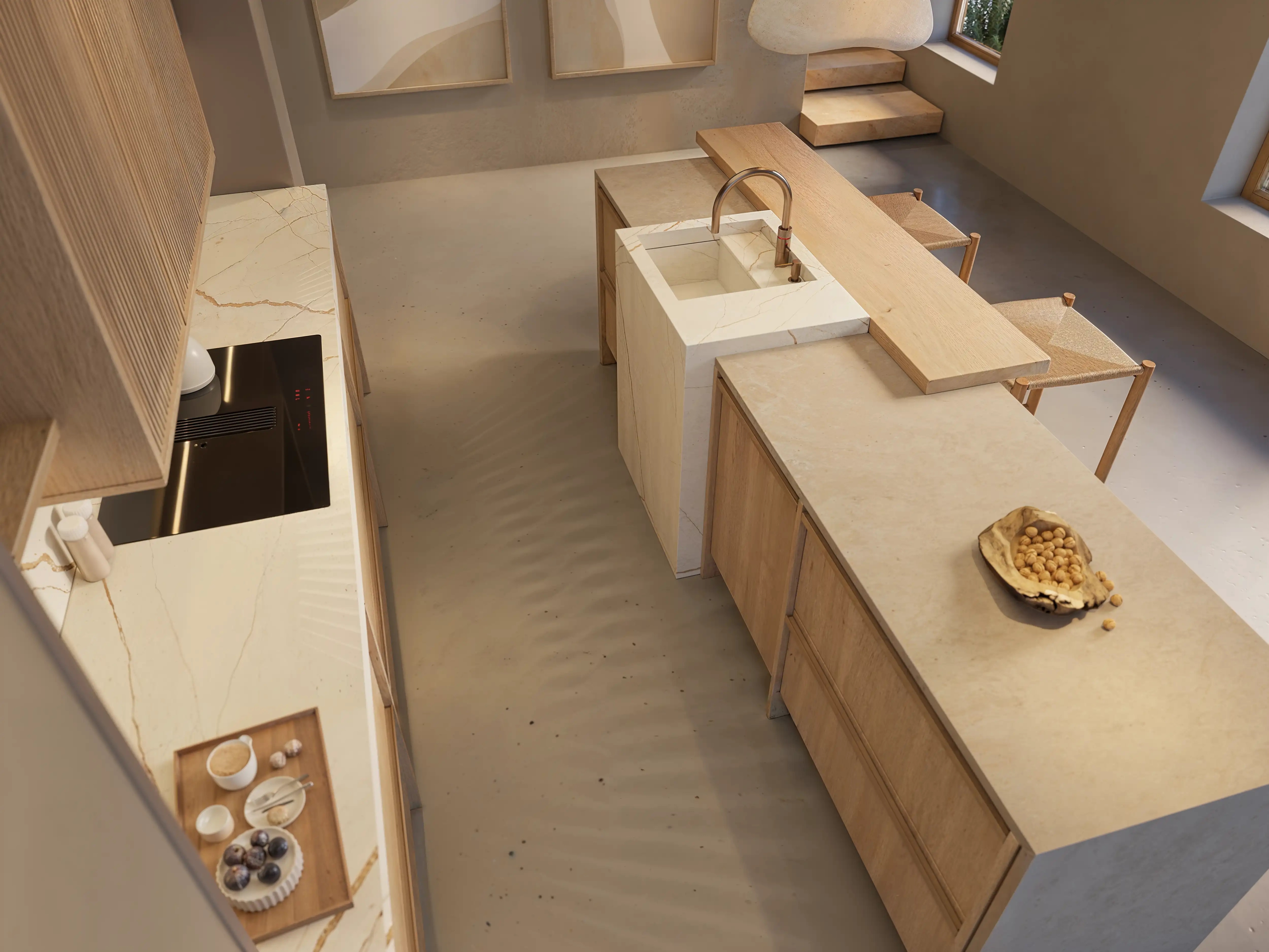
Wood-look in a Japandi kitchen
Wood is a commonly used material in Japandi kitchens. Light oak and other soft wood tones, in particular, pair well with the simple cabinet fronts and muted colors of this style. A wooden cabinet wall paired with a sand-colored kitchen island is a perfect example. In Japandi design, you’ll often see minimal visible handles and decorative elements, which draws more attention to the wood grain. A combination with a matte countertop in a light stone look also complements this kitchen style well.
Which countertop goes well with a wood kitchen?
With a wooden kitchen, you can choose a countertop that matches the color of the wood or, conversely, creates a contrast. For example, a light-colored countertop in cream, sand, or a soft stone look pairs beautifully with dark walnut. With light oak, a dark countertop can create a striking contrast. The grain pattern of the countertop also plays a role. If the wood has a distinct grain, a subtle countertop can ensure that the materials don’t clash too much. A bold marble look is also an option, but it requires a careful combination of colors and patterns. Ceramic, composite, and natural stone each have different properties. It is therefore wise to consider not only the color but also maintenance and daily use.
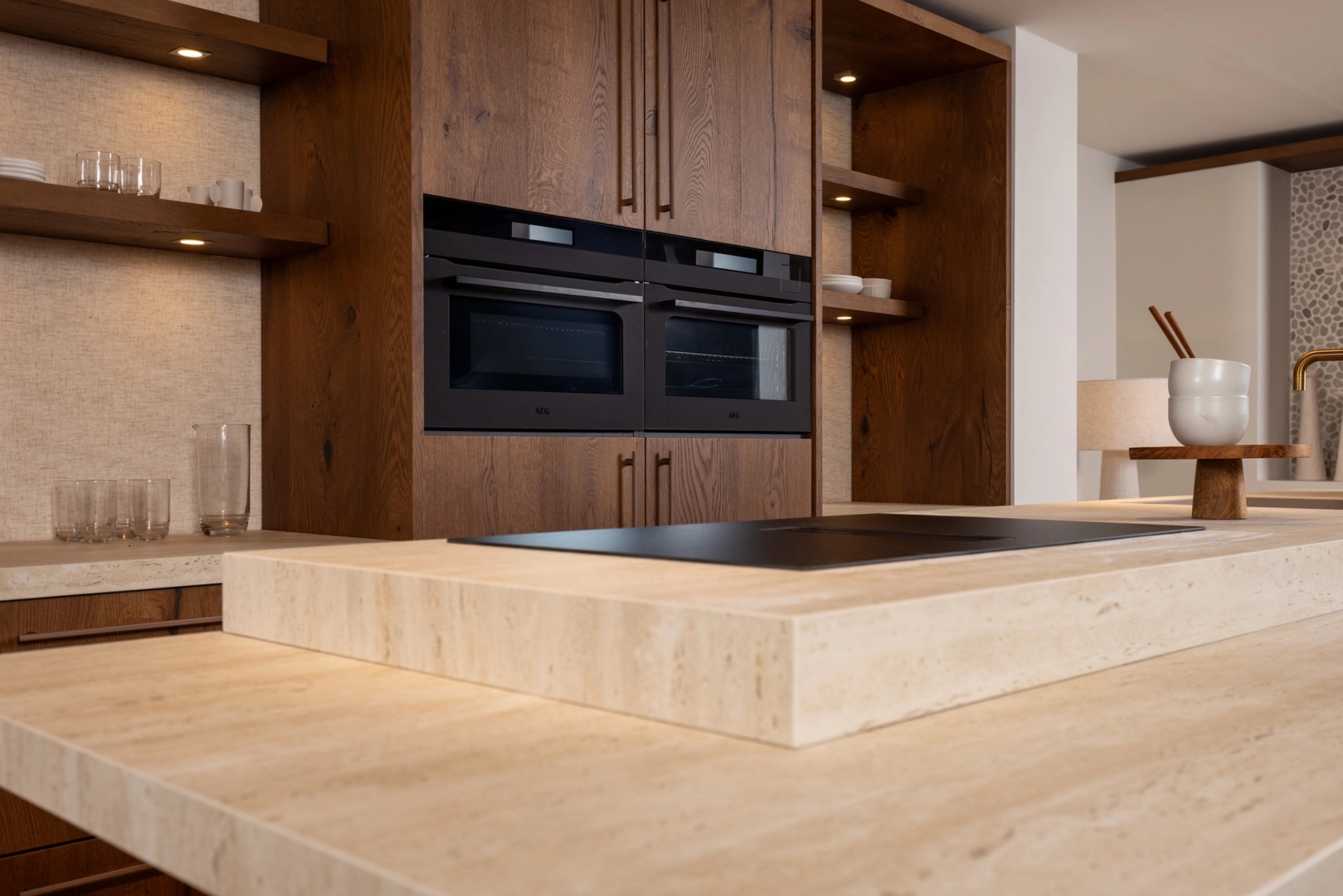
Wood-look on the kitchen island or cabinet wall
A wood-look kitchen island can create a beautiful contrast with a wall of cabinets in a solid color. The wood grain really stands out, especially on a large island. You can have the grain run horizontally across the cabinet fronts or opt for a vertical orientation instead. The reverse is also possible. A tall wall of cabinets with a wood-look finish can be paired with a understated kitchen island in beige, white, or a dark color. When the wall of cabinets extends all the way to the ceiling, the wood plays a more prominent role in the design. Smaller wooden elements can also be sufficient. Think of a bar countertop, an open niche, or a few wooden cabinet fronts among solid-color cabinets. This way, you can incorporate wood without it being present everywhere.
View wooden kitchens at Intermat
The best way to see the difference between light oak, walnut, and other wood tones is to view the materials side by side. It’s also not always easy to assess the texture of wood-look finishes and real wood veneer from a photo.
In our showrooms in Mijdrecht and Alphen aan den Rijn, you can view various kitchen cabinet fronts, wood colors, and countertops. Our kitchen consultants will be happy to help you choose materials that suit your needs.