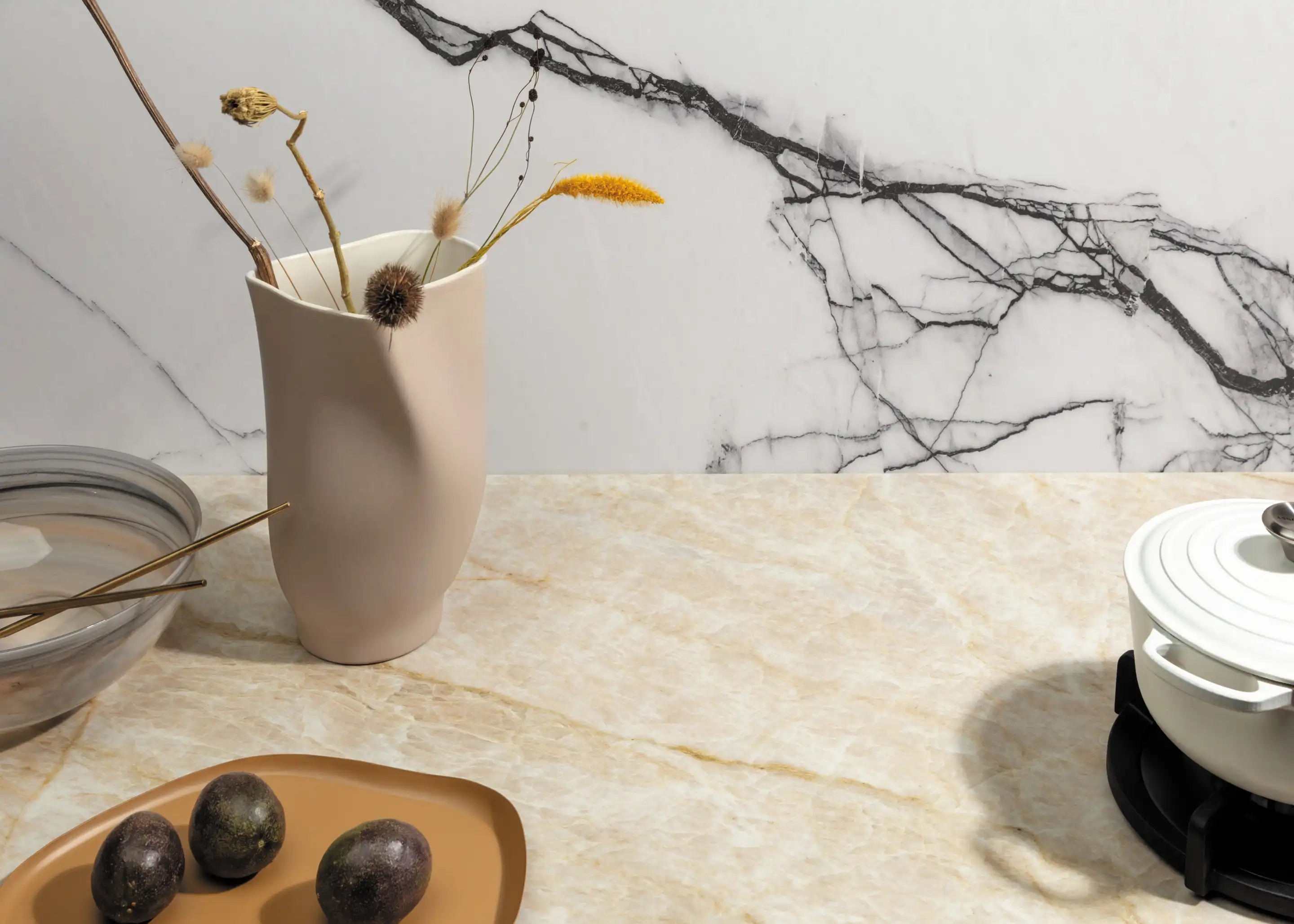
Compare kitchen countertops by material and use
A Kitchen Countertop is used intensively every day and plays a major role in defining the look of the kitchen. That’s why not only color and material are important, but also how the countertop handles heat, moisture, and stains. From ceramic and composite to natural stone, plastic, wood, and stainless steel: every material has its own properties.
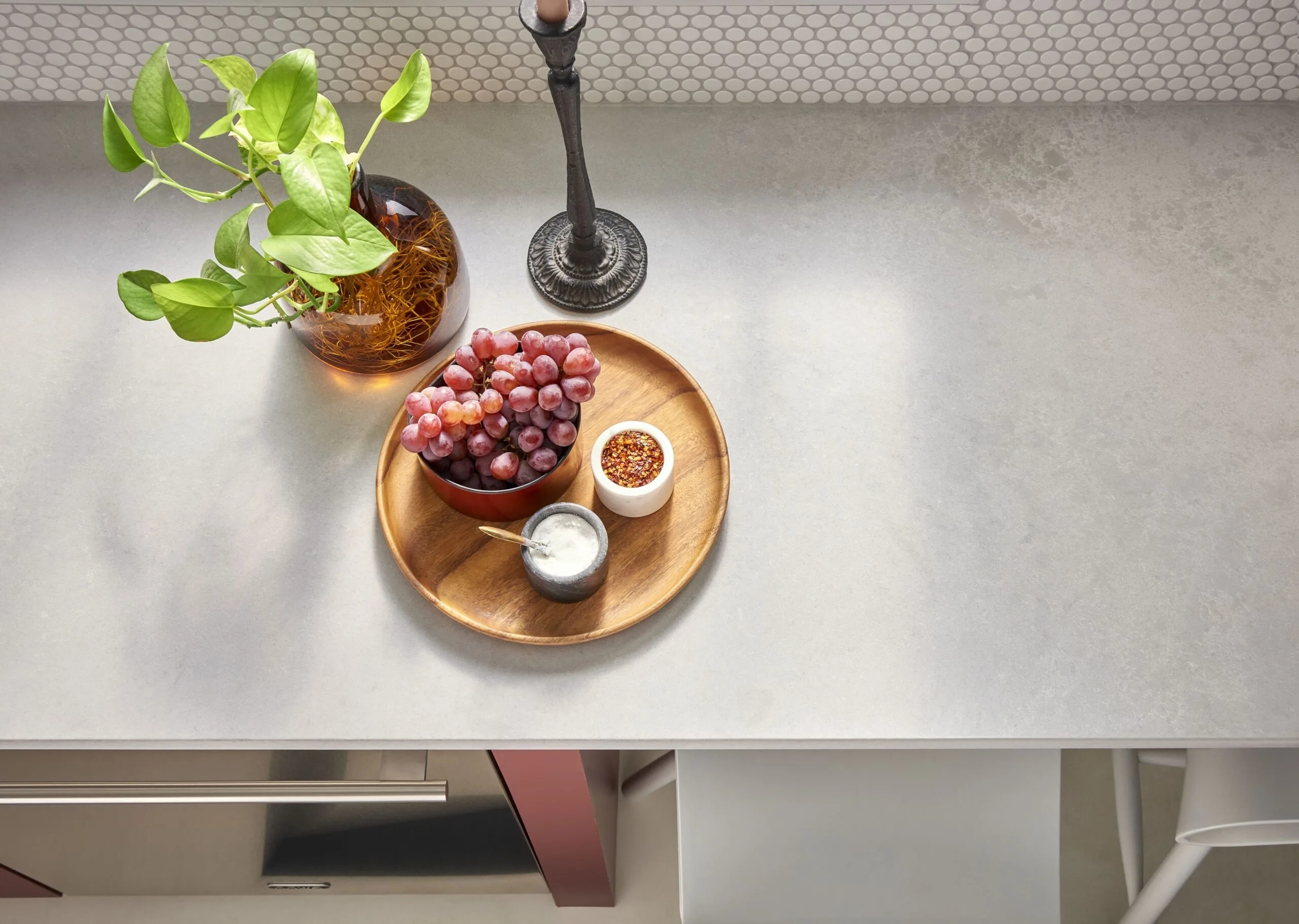
Composite kitchen countertops for everyday use
Composite is a popular material for Kitchen Countertops and consists largely of finely ground quartz grains, mixed with color pigments and resin. This creates a dense surface that resists penetration by dirt and liquids such as coffee, tea, and oil, and is easy to clean. Composite is also impact- and scratch-resistant and available in many colors and finishes, ranging from subtle sand tones to marble and concrete looks. Keep in mind, however, that the resin is sensitive to sudden heat. Therefore, always place hot pans and baking dishes on a trivet.
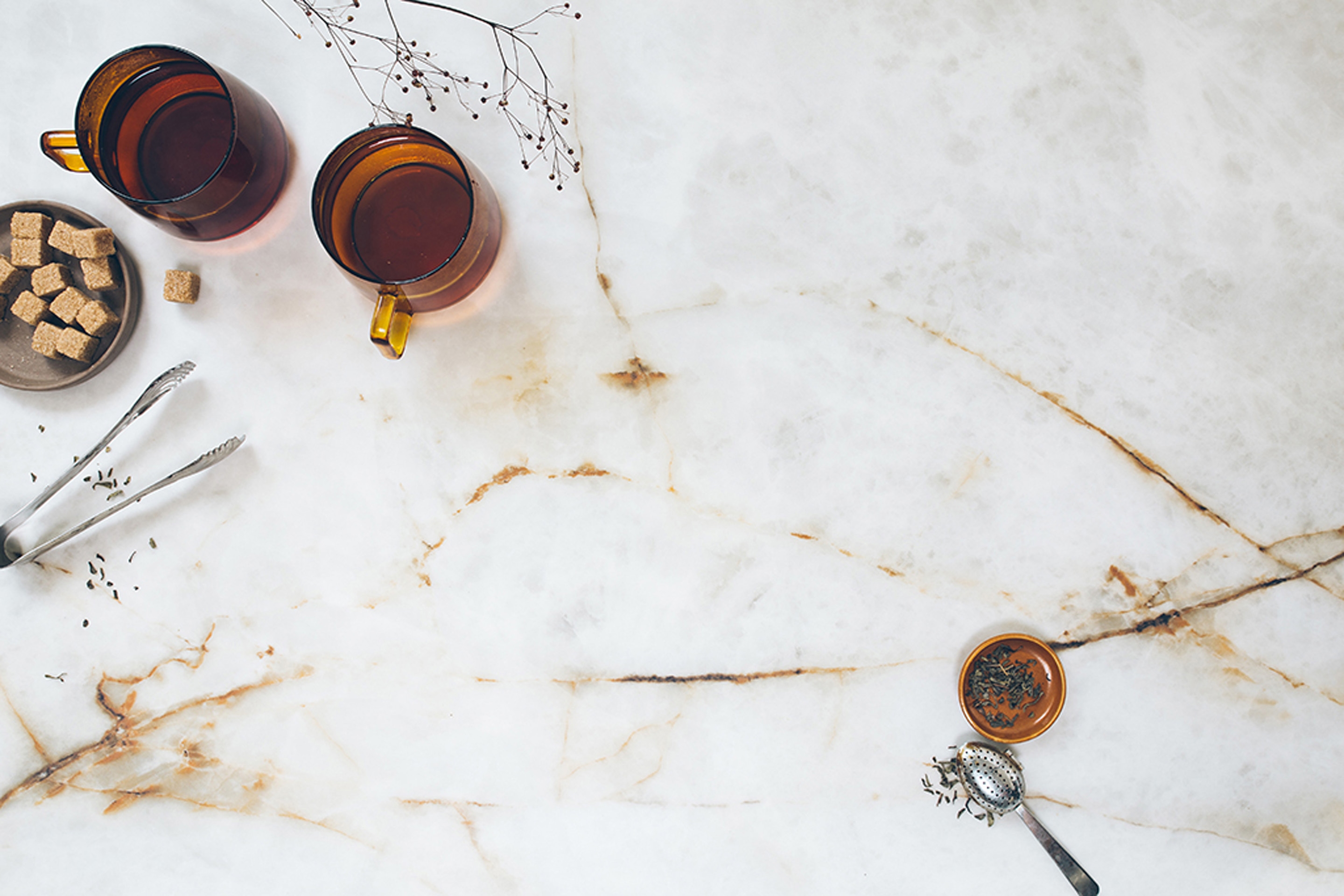
Ceramic kitchen countertops and heat resistance
Ceramic is made from natural raw materials such as clay, feldspar, and quartz, which are pressed under high pressure and fired at very high temperatures. This creates a hard, dense surface that is highly resistant to stains, scratches, acids, and heat. Lemon juice, vinegar, and other common kitchen products do not easily penetrate the countertop, making ceramic easy to keep clean. However, its hardness does make the material more susceptible to point loads: if a heavy pan or glass object falls directly on an edge, a small piece may chip off. Although ceramic can withstand heat well, it’s still wise to use a trivet for hot pans and baking dishes.
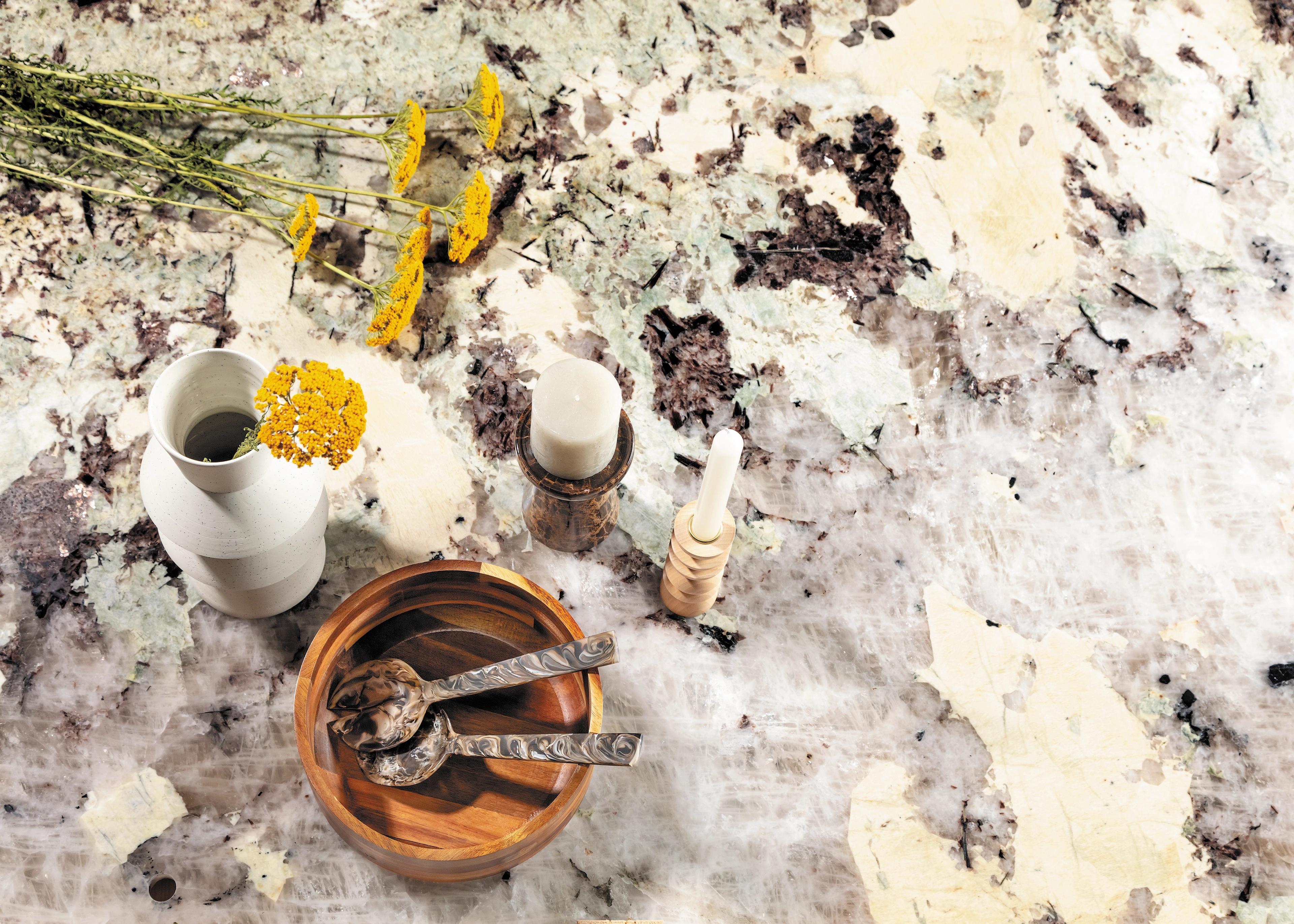
Natural stone countertops made of granite, quartzite, and marble
Natural stone has a unique look, because every slab has different veins, patterns, and color nuances. Granite is hard, scratch-resistant, and suitable for heavy-duty use, while quartzite is often even harder and at the same time resembles the luxurious look of marble. Marble and limestone, on the other hand, have a softer, more pronounced veining, but are more porous and sensitive to acids such as lemon juice, wine, and descaling agents. Depending on the type of stone, natural stone therefore requires periodic maintenance, such as impregnation. If you want the look of marble with less maintenance, composite or ceramic with a marble look are good alternatives. Would you like to further compare different shades and material combinations? Then check out our page on kitchen colors.
Plastic kitchen countertops: a practical choice
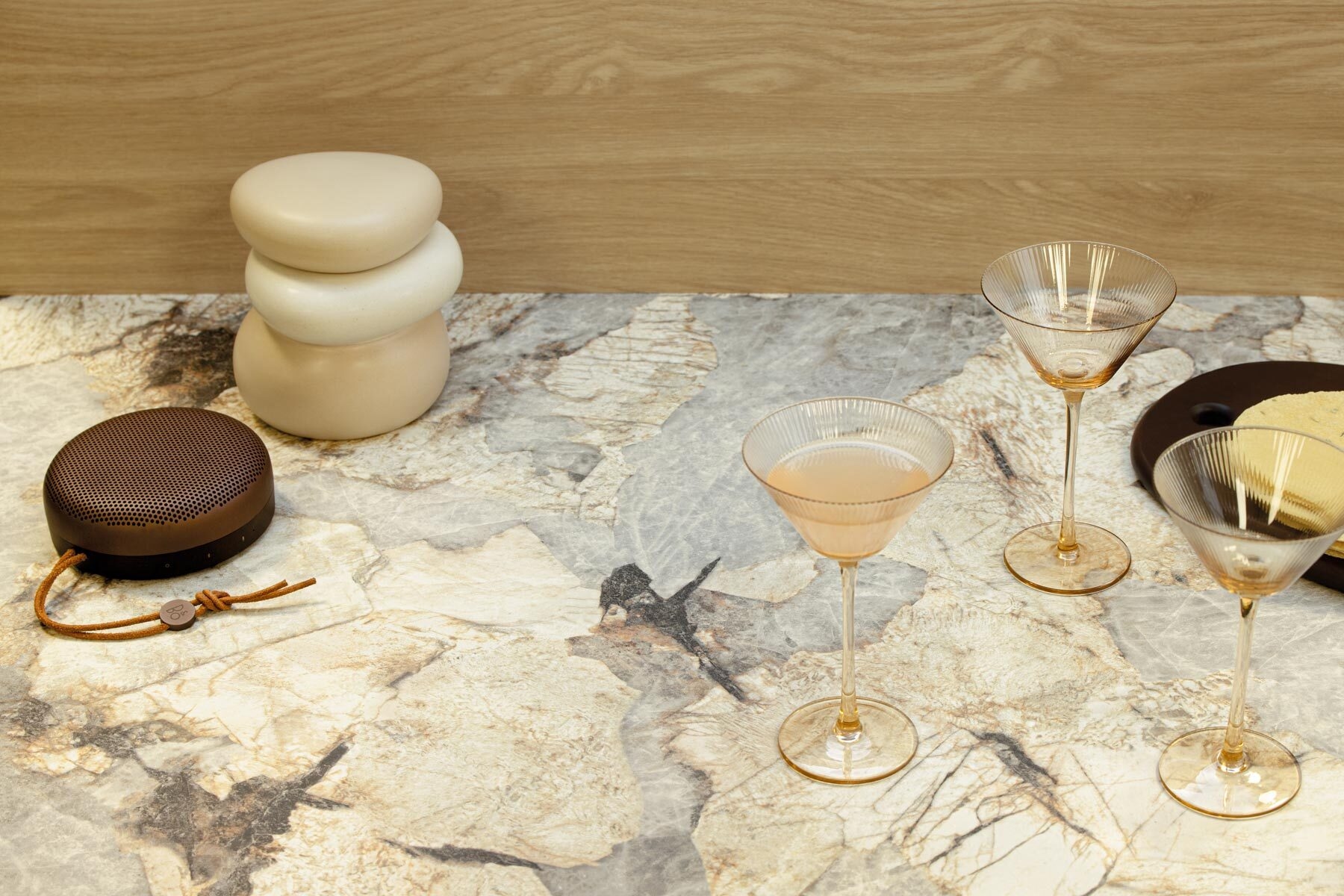
Plastic kitchen countertops, also known as laminate or HPL countertops, combine ease of use with a relatively affordable price. They are available in many colors, patterns, and edge finishes, including wood, concrete, and natural stone looks, and are easy to keep clean. The surface is water-resistant as long as seams and edges are properly sealed. However, plastic is more sensitive to heat and scratches: always place hot pans on a trivet and use a cutting board. It’s also best to prevent standing water near seams and cutouts, as moisture can cause the core material to swell.
Wood and stainless steel countertops
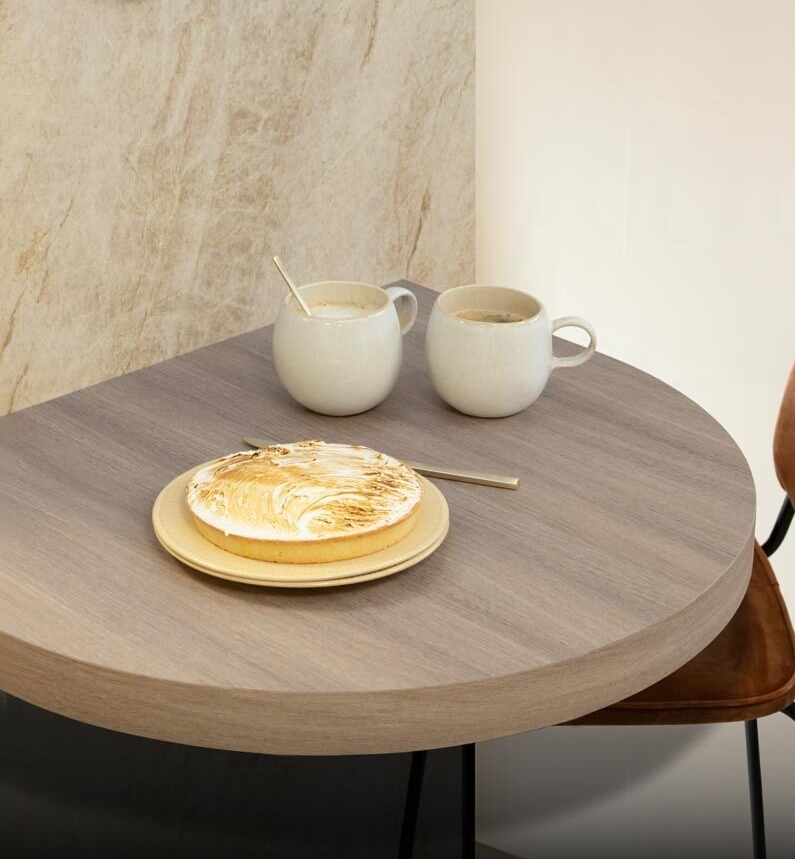
Solid wood and stainless steel each lend a very different character to the kitchen. Woods such as oak, walnut, and beech create a warm, natural look, but they do require regular maintenance with oil or wax and are more susceptible to moisture, temperature fluctuations, and discoloration. Stainless steel, on the other hand, has a sleek, professional look and is hygienic, heat-resistant, and highly resistant to water. A stainless steel countertop can also be seamlessly integrated with a built-in sink and backsplash, although fine scratches tend to appear relatively quickly with daily use, becoming part of the material’s well-worn character.
Compare kitchen countertops for heat, stains, and scratches
The properties of Kitchen Countertops vary by material. Ceramic and stainless steel are highly heat-resistant, while with composite and plastic, it’s best to use a trivet. Ceramic and composite are not very prone to staining; with natural stone, this depends on the type of stone and its finish. There are also differences in scratch and impact resistance: ceramic and quartzite are highly scratch-resistant, while wood, plastic, and stainless steel show signs of wear more quickly. Which properties matter most depends on how intensively you use your Kitchen Countertop. Want to learn more about the properties and applications of materials in the rest of the kitchen? Then check out our page on kitchen materials.
Thickness and edge finish of the kitchen countertop
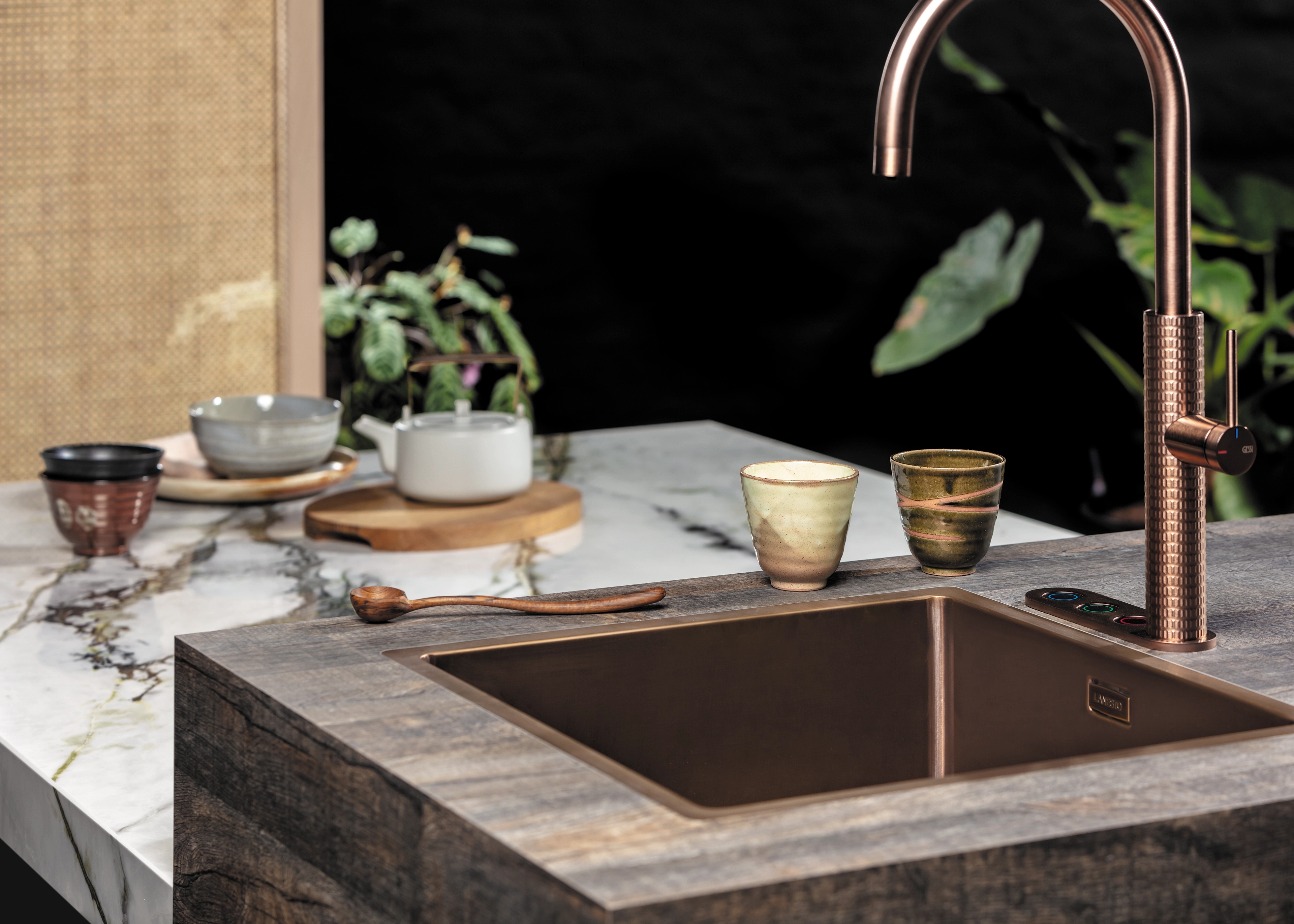
The thickness and edge finish of a Kitchen Countertop have a significant impact on the kitchen’s overall look. Thin countertops, approximately 12 to 20 millimeters thick, create a sleek and light effect and pair well with modern, handle-less kitchens, while a thicker countertop—for example, 4 to 10 centimeters—has a more robust appearance. Ceramic and composite materials are well-suited for a slim design. With a thicker countertop, the edge is often mitered and glued, so that the countertop appears solid without becoming unnecessarily heavy. The edge itself can also vary, ranging from a straight edge with a small bevel to rounded edges or a splashback. Which design works best depends on the material and the chosen kitchen style.
Sinks and cooktops on the kitchen countertop
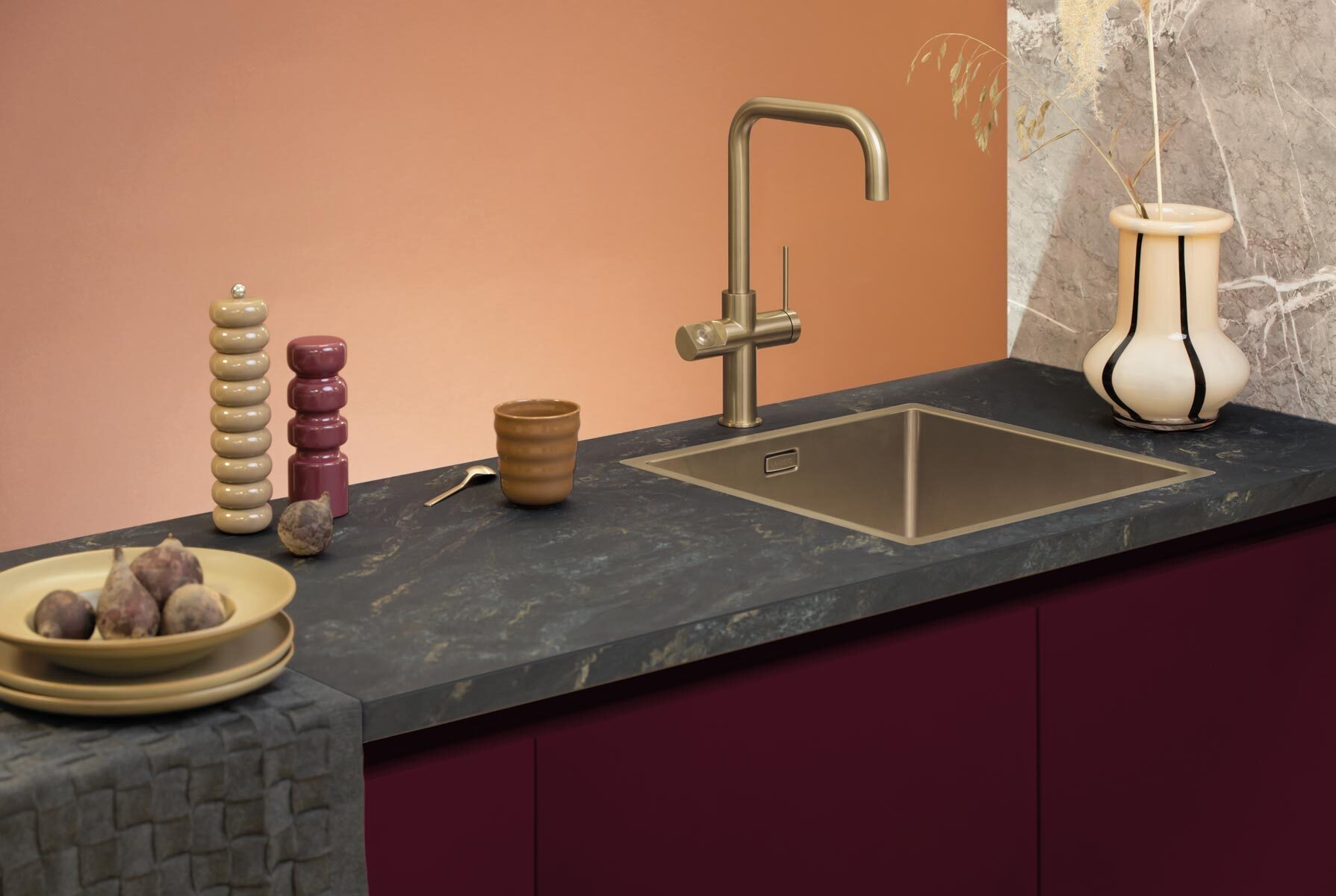
The way a sink and cooktop are integrated into the countertop determines both the appearance and how easy it is to clean. With flush mounting, the edge is virtually flush with the countertop, making it easy to wipe away crumbs and moisture. This finish works well with composite, ceramic, and natural stone. A sink can also be mounted under the kitchen countertop, creating a calm and sleek look that is particularly well-suited for stone-like materials. With a surface-mounted installation, the edge of the sink or cooktop rests directly on the countertop; this method works with virtually any type of Kitchen Countertop. With plastic countertops, extra care is needed when finishing cutouts to prevent moisture from penetrating the core. Be sure to check out our kitchen appliances to explore the various options for cooktops and other appliances.
What determines the price of a kitchen countertop?
The price of a Kitchen Countertop depends mainly on the material, color, and design. Laminate is generally the most affordable option, while composite, ceramic, and natural stone are available in various price ranges. With natural stone, exclusivity and the availability of the specific stone type play a role, while with composite and ceramic, unique patterns, textures, and finishes can drive up the price. The dimensions and required fabrication processes also influence the price.
A straight countertop with standard cutouts is easier to fabricate than a large kitchen island with a built-in cooktop, an undermount sink, beveled corners, or a mitered edge. The number of cutouts—for the sink, cooktop, and faucet, for example—also affects the final price. A backsplash made of the same material also increases the total cost.


View kitchen countertops at Intermat
It can be difficult to fully assess color, texture, and sheen on a screen or from a small material sample. In Intermat’s showrooms, you can view various Kitchen Countertops on larger surfaces and see how they pair with cabinet fronts, colors, and materials. Our consultants will help you compare ceramic, composite, natural stone, and other options, taking into account appearance, maintenance, daily use, and budget. This way, you can choose a Kitchen Countertop that complements the rest of your kitchen design, rather than focusing solely on the material itself.