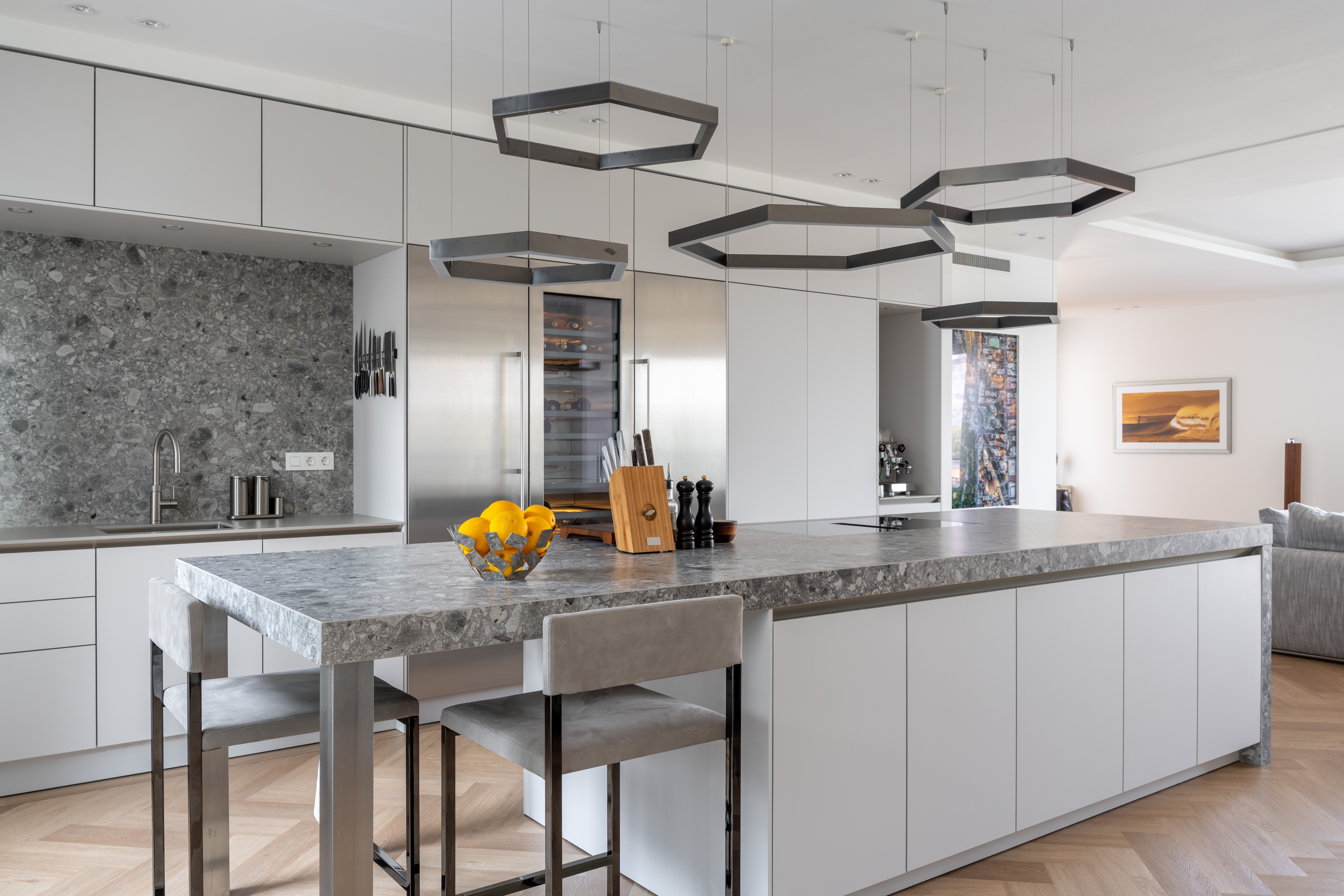
Light-colored kitchens for a fresh and serene interior
A light-colored kitchen doesn’t have to be entirely white. Cream, greige, light gray, and soft sand tones can also give a kitchen a fresh look. Discover which light colors suit your interior and how to combine them with wood, stone, and other materials.
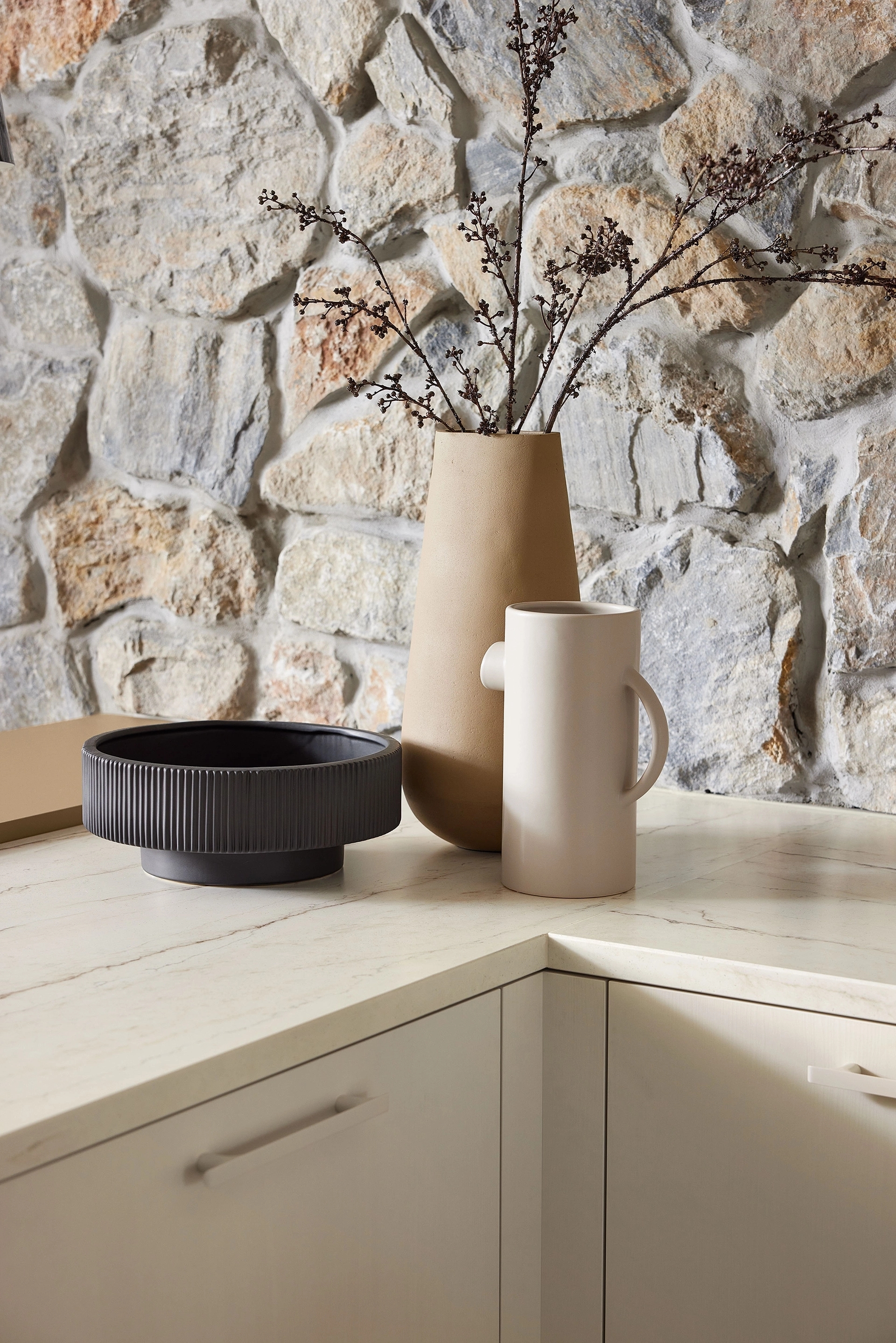
Light, but certainly not just white
When you think of a light-colored kitchen, white cabinet fronts might immediately come to mind. Yet there are many more possibilities. Off-white, cream, and light sand tones have a warmer undertone, while light gray often looks a bit cooler. A light wood finish also fits well within this color palette. The color you choose depends, among other things, on the kitchen style. Flat cabinet fronts without visible handles work well in a modern kitchen, while light framed cabinet fronts look particularly nice in a rustic or classic design. You’ll also see plenty of light colors in a Japandi kitchen, often combined with wood and matte materials. A light-colored kitchen can therefore be designed in many different ways. Not only the cabinet color, but also the countertop, handles, and layout determine the kitchen’s overall look.
From white to beige and light gray
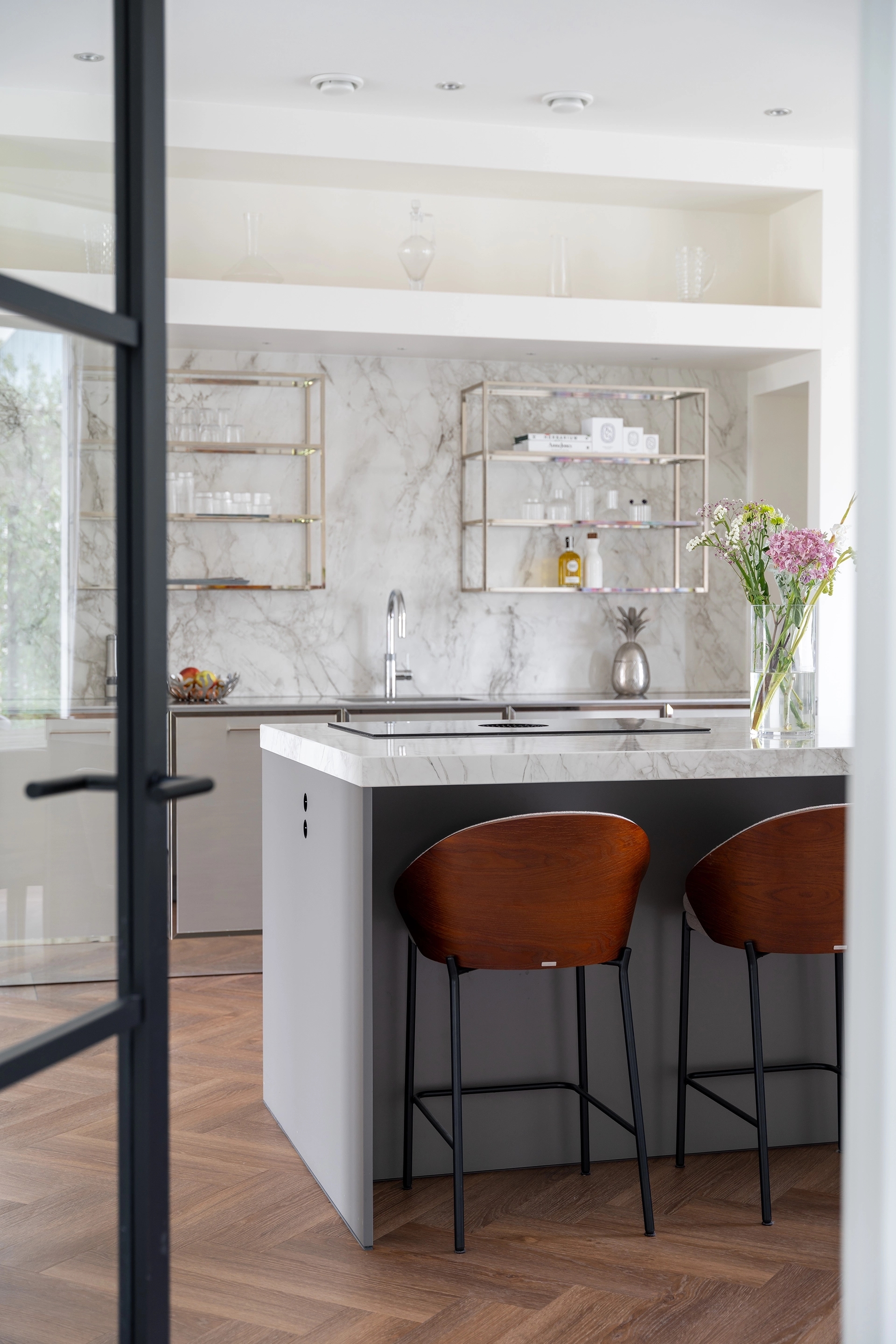
Bright white creates a fresh look, while off-white and cream have a softer appearance. Light gray often has a cooler undertone, while beige tends to have warmer tones. Greige is also a great choice for a light-colored kitchen. This color falls between gray and beige and can appear warmer or cooler, depending on its undertone. The differences between light colors can sometimes be subtle. For example, a white kitchen with a yellow undertone might look very different than expected when paired with a cool gray floor. Similarly, a beige cabinet front might appear almost white in one room but slightly darker in another. That’s why it’s wise to consider the colors in conjunction with the floor, the countertop, and any wood samples. Do beige, sand, and greige particularly appeal to you? Then you’ll find more examples of these colors on our page about natural tones.
Matte or glossy?
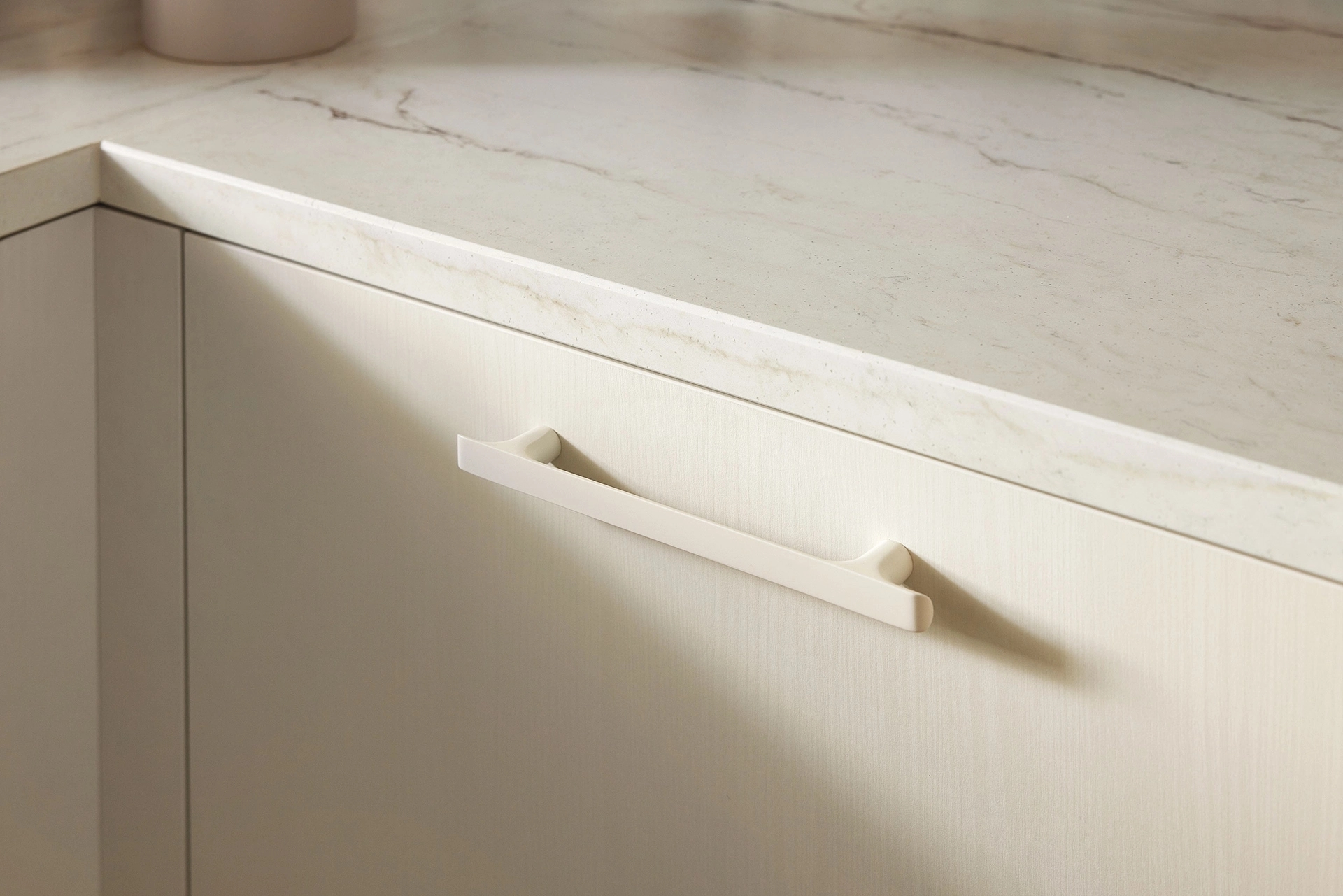
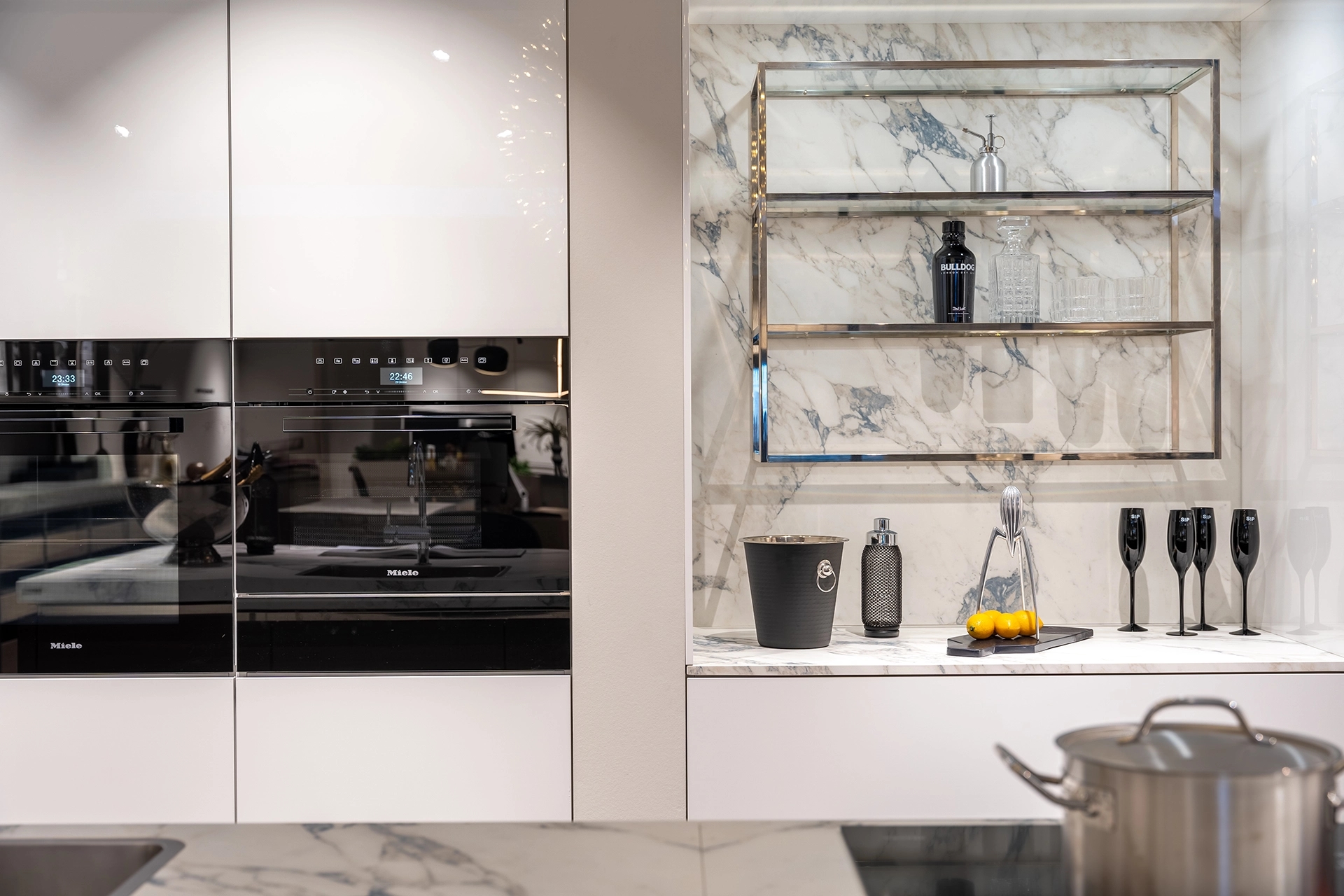
With light-colored kitchen cabinet fronts, the finish has a significant impact on the final look. A high-gloss white front reflects more light, while the same color in a matte finish has a softer appearance. This difference can be particularly noticeable with large cabinet walls. The texture of the front also plays a role. Some matte fronts are completely smooth, while others have a subtle texture. With a light wood look, for example, the wood grain remains visible or noticeable to the touch. The finish can also affect how quickly you notice fingerprints and stains. Which finish you prefer depends on your taste and daily use. In the showroom, you can view and feel different front materials side by side.
A light-colored kitchen with wood
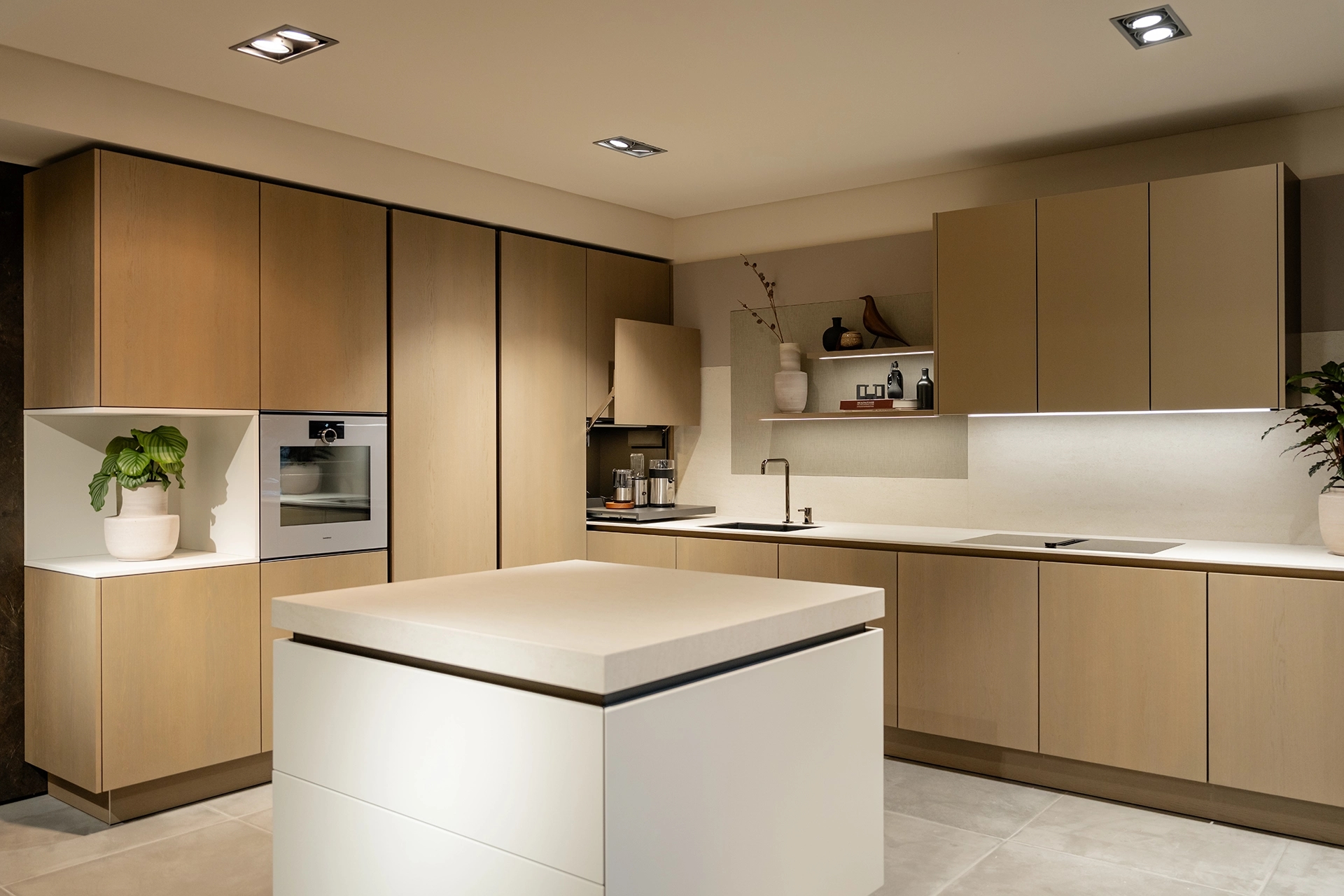
Wood is a beautiful complement to light-colored kitchen cabinet fronts. A white kitchen with light oak looks different from a cream-colored kitchen with dark walnut. Wood can be a particularly beautiful complement to beige, sand, and greige, as these colors often have similar warm undertones. You can incorporate wood in various places. Think of a wooden cabinet wall next to a light-colored kitchen island, a bar countertop, or an open niche. A combination of light-colored base cabinets and wooden wall cabinets is also possible. Do you have a wooden floor? If so, it’s a good idea to compare the wood colors side by side. The wood in the kitchen doesn’t have to be exactly the same color as the floor, but it’s important that the undertones complement each other.
More space with a light-colored kitchen
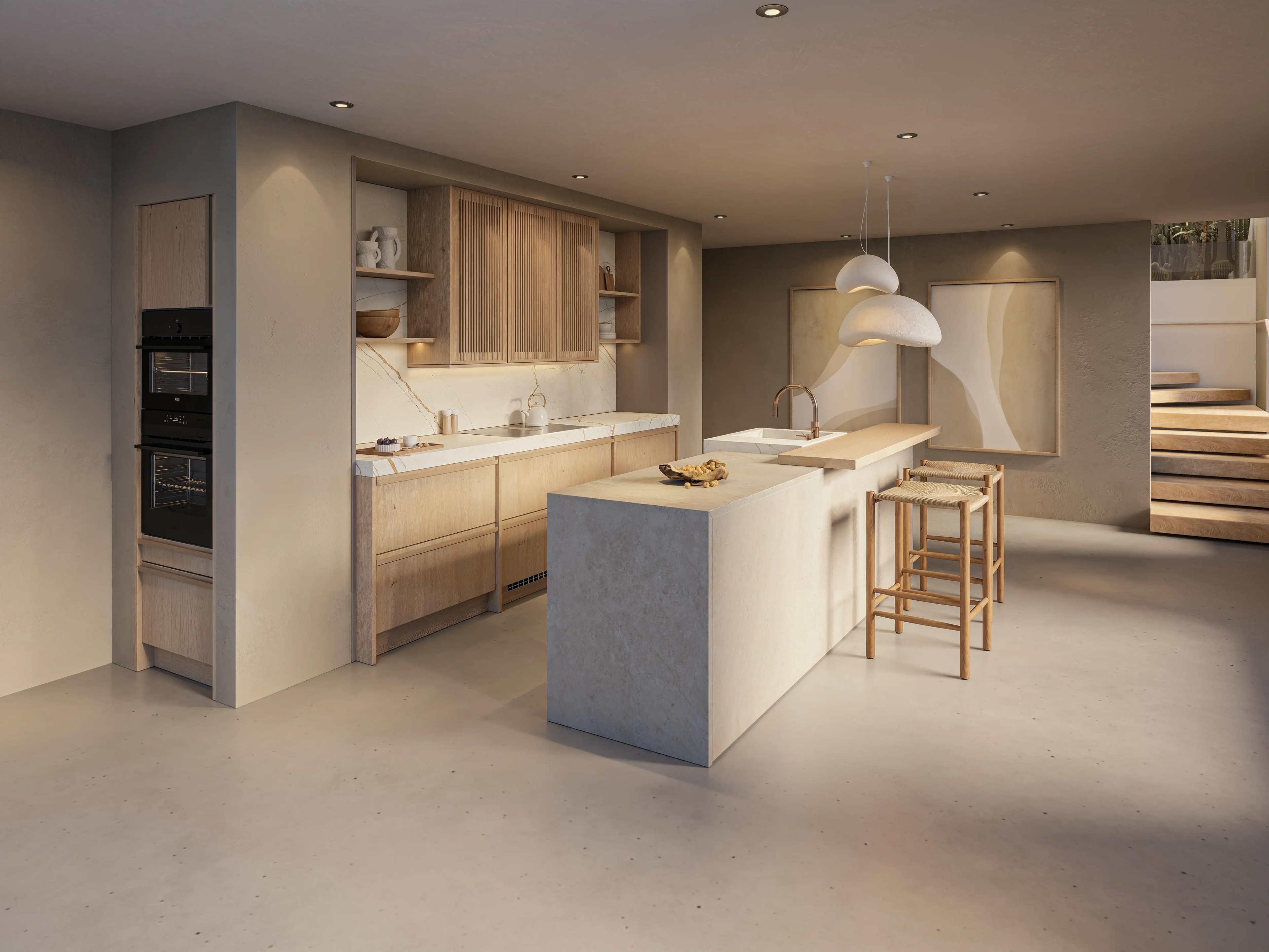
Light colors reflect a relatively large amount of incoming light. This can make a kitchen appear more open and spacious, especially when there’s little natural light. That makes light-colored cabinet fronts a great choice for smaller kitchens, but also for a large open-concept kitchen where you want a calm, neutral base. However, color alone doesn’t determine how spacious a kitchen feels. The layout also plays a role. For example, a tall wall of cabinets offers plenty of storage space, so you need fewer freestanding cabinets. In a larger space, a light-colored kitchen island can look great, while a straight kitchen or corner layout is often more practical when you have less space. A small kitchen doesn’t have to be entirely white, though. Cream, light gray, greige, and light wood tones can also work well. Pay particular attention to the amount of natural light, the available walking space, and the layout of the cabinets.
Tone-on-tone or contrast?
For a light-colored kitchen, you can choose colors that are close to each other. This is also known as tone-on-tone. Think of cream-colored cabinet fronts with a sand-colored countertop or a greige kitchen with a light stone look. The differences between the materials are subtle, but they do add more depth to the design.
Would you prefer more contrast? Then you can combine light cabinet fronts with a dark countertop, black handles, or a wooden cabinet wall. For example, a white kitchen island with a dark countertop stands out more than an island where the countertop is almost the same color as the cabinet fronts.
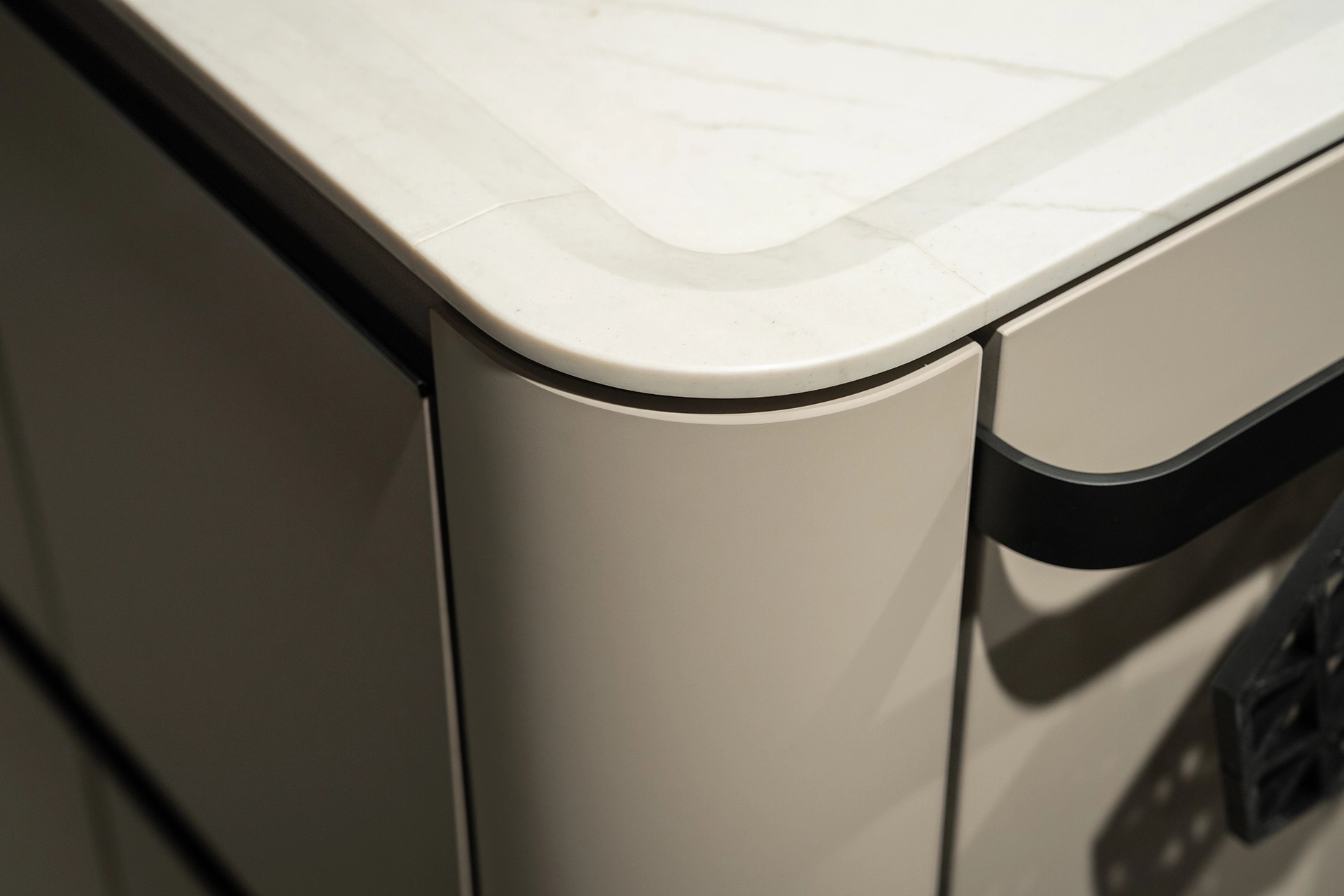
The pattern of the countertop also plays a role. A subtle stone look pairs well with a kitchen that has little color variation, while a bold marble look draws more attention. So be sure to consider not only the color of the countertop, but also its texture and finish.

Is it easy to keep a light-colored kitchen clean?
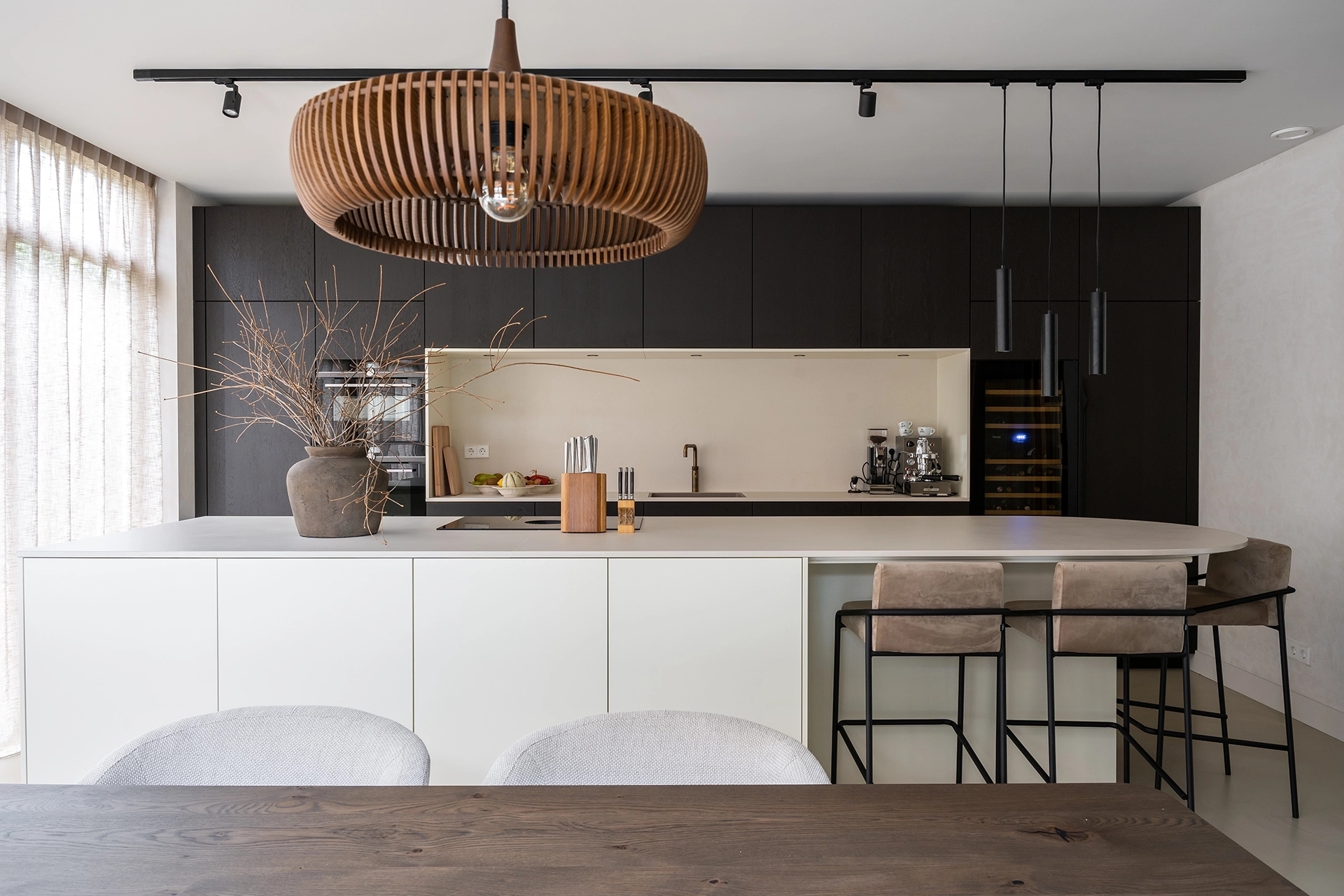
Certain stains may be more visible on light-colored kitchen cabinet fronts, but that doesn’t automatically mean they’re harder to keep clean. How easy it is to maintain a cabinet front depends mainly on the material, texture, and finish. On a smooth cabinet door, you can often easily remove dirt with a soft cloth and a suitable cleaning product. Cabinet doors with a textured surface may require a different approach. Fingerprints are also more visible on some surfaces than on others. That’s why it’s wise to consider more than just the color when choosing a light-colored kitchen. Be sure to ask about the maintenance requirements of the cabinet fronts and the countertop. That way, you’ll have a better idea of what to expect in everyday use.
View light-colored kitchens at Intermat
You often don’t fully appreciate the difference between bright white, cream, beige, and greige until you see the colors side by side. The finish of the cabinet fronts and how they pair with a countertop can also make a big difference. In our showrooms in Mijdrecht and Alphen aan den Rijn, you can view a variety of light-colored kitchen cabinet fronts, wood tones, and countertops. Our kitchen consultants will be happy to help you choose colors and materials that suit your preferences and the space in your home.