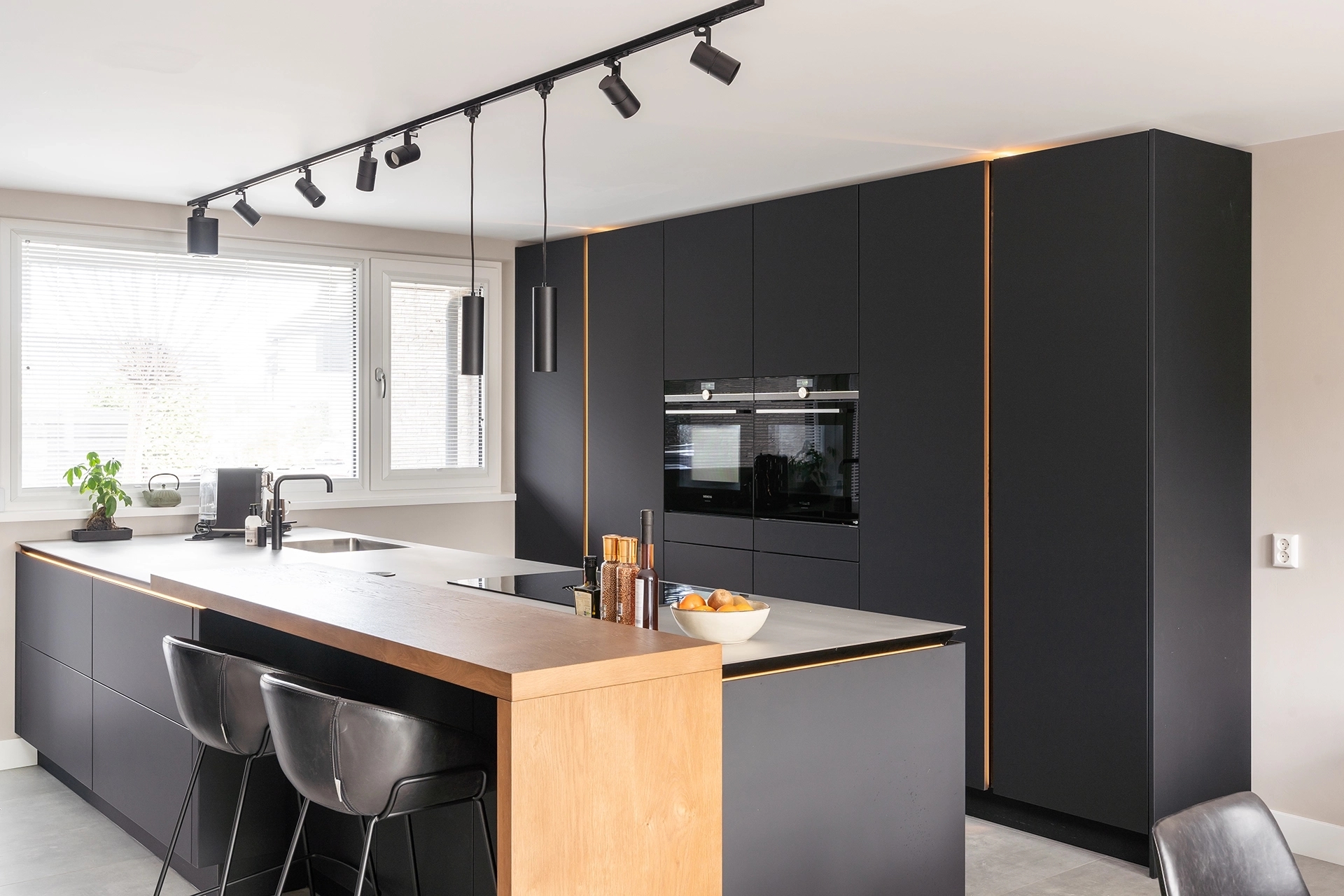
Dark kitchens with character
A dark kitchen doesn’t have to be entirely black. Anthracite, dark brown, and deep wood tones can also give a kitchen a unique look. Discover which dark colors go well together and how to combine them with wood, stone, and other materials.
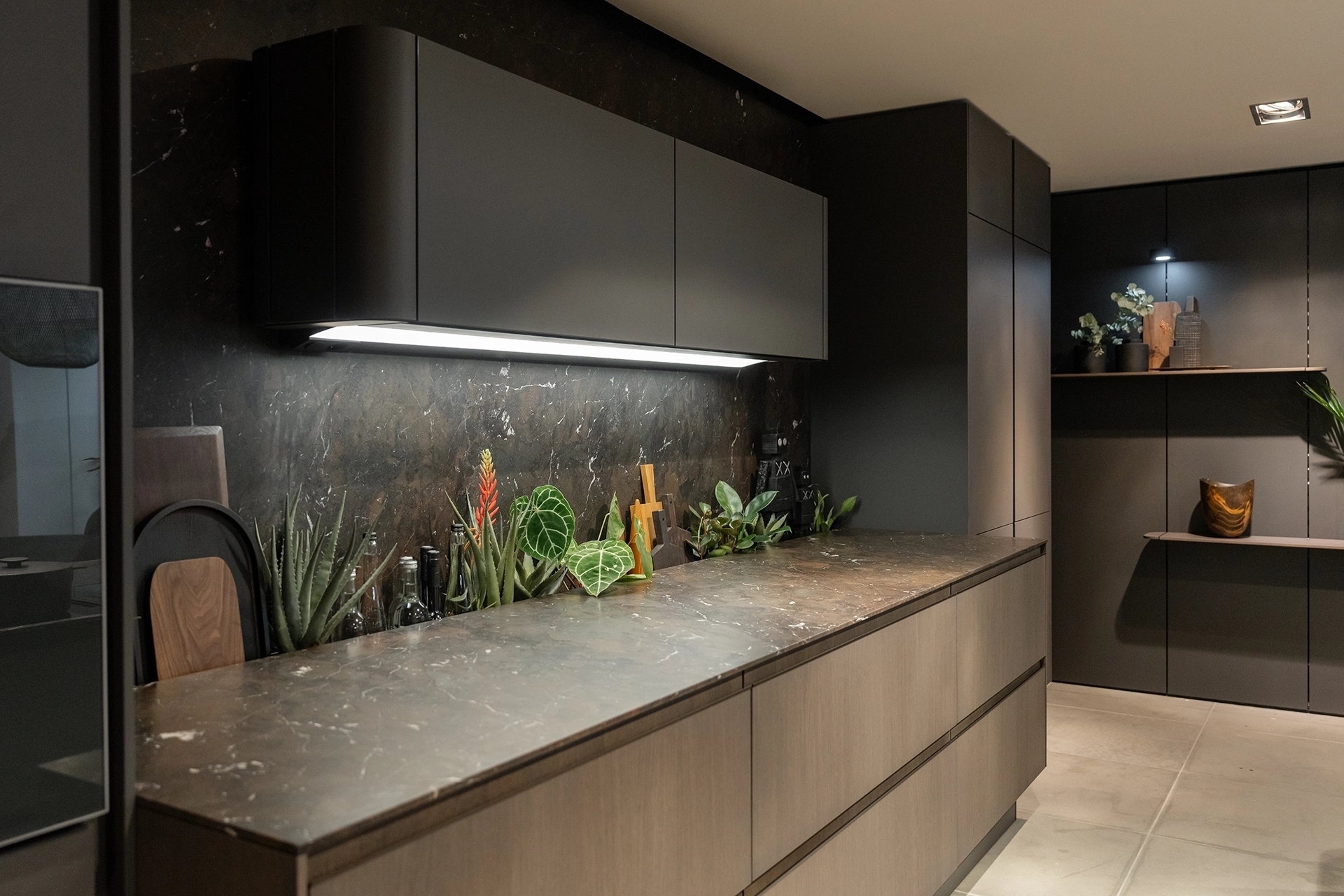
From black to dark brown
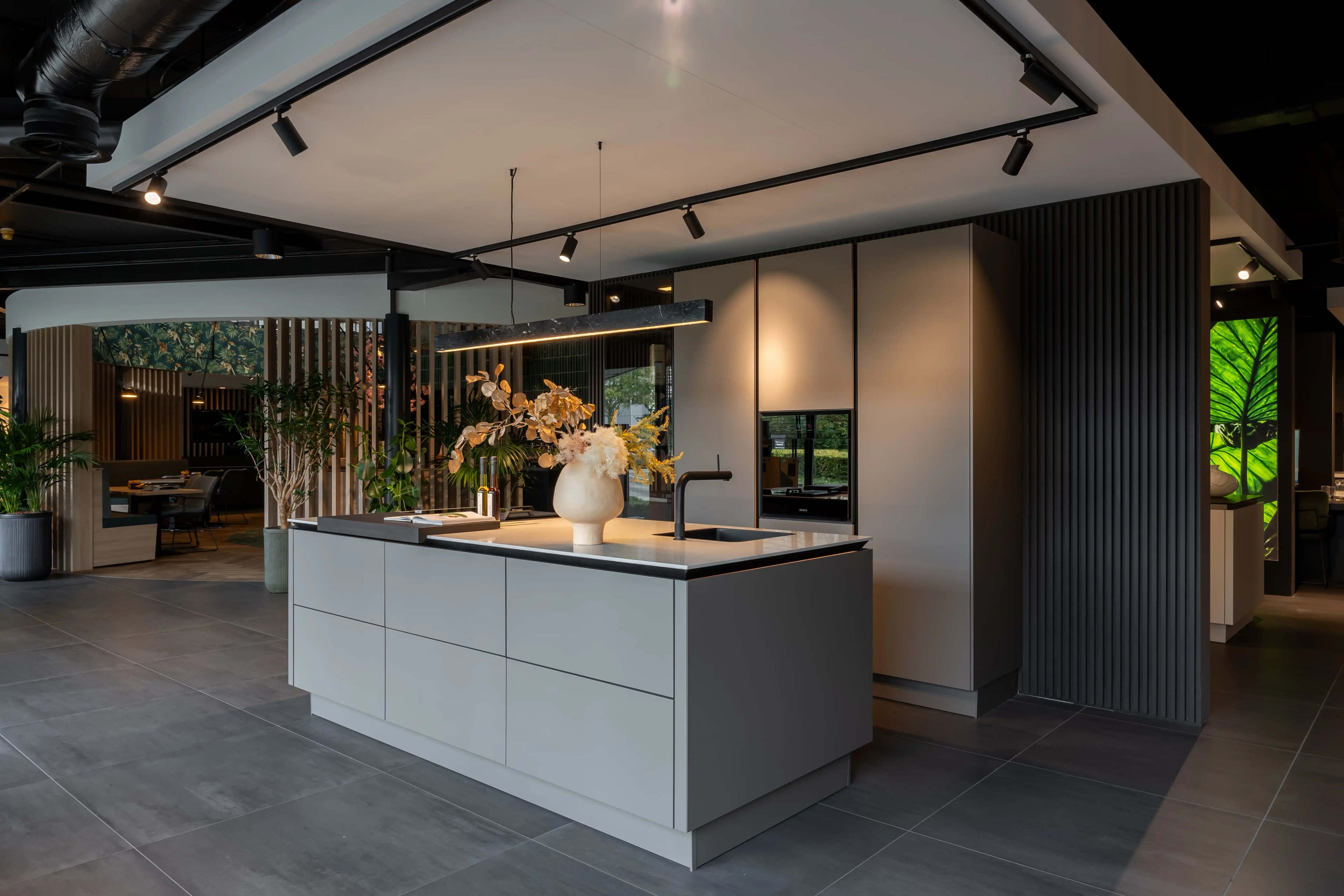
Black kitchens are popular, but there are many more dark colors to choose from. Anthracite and dark gray are a bit softer than deep black, while dark brown and warm wood tones create a completely different effect. A dark greige or deep taupe can also be beautiful if you’d rather not have a black kitchen. A dark kitchen complements various styles. Flat, handle-less cabinet fronts give a modern look, while dark framed cabinet fronts work well with a rustic or classic kitchen. With unique materials, a large kitchen island, and subtle lighting, you can also create a luxurious designer kitchen. It’s not just the color of the cabinet fronts that matters. The countertop, the handles, and the amount of natural light also influence how dark the kitchen ultimately appears.
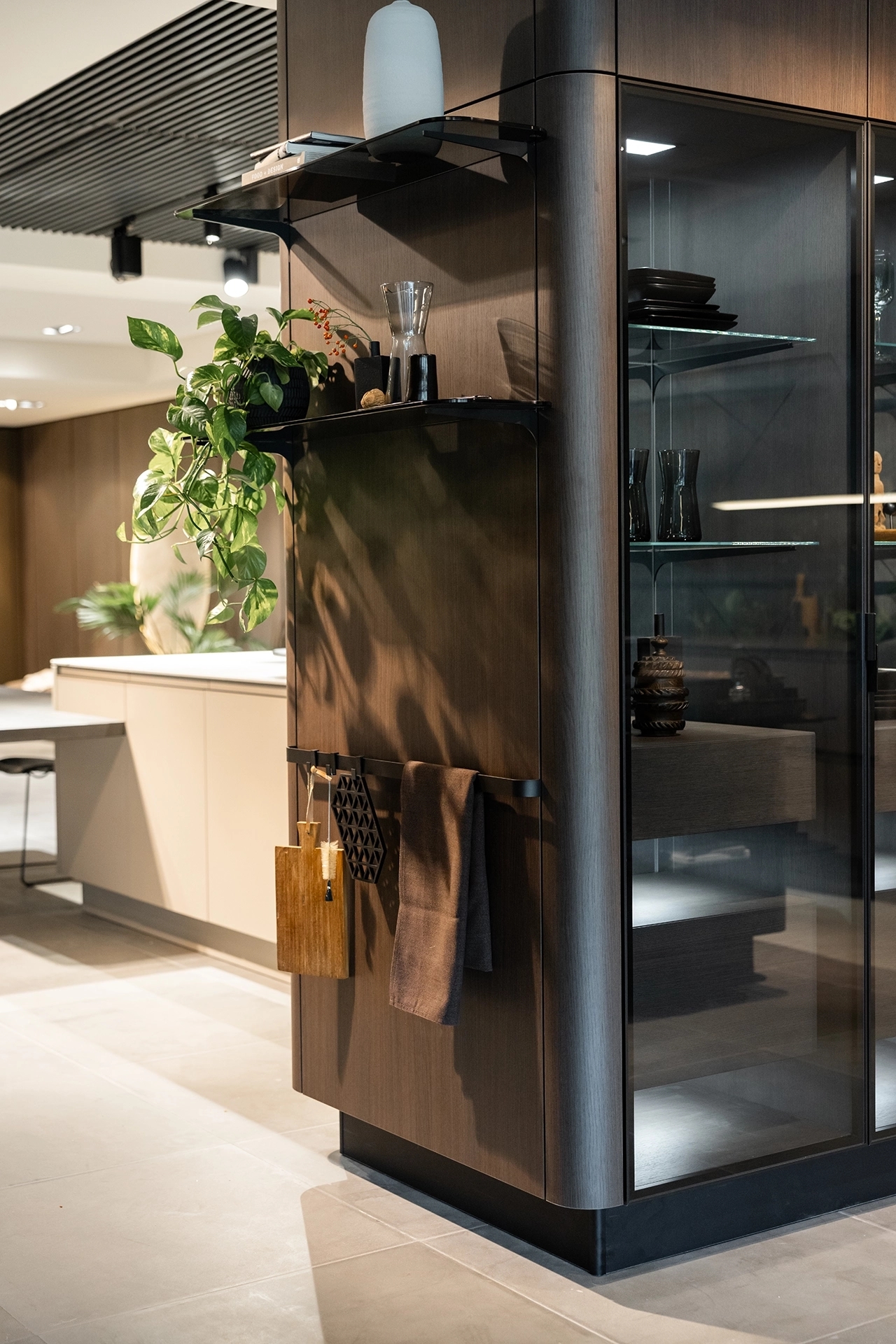
Which dark color suits your kitchen?
Matte black has a different look than anthracite or dark gray. Black is a deep, neutral color, while shades of gray can appear warmer or cooler depending on their undertones. Dark brown, on the other hand, has more warm undertones and pairs well with wood and natural stone textures. There are also differences within a single color. For example, a solid black cabinet front looks different from one with a textured finish. With dark wood-look finishes or wood veneers, the grain pattern remains visible, giving the surface more color nuances. It’s therefore a good idea to view different cabinet fronts side by side. Especially with dark colors, the texture and finish can make a big difference.
Black and wood: a striking combination
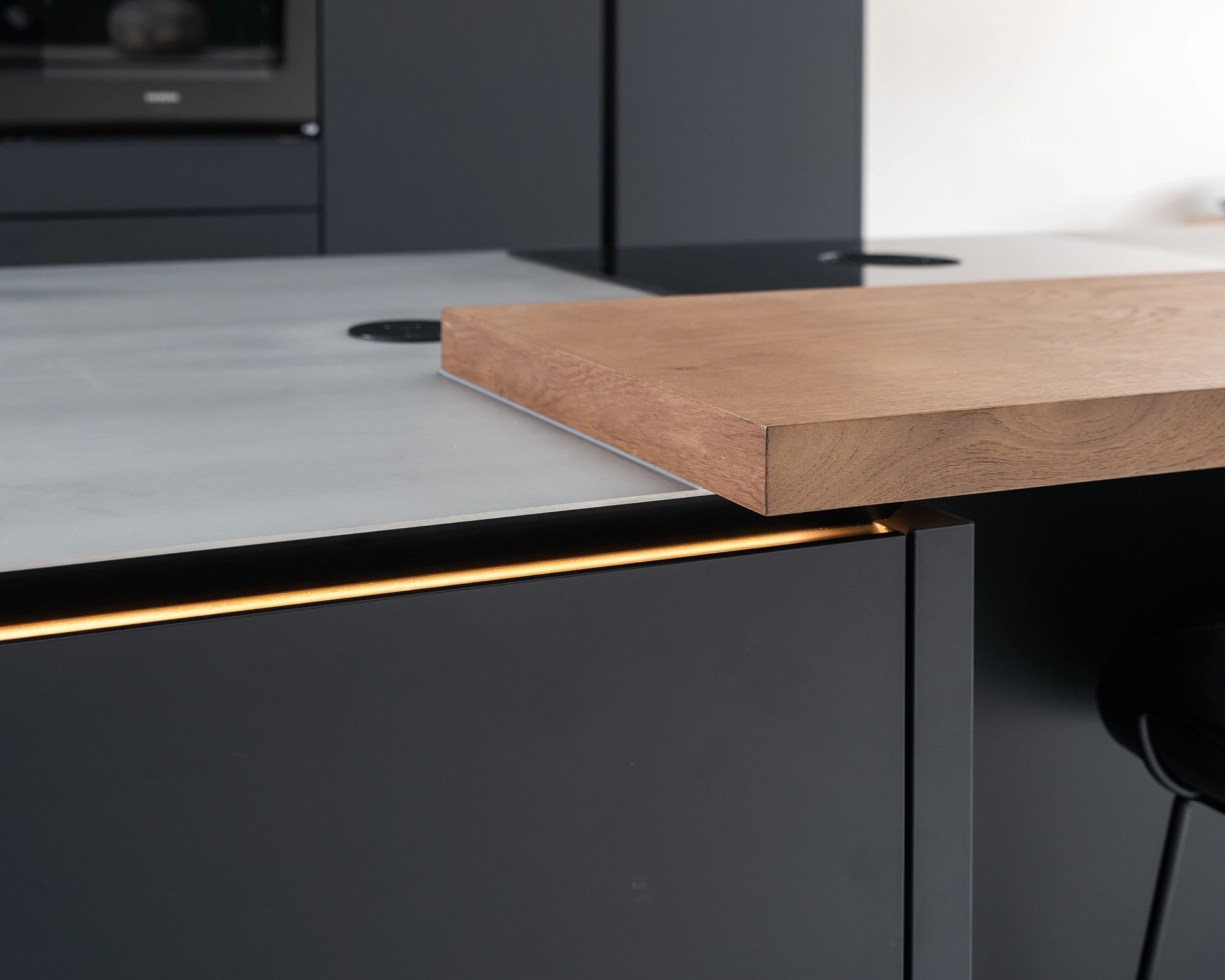
A black kitchen with wood is a great choice if you don’t want everything in the same dark color. Light oak provides a clear contrast with black cabinet fronts, while walnut or smoked oak stays closer to the dark color palette. You can incorporate wood in various places. Think of a wooden cabinet wall next to a black kitchen island, a bar countertop, or an open niche. A combination of black base cabinets and wooden wall cabinets is also possible. When choosing wood, it’s wise to also consider the floor. Especially if you have a wood floor, the different wood tones can affect the overall look.
Dark wood tones in the kitchen
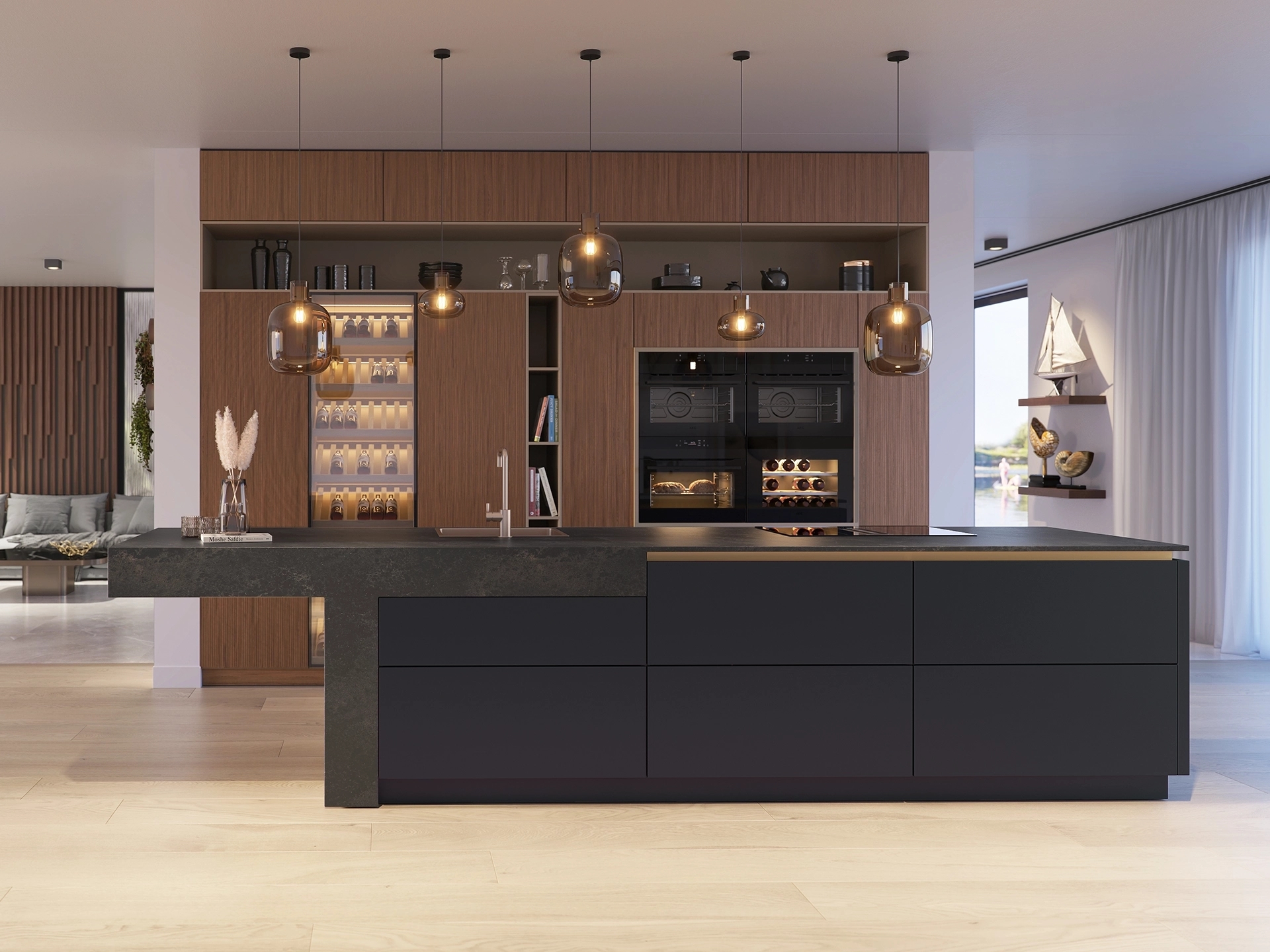
A dark kitchen doesn’t have to consist of black or gray cabinet fronts. Dark oak, smoked wood tones, and walnut also fit well within this color palette. The visible wood grain gives these cabinet fronts a different look than a solid dark color. Dark wood can be used in various ways. For example, a tall cabinet wall with continuous wood grain draws the eye, while a dark wood kitchen island can look beautiful next to a calm, solid-color cabinet wall.
The type of cabinet front also plays a role. A dark wood-look finish has a different construction than real wood veneer. With veneer, the visible top layer consists of real wood, which means the grain pattern and color nuances can vary from one front to another. A wood-look finish mimics this structure with a decorative coating.
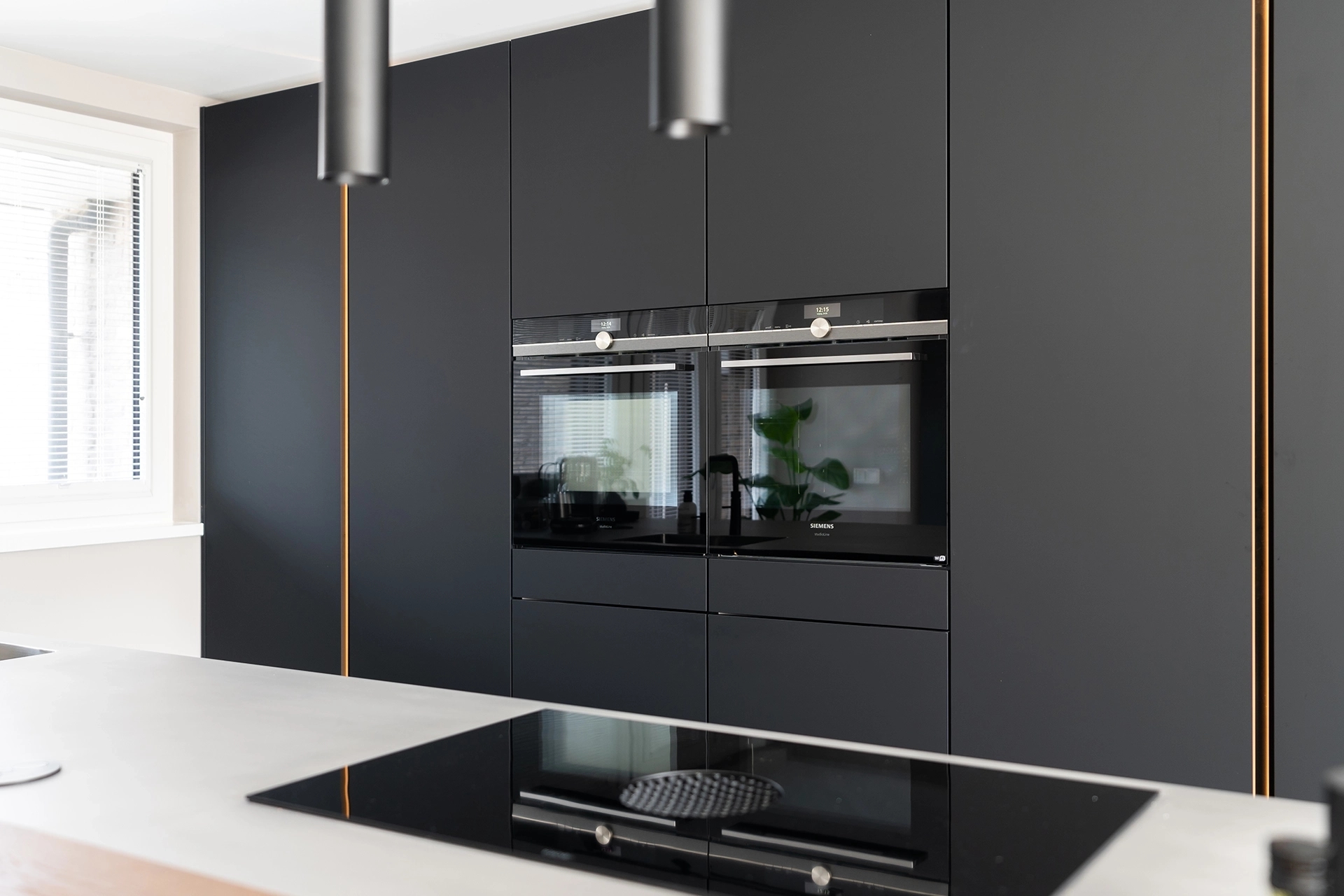
Black appliances in a dark kitchen
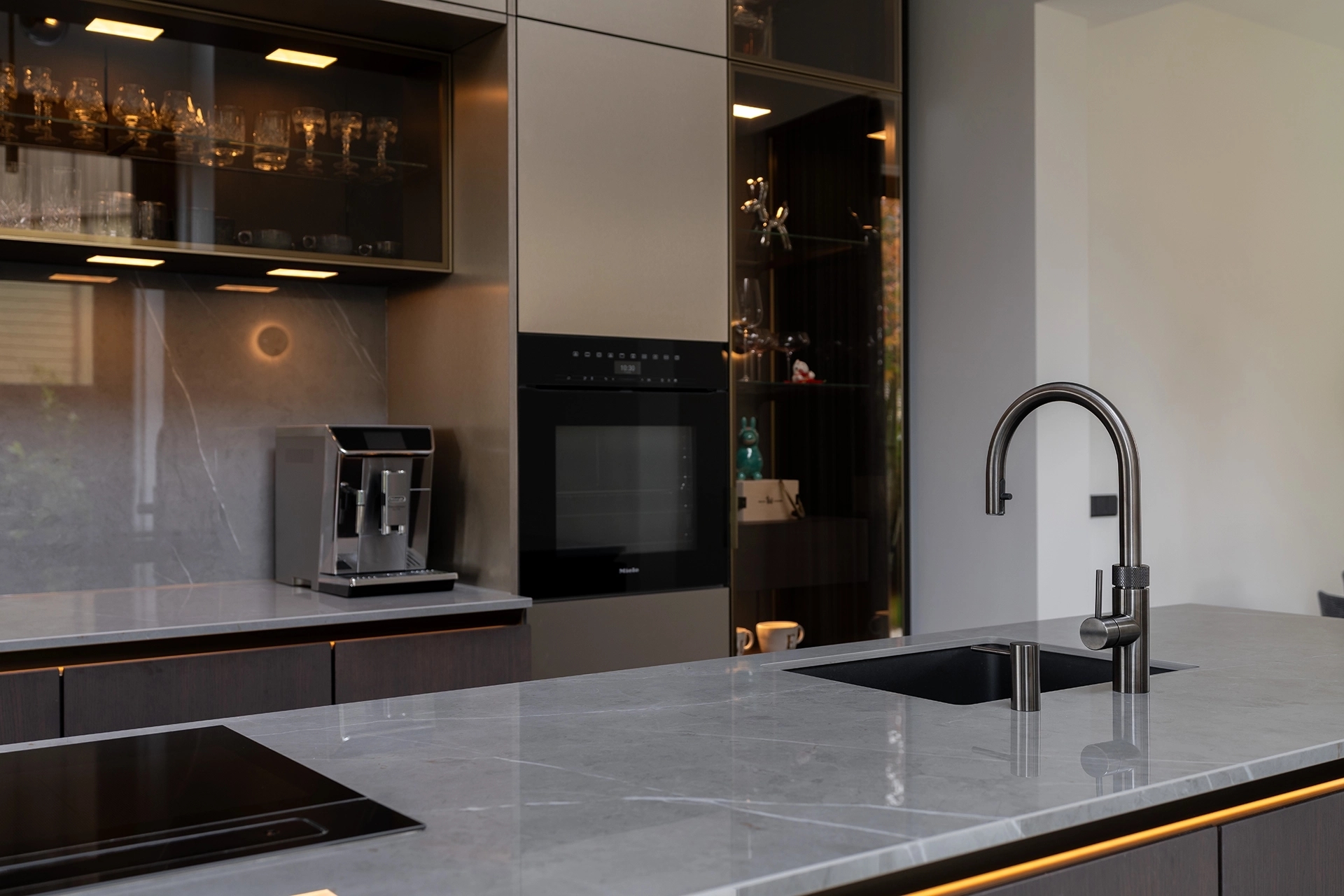
In a dark kitchen, you can match the appliances to the color of the cabinet fronts. For example, a black oven in a black cabinet wall stands out less than a stainless steel model. A black cooktop also often complements a dark countertop well. However, not all appliances need to be black. Stainless steel, on the other hand, can provide a nice contrast with dark cabinet fronts and wood. When it comes to faucets and sinks, you can also choose between dark finishes and metal finishes such as stainless steel or brass. When selecting appliances, focus primarily on their features and ease of use. Color is important for the design, but the appliance must, of course, also suit the way you cook.
Playing with light and dark
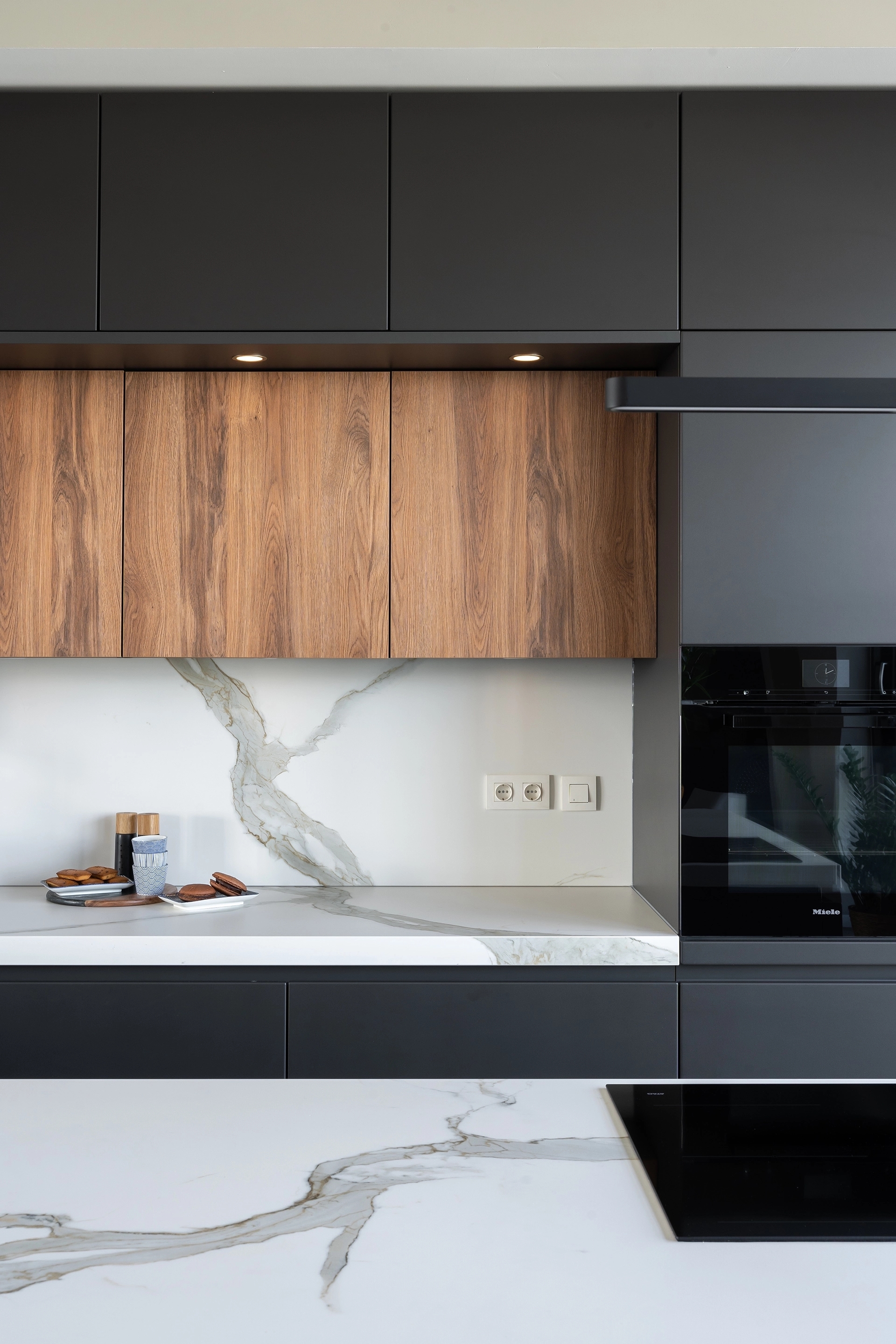
A dark kitchen can also work in a room with less natural light. However, it’s wise to carefully consider the balance between light and dark surfaces. For example, dark cabinet fronts against a light-colored wall create a different effect than a wall of entirely dark cabinets. The countertop can also make a difference. A light-colored countertop paired with black or dark brown cabinet fronts creates a clear contrast, while a dark countertop brings the colors closer together. A stone-look countertop with light veining can be a nice compromise. In addition to natural light, the lighting in the kitchen plays a role. Good task lighting is important for cooking, while lighting in a niche or under a cabinet can make dark materials more visible.
View dark kitchens at Intermat
You can best see the difference between matte black, anthracite, dark brown, and dark wood when you view the materials side by side. The combination with a countertop or floor can also make the color look different.
In our showrooms in Mijdrecht and Alphen aan den Rijn, you can view various dark kitchen cabinet fronts, wood types, and countertops. Our kitchen consultants are happy to help you choose colors and materials that suit your preferences and the space in your home.