Which tiles work well with underfloor heating?
Tiles and underfloor heating are a great combination. They conduct heat well, are easy to maintain, and complement various interior styles. But which floor tiles should you choose? From ceramic wood-look to natural stone-look: discover which tiles are suitable for underfloor heating and what to look out for.
Why are tiles suitable for underfloor heating?
Tiles generally have low thermal resistance. This allows the heat from the underfloor heating to be easily transferred through the floor into the room. That makes tiles suitable for both water-based and electric underfloor heating, provided the floor construction is designed to accommodate the heating system.
It’s not just the material that determines how well heat is conducted. The thickness of the tile, the subfloor, and the adhesive used also play a role. A suitable floor construction helps distribute heat evenly and provide comfortable warmth.
Ceramic tiles with underfloor heating
Ceramic tiles are an excellent choice for underfloor heating. They conduct heat well, are durable, and require little maintenance. Plus, they’re available in a wide variety of colors, sizes, and textures, giving you plenty of options for the look of your floor.
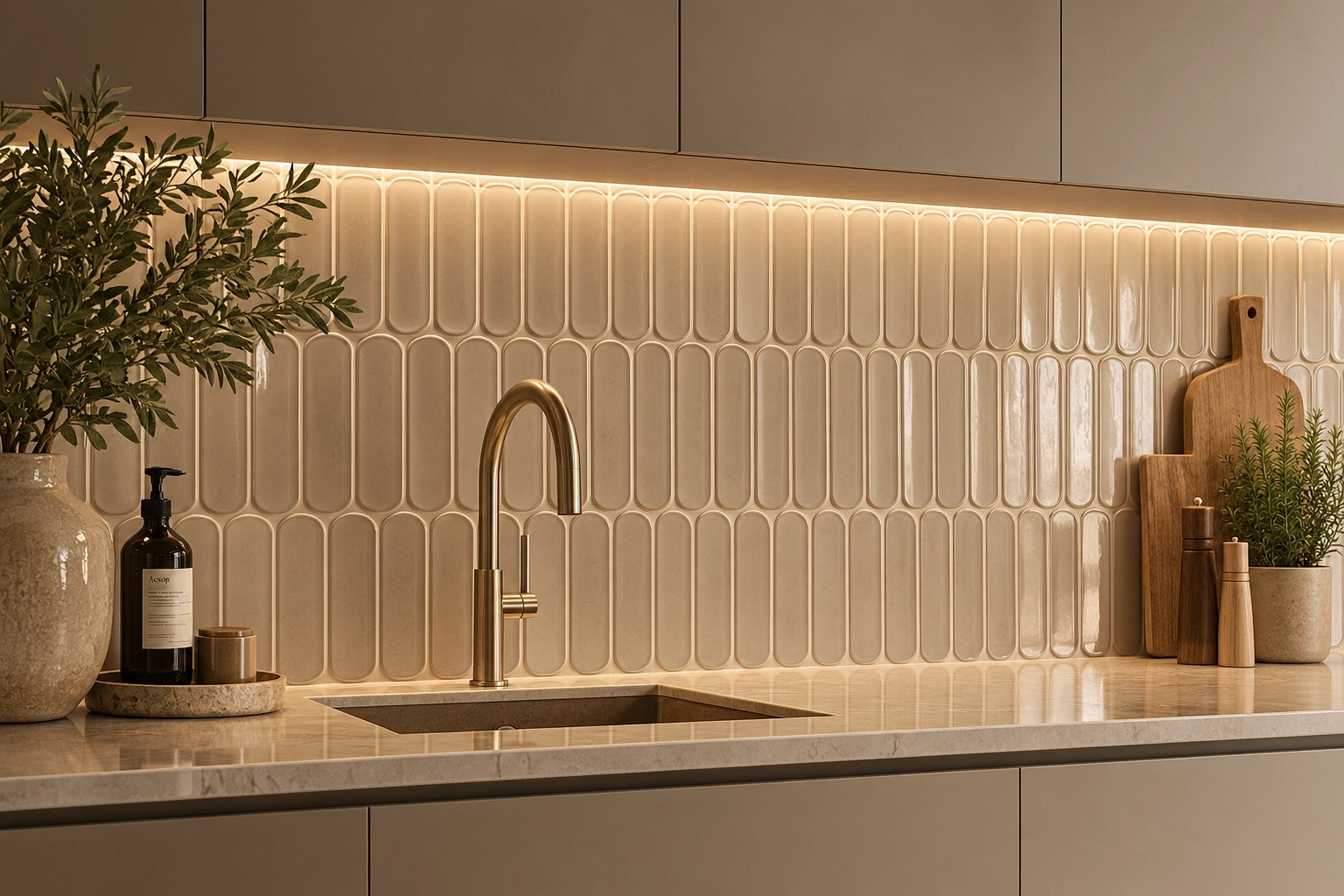
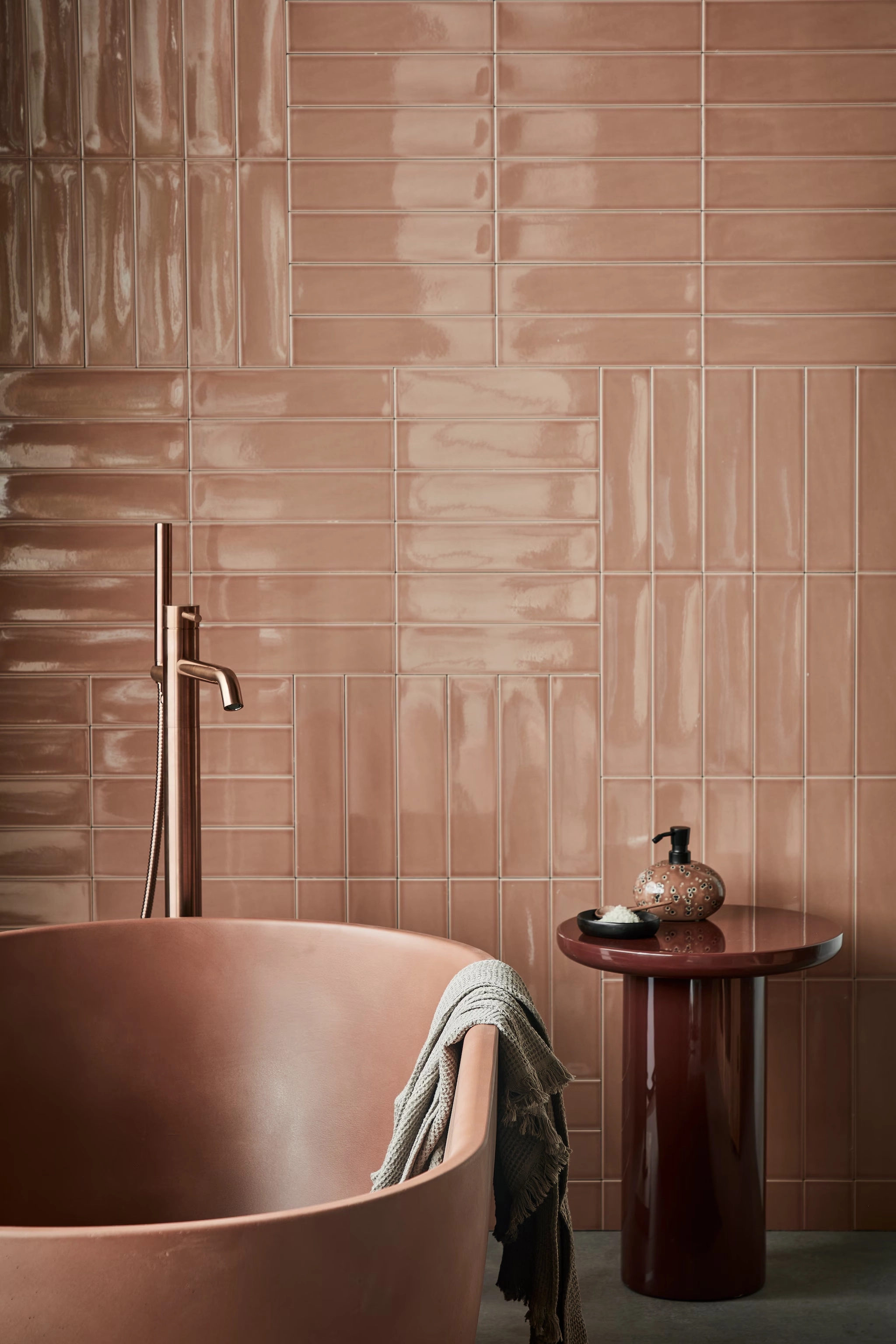
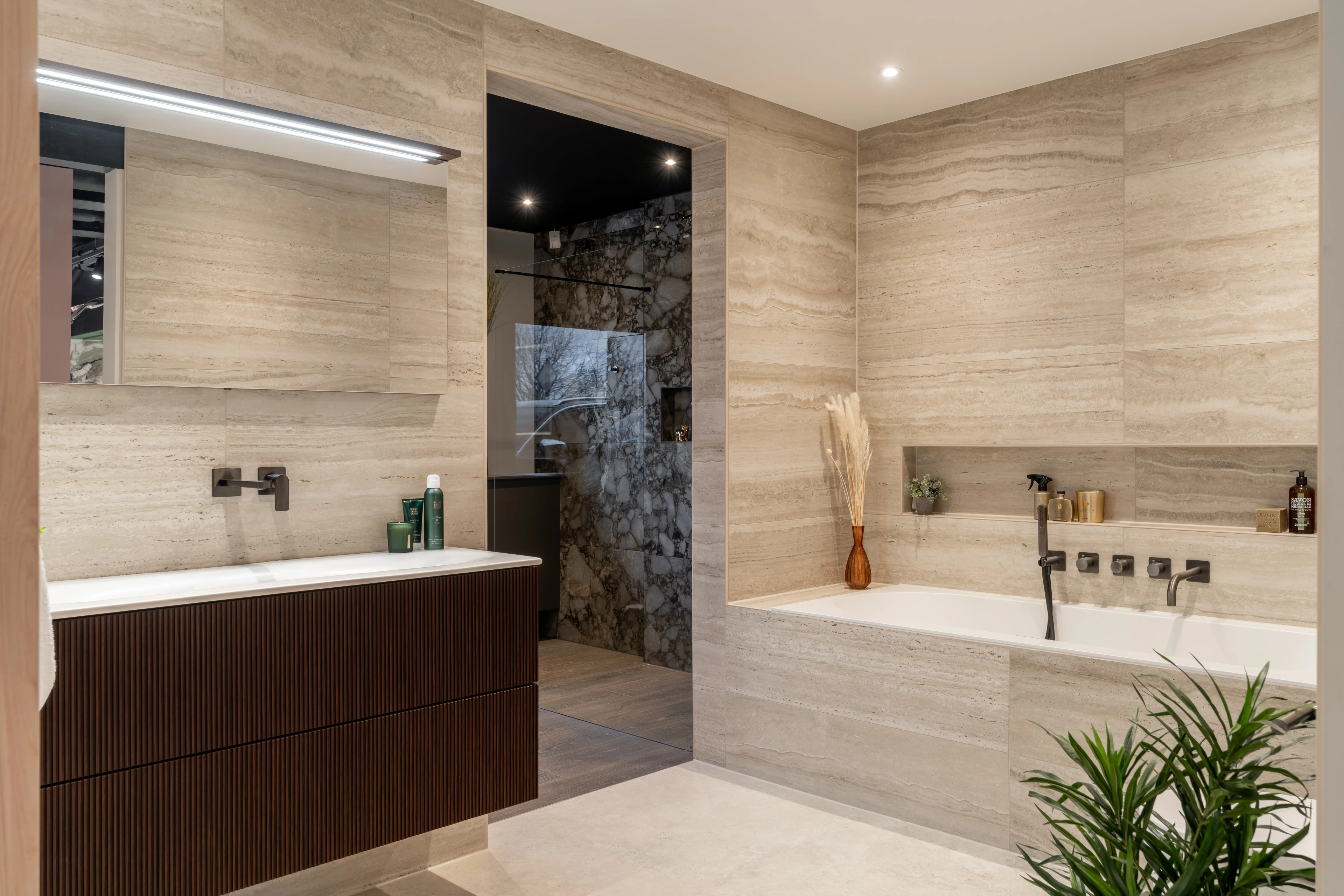
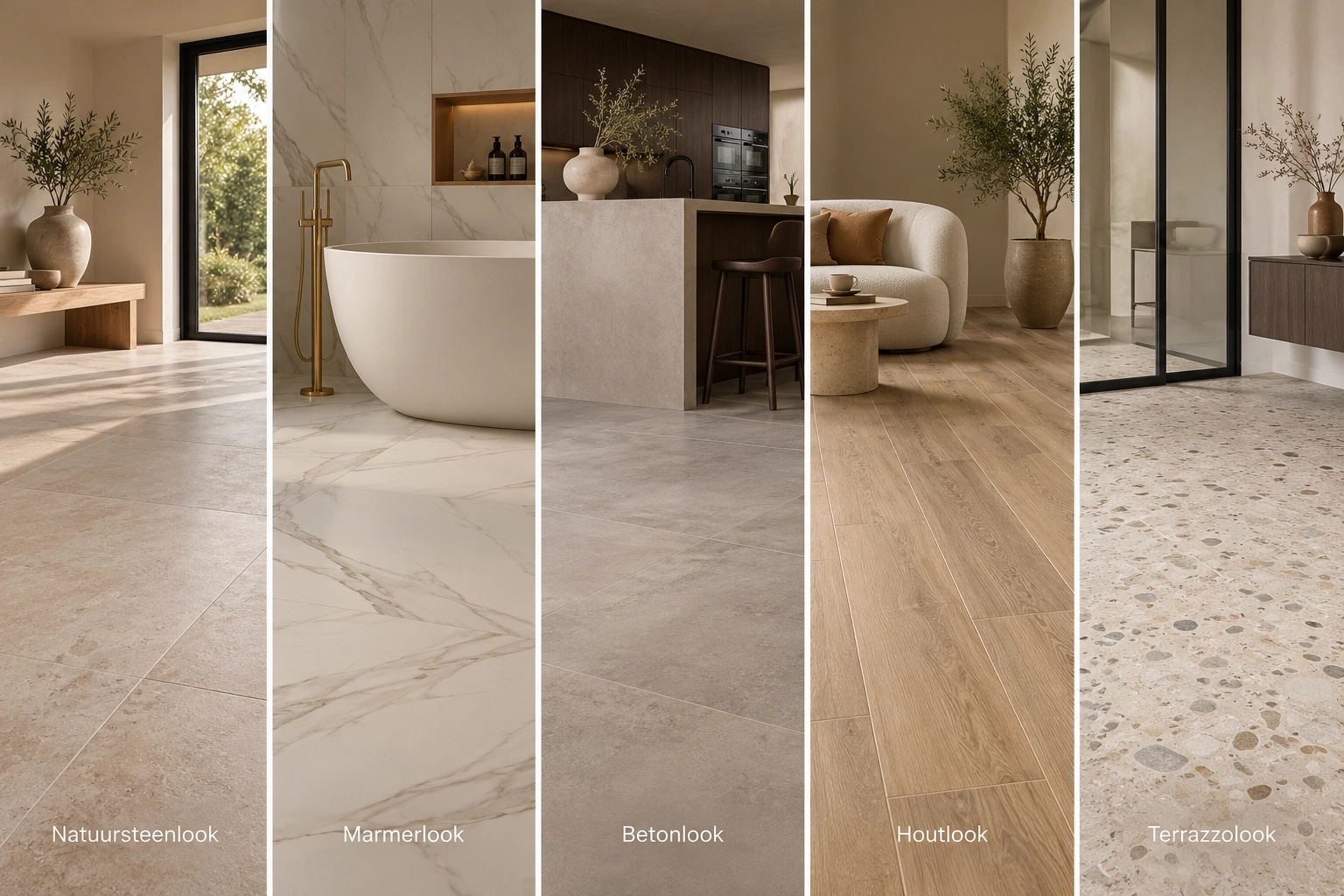
At Intermat, you’ll find a variety of ceramic tile styles. Consider concrete-look tiles for a neutral base, marble-look tiles with elegant patterns, or travertine-look tiles with warm, natural color tones. Terrazzo-look and natural stone-look tiles are also attractive options. You’ll enjoy the aesthetic appeal of these materials, combined with the practical properties of ceramic.
Combining wood-look tiles with radiant floor heating
Do you want the warm look of a wood floor, but also the convenience of tiles? Then ceramic wood-look tiles—also known as ceramic parquet—are an interesting choice. These elongated tiles feature a wood grain and are available in various shades, from light oak to dark brown.
Unlike real wood, ceramic wood-look tiles are not very sensitive to temperature changes or moisture. This makes them ideal for use with underfloor heating and suitable for spaces such as the living room, kitchen, or bathroom. With various laying patterns, such as herringbone or half-brick, you can also give your floor a unique look.
Are natural stone tiles suitable for underfloor heating?
Many types of real natural stone, such as marble, granite, and slate, can also be suitable for underfloor heating. Thermal conductivity varies by stone type and depends, among other things, on the thickness and the floor construction. Natural stone also often requires more maintenance, and some types are sensitive to stains or acidic cleaning products.
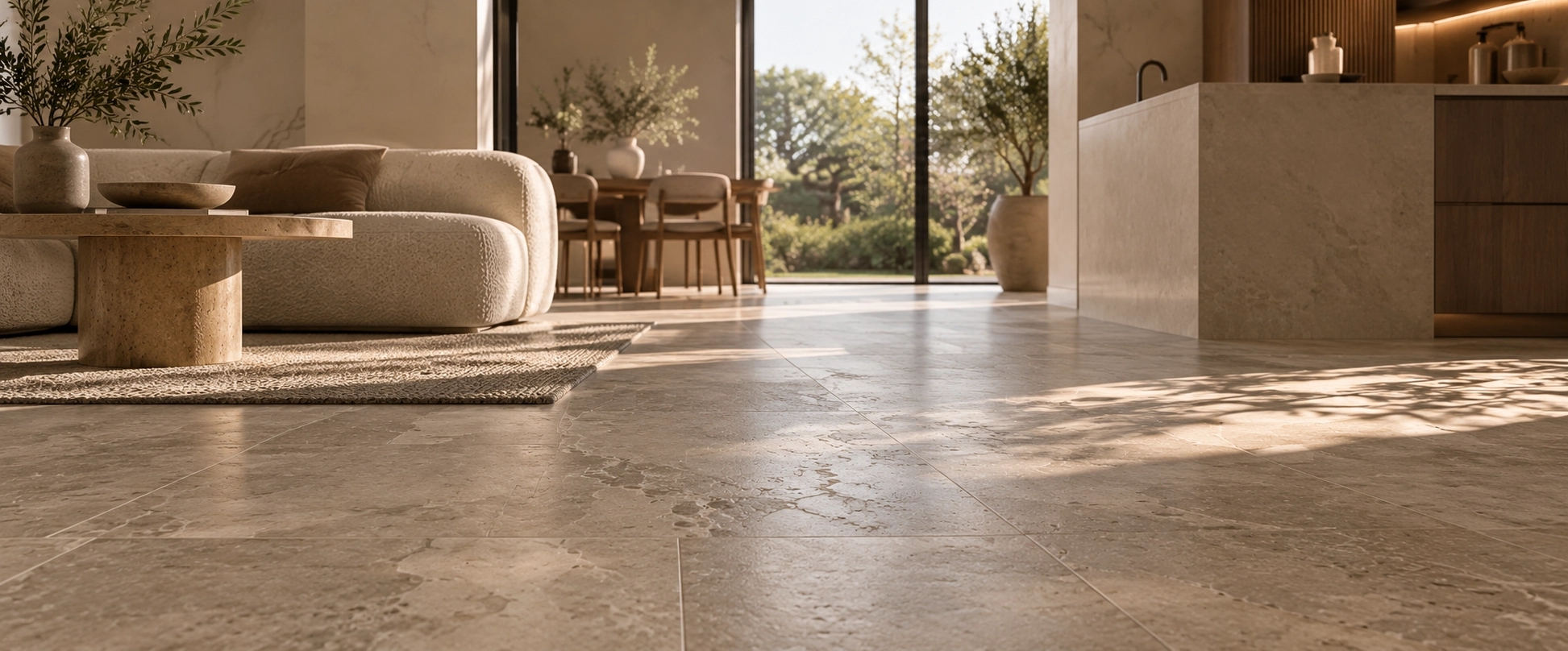
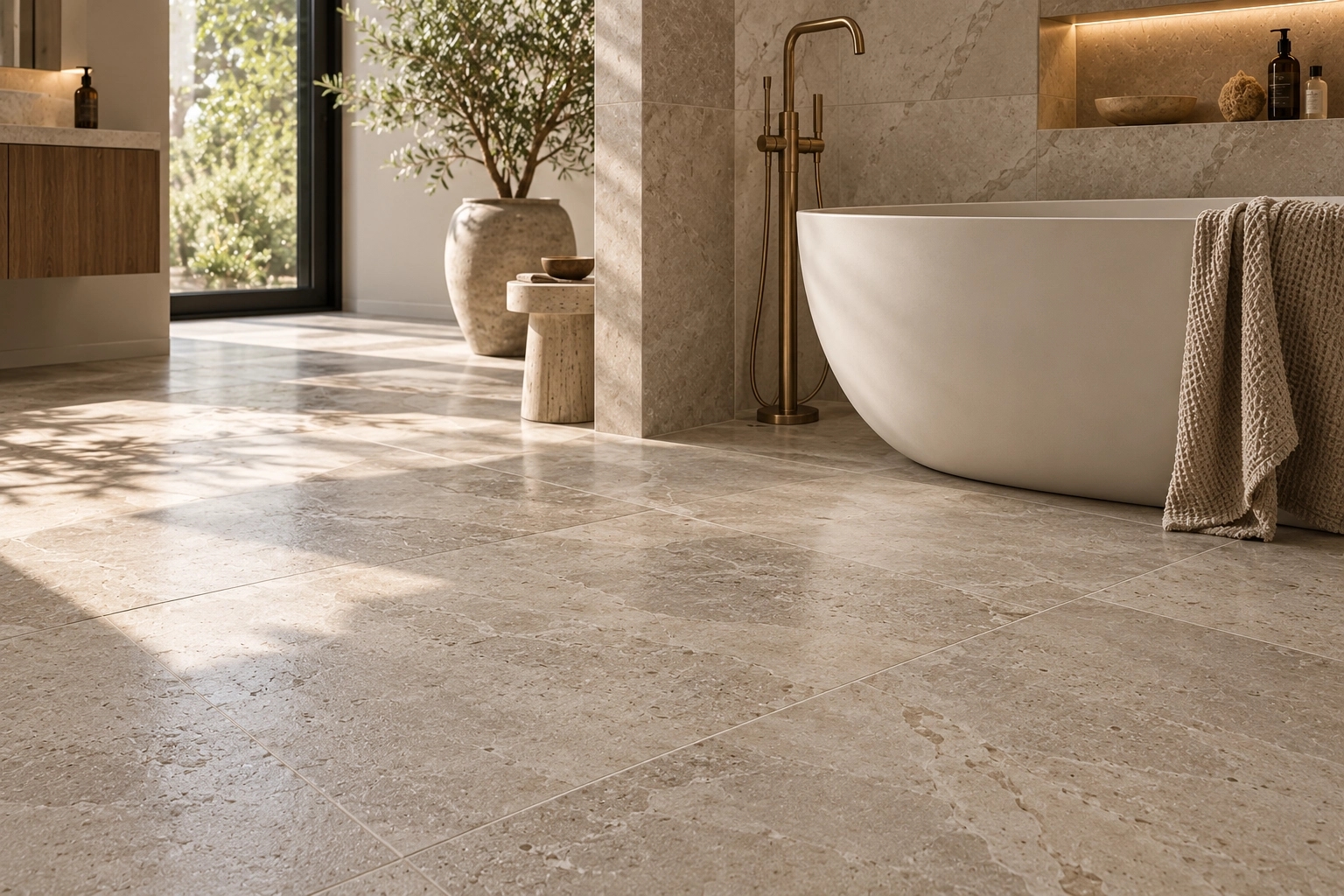
Do you want the look of natural stone without the extra maintenance? Then ceramic tiles with a natural stone look are a good alternative. They mimic the colors and textures of natural stone but are generally less susceptible to moisture and stains.
How do tile thickness and size affect heat transfer?
The thickness of a tile affects heat transfer. A thicker tile may take longer to reach the desired temperature, but the floor’s overall thermal resistance is more important than tile thickness alone. The subfloor and any intermediate layers also play a role.
Both small and large floor tiles can be used with underfloor heating. Large-format tiles create a calm, uncluttered look because fewer grout lines are visible. However, they require a sufficiently level subfloor and a suitable installation method. You must also take into account how the floor will expand and contract due to temperature changes.
What should you keep in mind when laying tiles?
Proper preparation is essential to prevent cracks and tiles from coming loose. With underfloor heating, the subfloor, tile adhesive, and grout must be suitable for a heated floor. Additionally, the tiler must account for existing expansion joints and allow sufficient space for the floor to expand and contract.
When installing a new screed with underfloor heating, the heating-up protocol is also an important consideration. This involves heating and cooling the floor according to a prescribed schedule. The specific steps required depend on the screed and the heating system. Therefore, coordinate the preparation and installation with the installer and tiler.
Discover Intermat’s floor tiles
From a warm wood look to a sleek concrete look and a characterful natural stone look: at Intermat, you’ll find ceramic floor tiles in various styles and sizes. Our advisors are happy to help you compare the options and choose tiles that complement your interior and underfloor heating. Would you like to see the colors and textures in person? Visit one of our showrooms and make an appointment.