Large or small bathroom tiles? Here are the differences
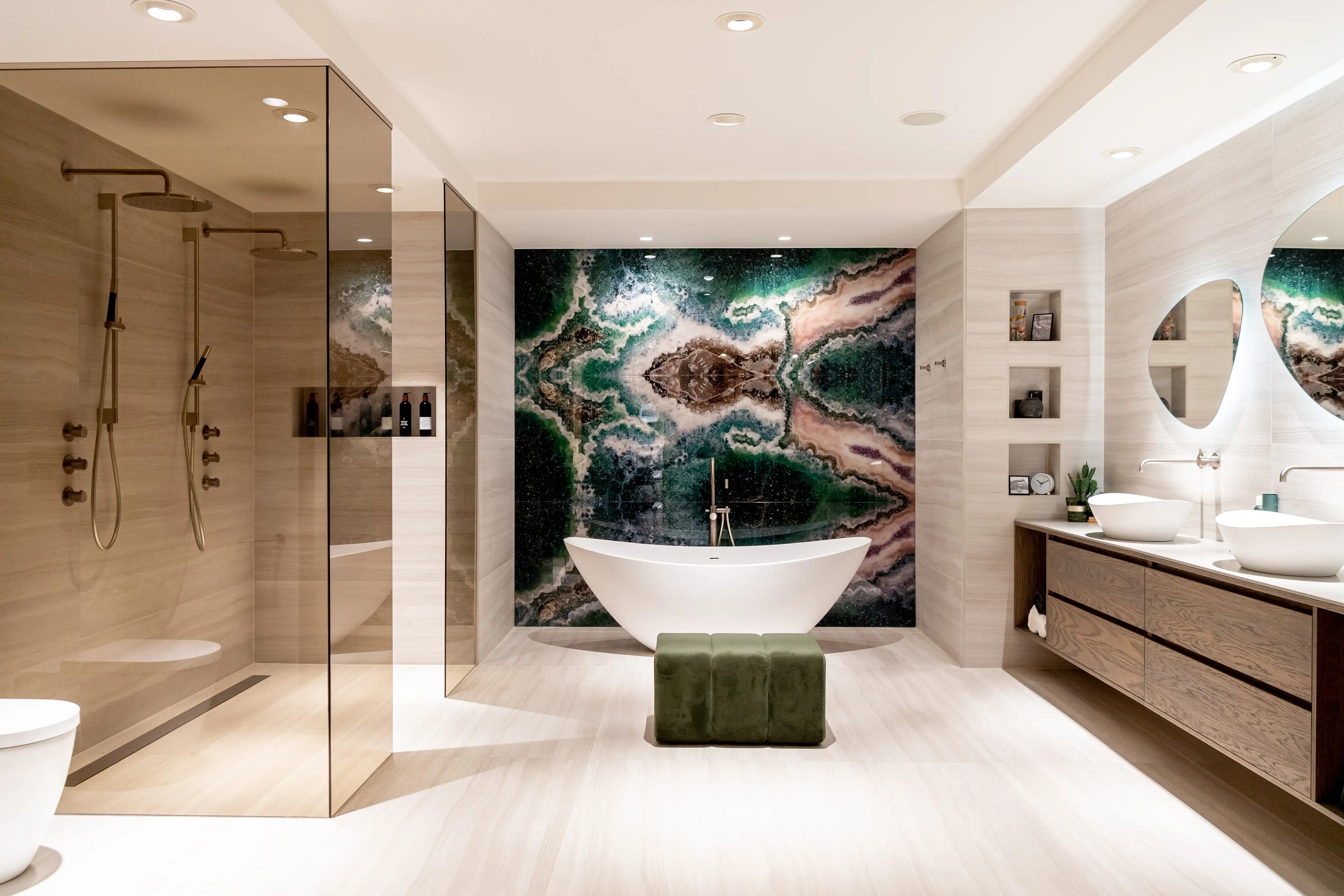
Are you going with large tiles or small ones in the bathroom? The size has a big impact on the room’s look and feel. Large bathroom tiles often create a calm and spacious effect, while smaller tiles add character and playful details. But what’s the best choice for your bathroom? We’ve listed the differences, advantages, and things to consider for you.
Large bathroom tiles for a calm look
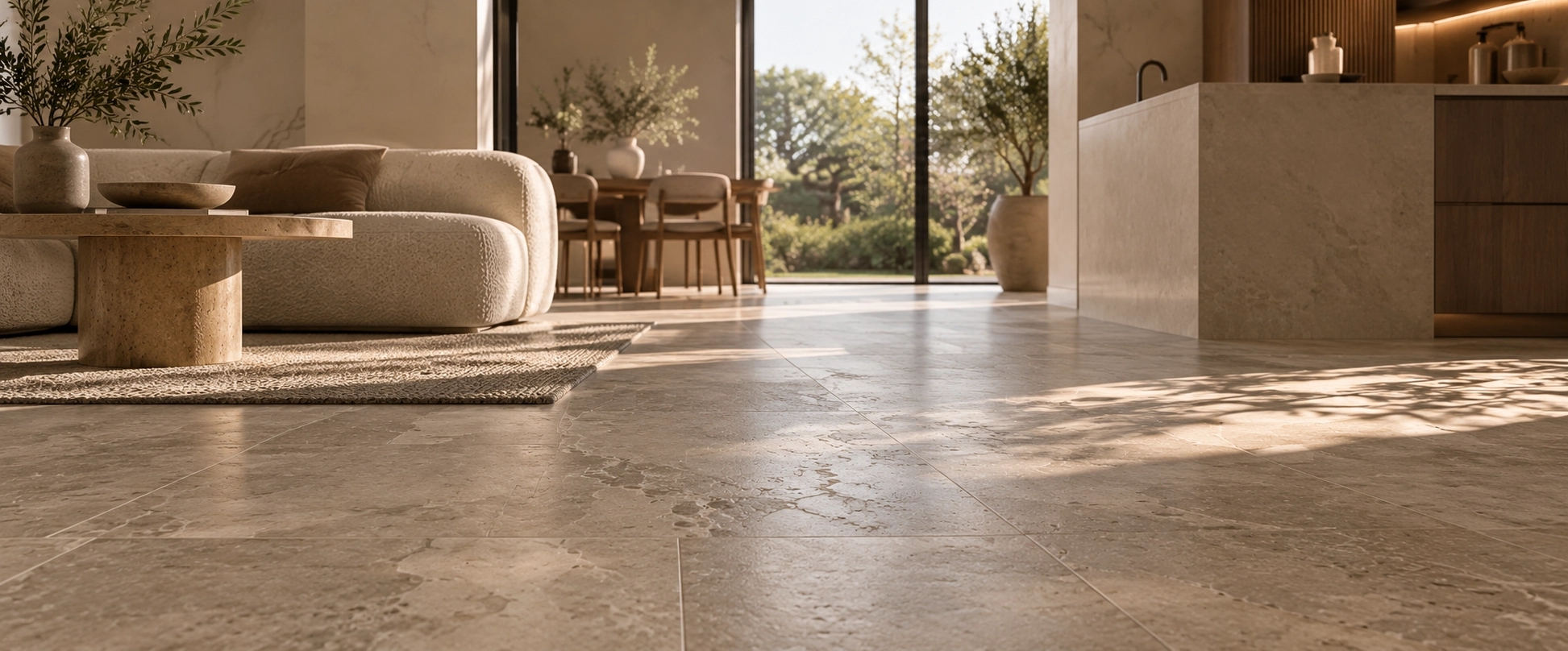
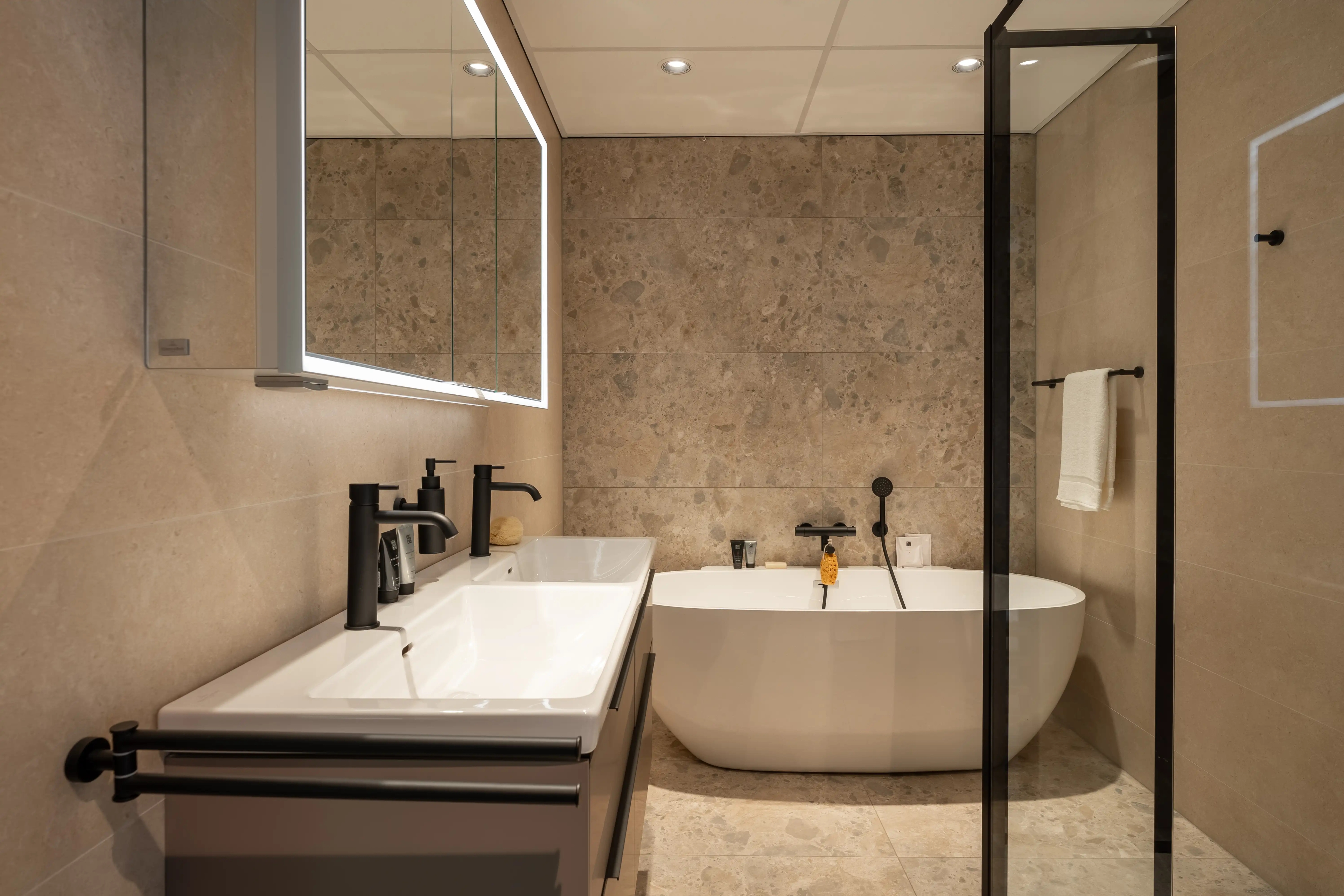
Large bathroom tiles are popular because of their calm and modern look. Think of sizes like 60 x 60 cm, 60 x 120 cm, or even 120 x 120 cm. Because large tiles have fewer grout lines, the floor and walls appear as a single, seamless surface. This can make a bathroom look larger, even if you don’t have a lot of square meters. In addition, large tiles are often easier to keep clean. Fewer grout lines mean fewer places where dirt, soap scum, and limescale can accumulate. However, it’s important to take the room’s dimensions into account. If there are many corners and small surfaces, large tiles may require more cutting. The subfloor must also be sufficiently level.
Small bathroom tiles for more character
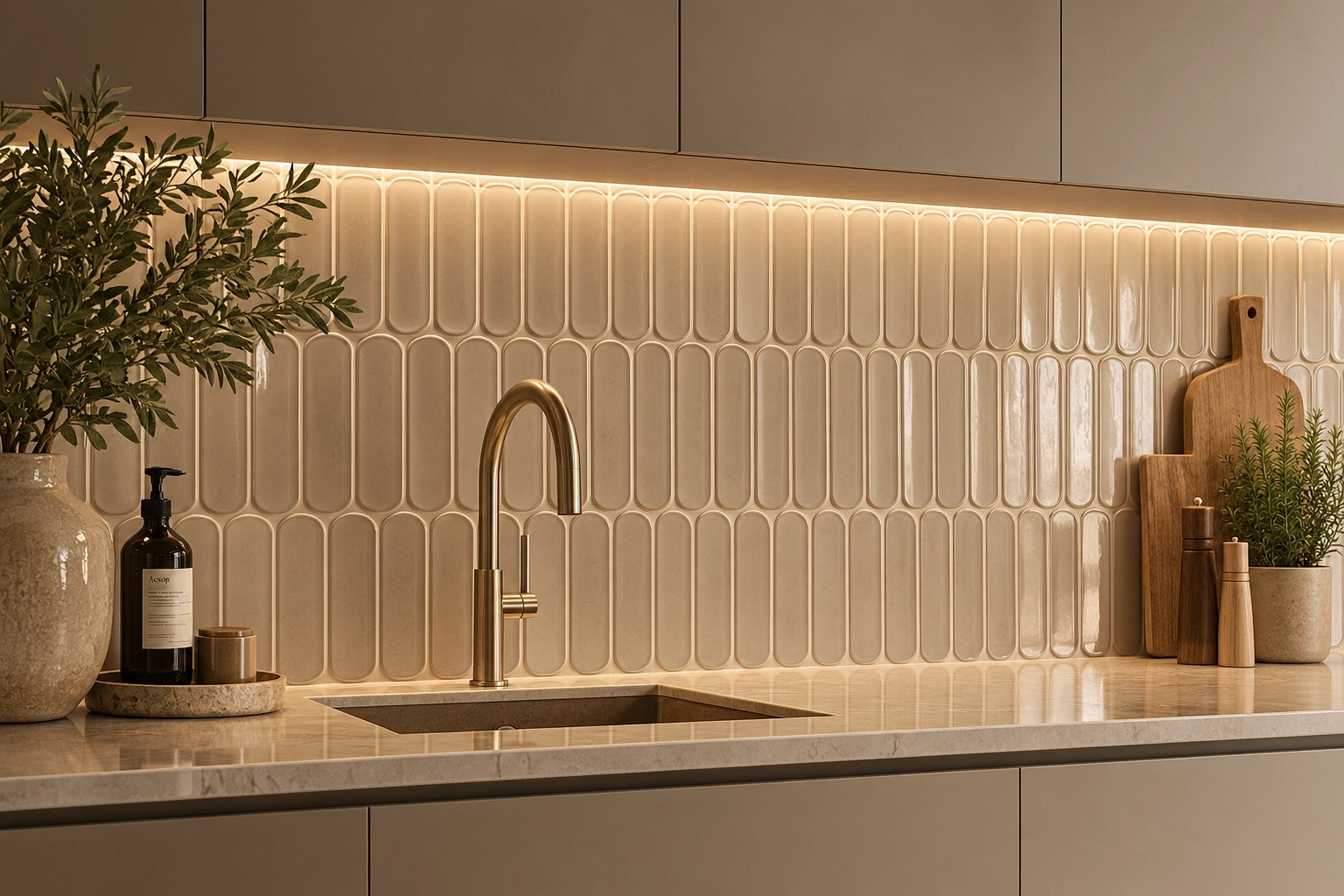
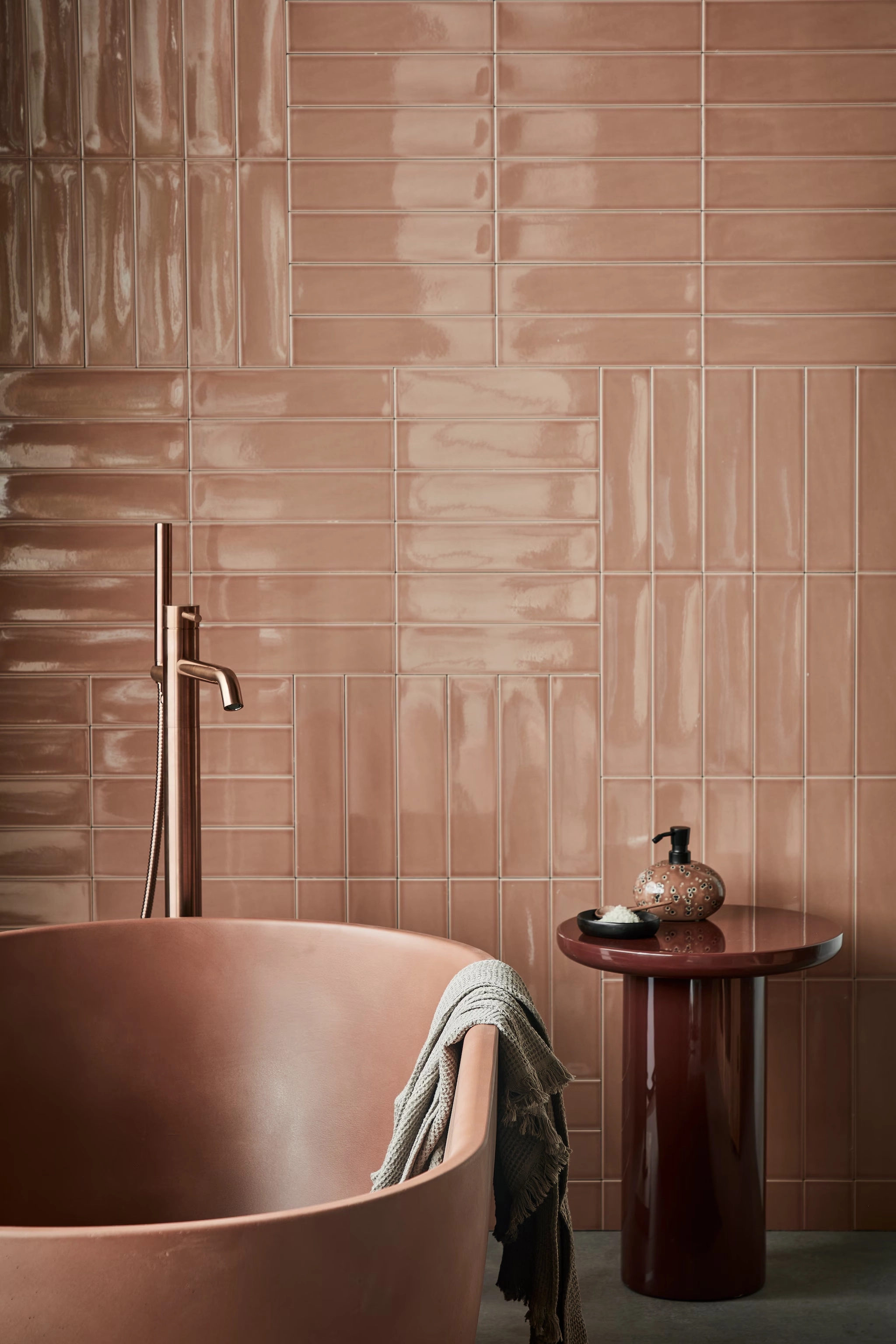
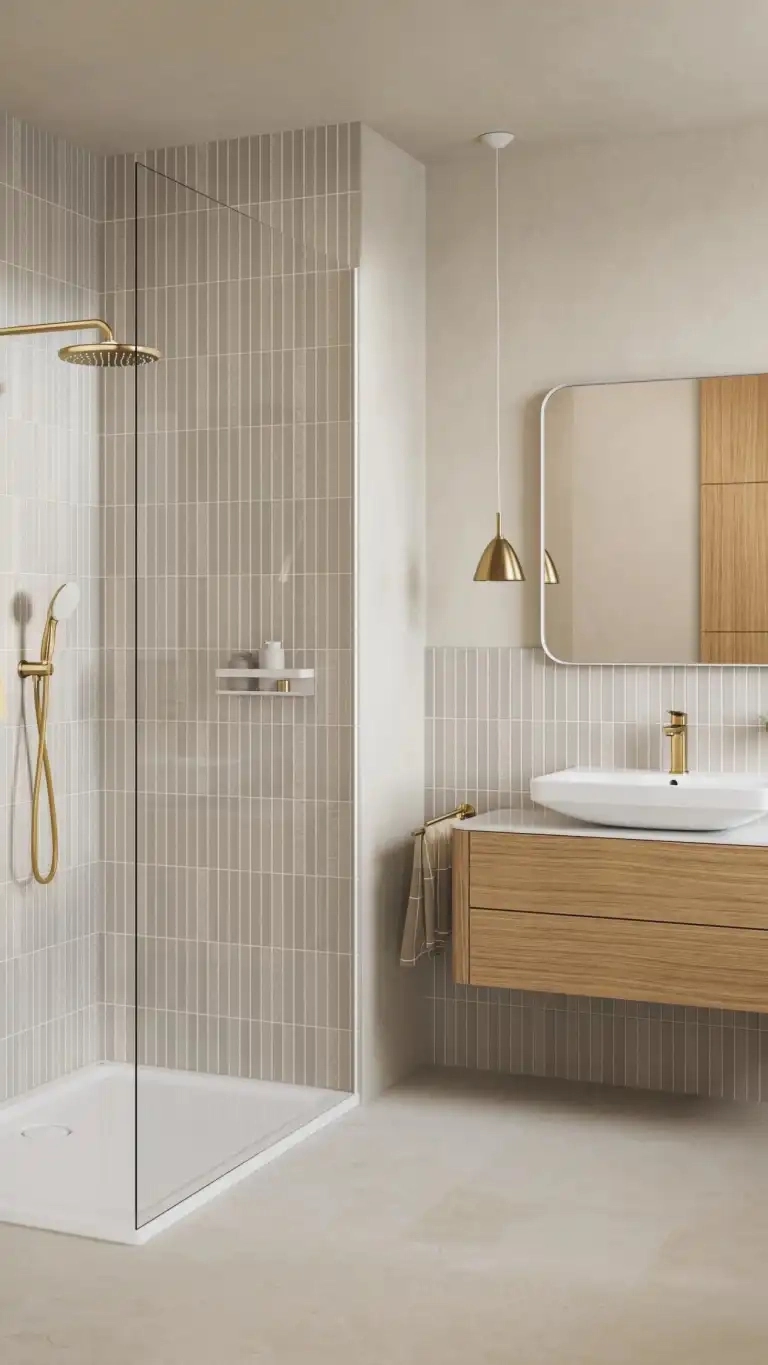
Small tiles are ideal when you want to add a bit more texture or a playful accent to the bathroom. Think, for example, of mosaic tiles, elongated wall tiles, or hand-molded tiles with a slightly irregular surface. You can have small tiles installed in various ways. A herringbone pattern, for example, creates a completely different look than tiles laid straight or vertically one below the other. Smaller floor tiles can also be practical in the shower. Because of their smaller size, they can more easily follow the slope toward the drain on certain shower floors. Keep in mind, however, that small tiles have more grout lines, which generally require a bit more attention when cleaning.
Which tiles make a small bathroom look bigger?
Many people think you automatically have to use small tiles in a small bathroom. However, that’s not necessary. In fact, large tiles can make a compact space look more serene because fewer grout lines are visible. Color also plays a role. Light shades such as beige, sand, and warm white create an open feel, but dark tiles can also work beautifully, especially when combined with sufficient lighting. Another tip is to use the same tile on both the floor and walls. This minimizes visual breaks between surfaces and makes the bathroom feel more like a single, cohesive space.
Combining large and small tiles
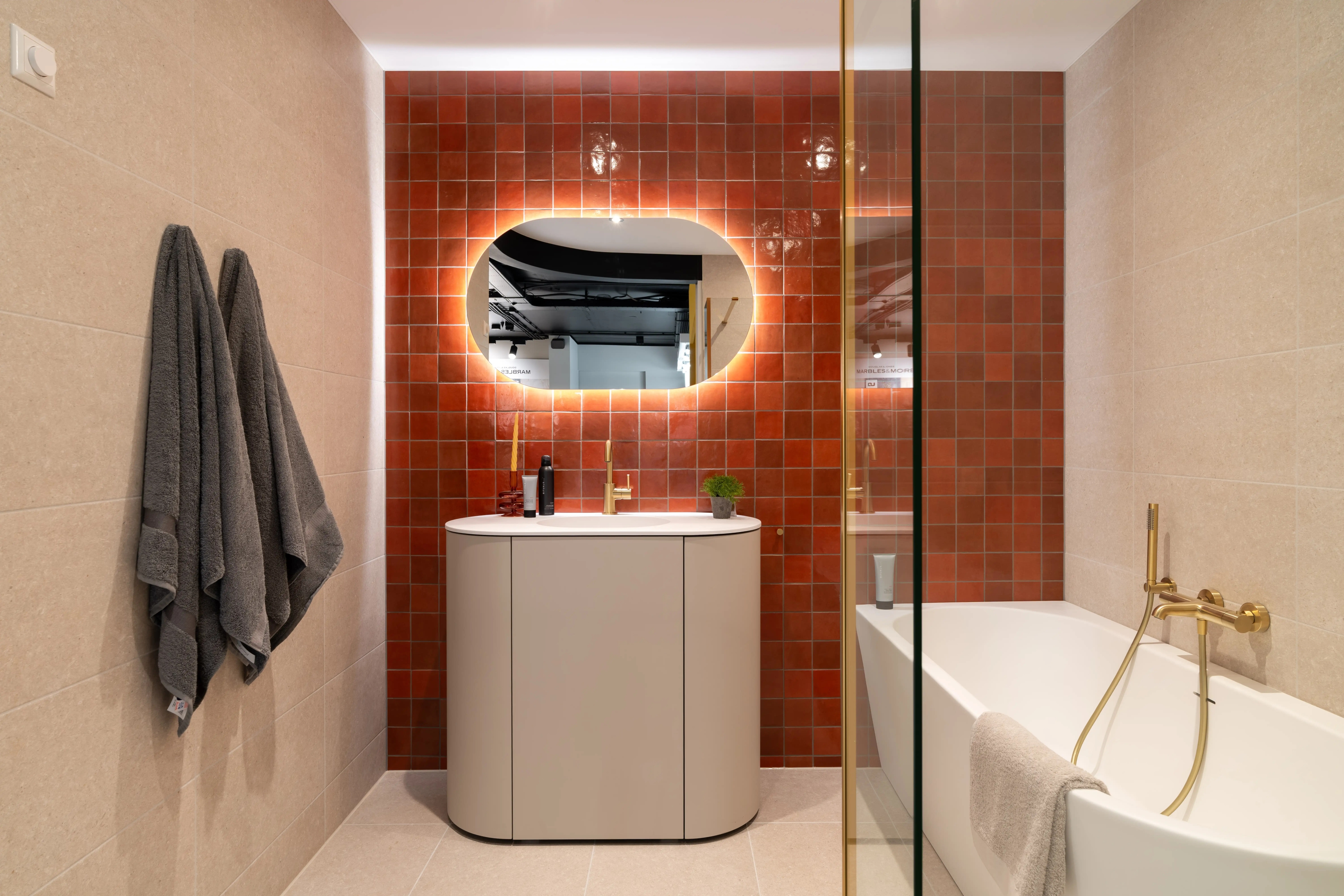
Of course, you don’t have to stick to just one tile size. In fact, combining large and small tiles can give a bathroom extra character. For example, use large tiles as a calm base on the floor and walls, and choose smaller tiles as an accent behind the vanity or in a shower niche. You can also experiment with different laying patterns. Consider vertical, elongated tiles that emphasize the room’s height, or a herringbone pattern that draws extra attention to a wall. Be sure to limit the number of different colors and materials, though, so the overall look remains calm.
Don’t forget the grout color
Not only the tile size but also the grout color determines the look of your bathroom. If you choose a grout color that’s close to the tile color, the individual tiles will stand out less, creating a calm overall look. A contrasting grout, on the other hand, emphasizes the tile size and layout. This can make a big difference, especially with small tiles. For example, dark grout with light-colored tiles creates a very different effect than grout in the same color. So be sure to consider the grout color when you’re selecting your tiles.
Discover your favorite bathroom tiles at Intermat
Can’t decide between large or small bathroom tiles? At Intermat, you’ll discover a variety of sizes, colors, and textures. Our advisors are happy to help you find a combination that suits your bathroom and personal taste. In our showrooms, you can examine the tiles up close and compare different materials.