
Japandi bathroom with wood and warm minimalism
Japandi combines Japanese simplicity with Scandinavian warmth. Natural materials, soft colors, and simple shapes create a bathroom that looks minimalist but feels warm and inviting at the same time.
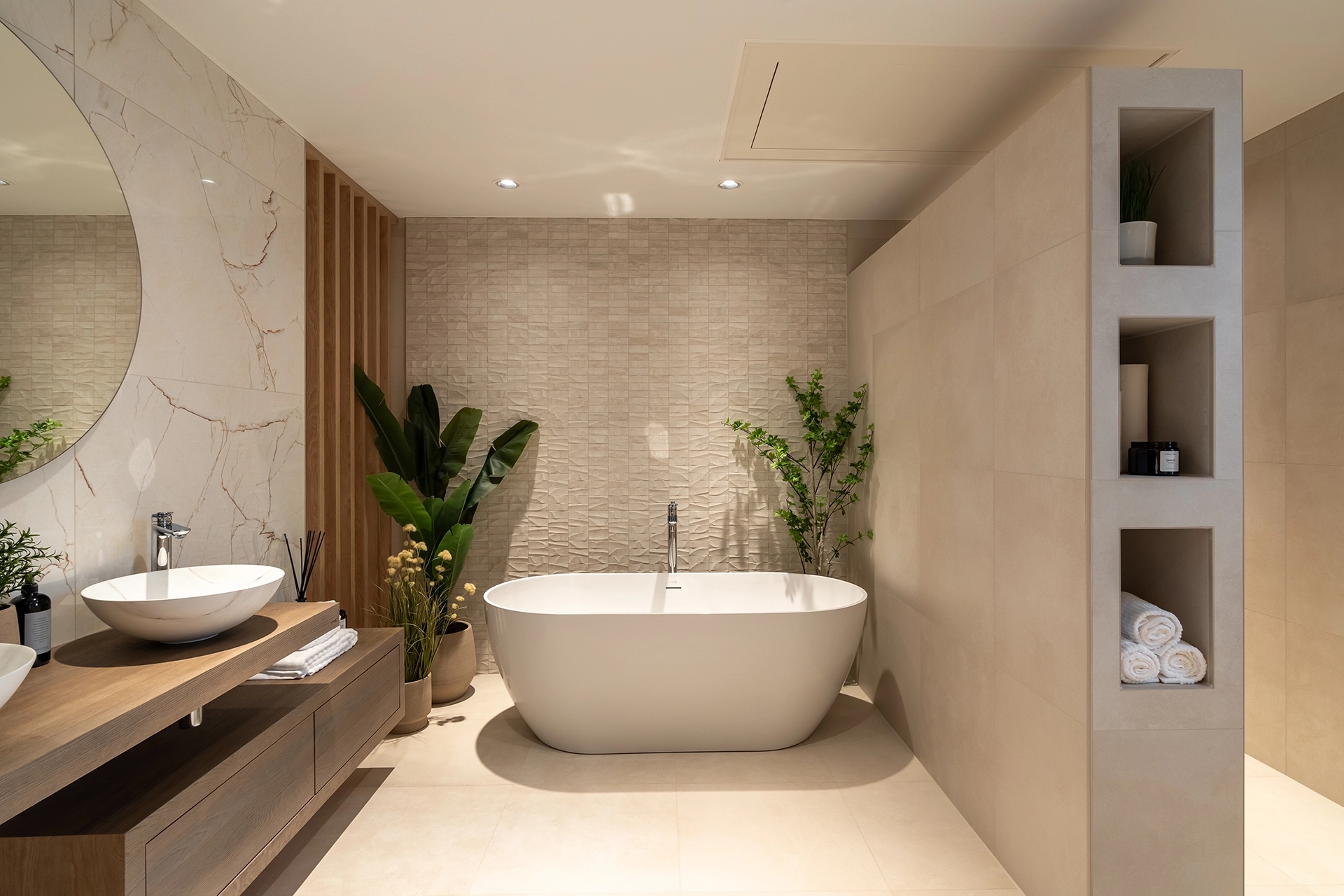
The Essentials of a Japandi Bathroom
A Japandi bathroom combines the simplicity of Japanese design with the warmth and functionality of Scandinavian interiors. Wood, stone, and ceramic form a natural foundation, typically in muted tones such as beige, sand, and greige. Straight lines in the furniture are often balanced with round sinks, organic-shaped mirrors, or a freestanding tub. By limiting the number of materials and colors, the design remains clean without making the bathroom feel cold or austere.
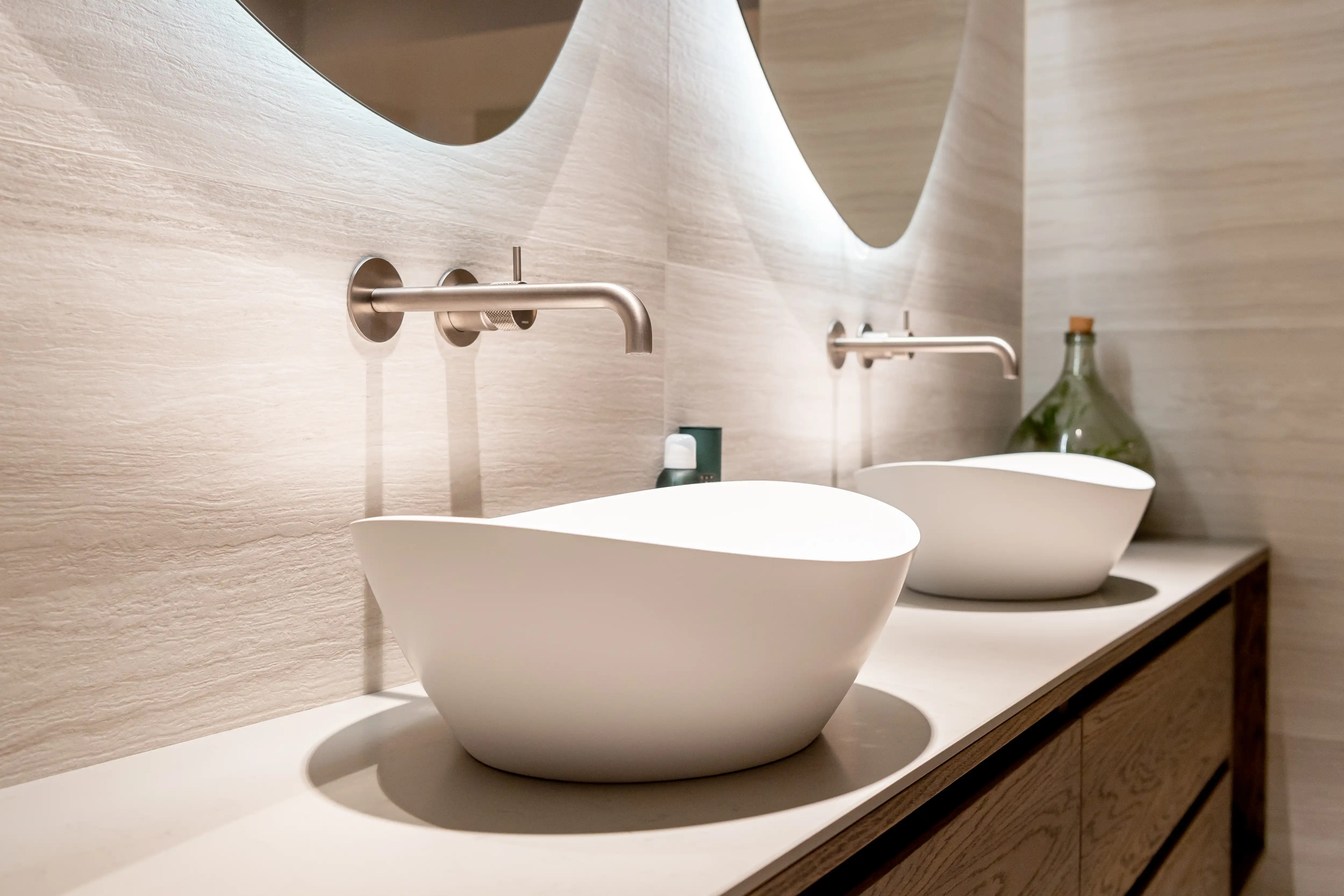
Characteristics of a Japandi Bathroom
Japandi is a fusion of Japanese and Scandinavian design principles. Scandinavian design places a strong emphasis on functionality, light woods, and a simple foundation. On the Japanese side, natural materials, minimalism, and the wabi-sabi philosophy play a role, where irregularities and natural material textures are also embraced. Characteristic features of a Japandi bathroom include:
- Natural materials: wood, stone, ceramics, and chalky textures with a calm, matte finish.
- Muted colors: beige, sand, taupe, greige, and warm white often form the base, possibly complemented by soft terracotta or muted green.
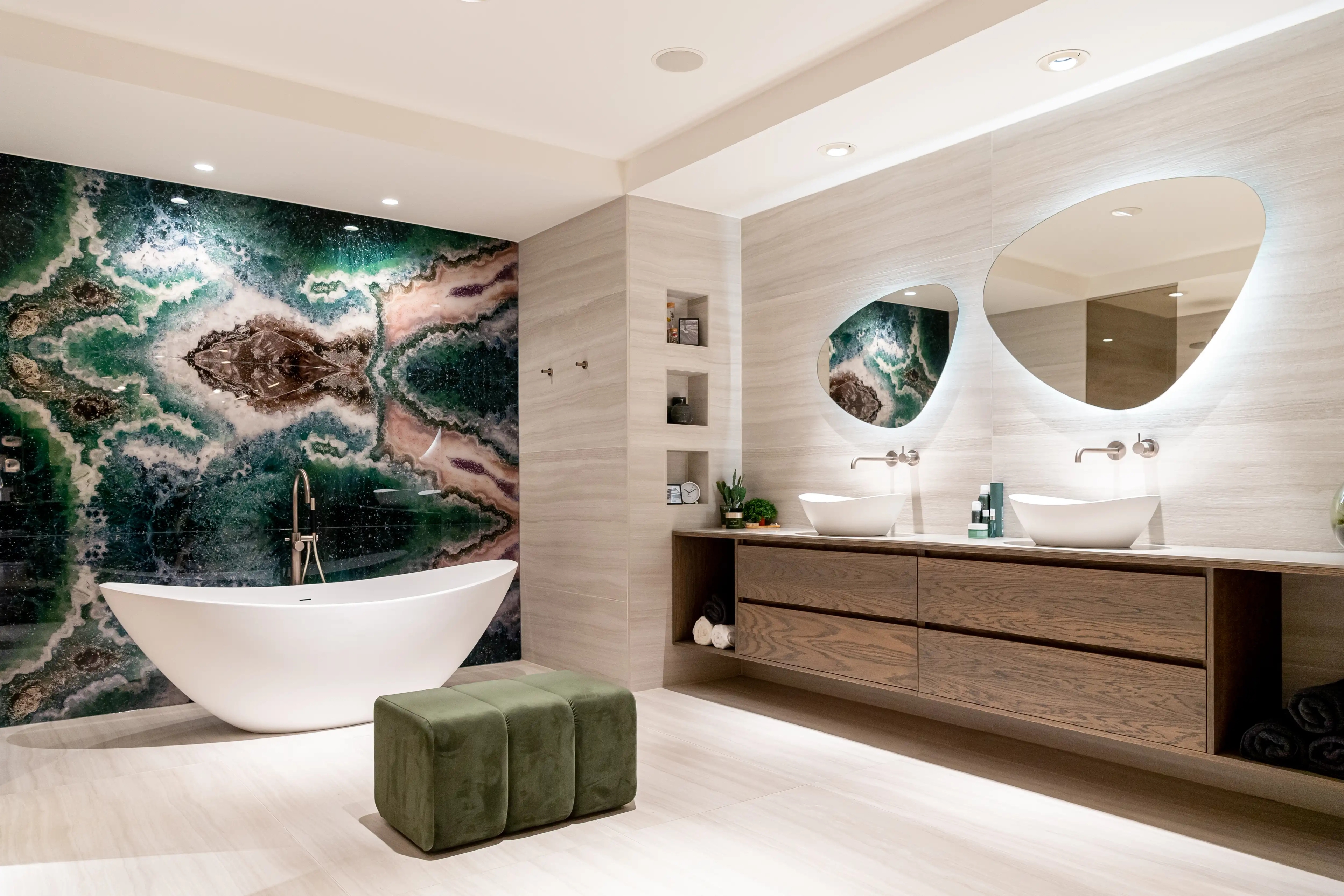
- Clean and soft shapes: straight lines in furniture are combined with round sinks, organic mirrors, or a freestanding bathtub with gentle curves.
- A tidy aesthetic: smart storage keeps bottles and toiletries out of sight as much as possible and helps maintain a sense of calm in the space.
Colors for a Japandi Bathroom
For a Japandi bathroom, a limited color palette usually works best. Choose one light base shade for the floor and walls and combine it with a wood tone and, if desired, a dark accent. By repeating colors in tiles, furniture, and accessories, the overall look remains balanced and the natural materials are given plenty of room to shine.
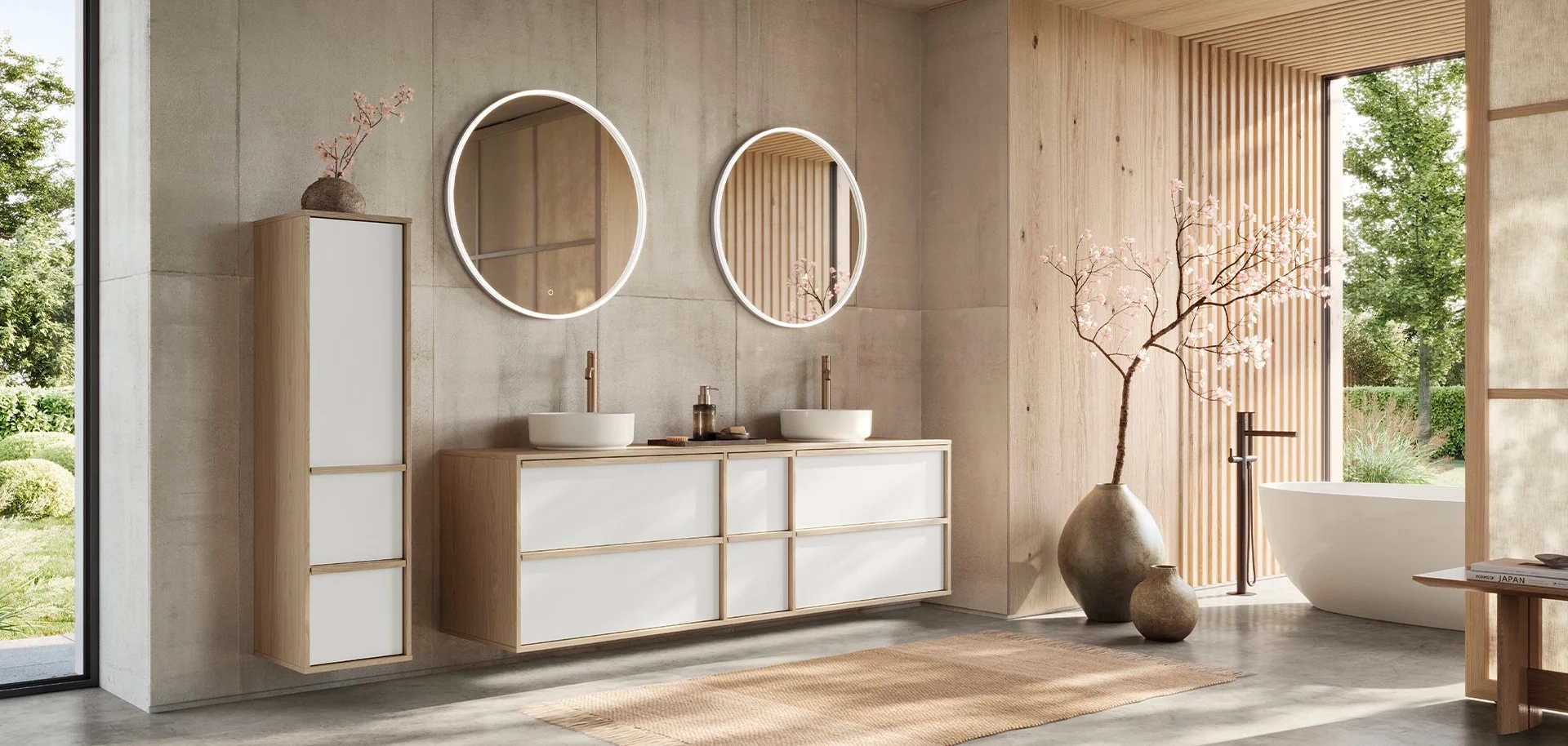
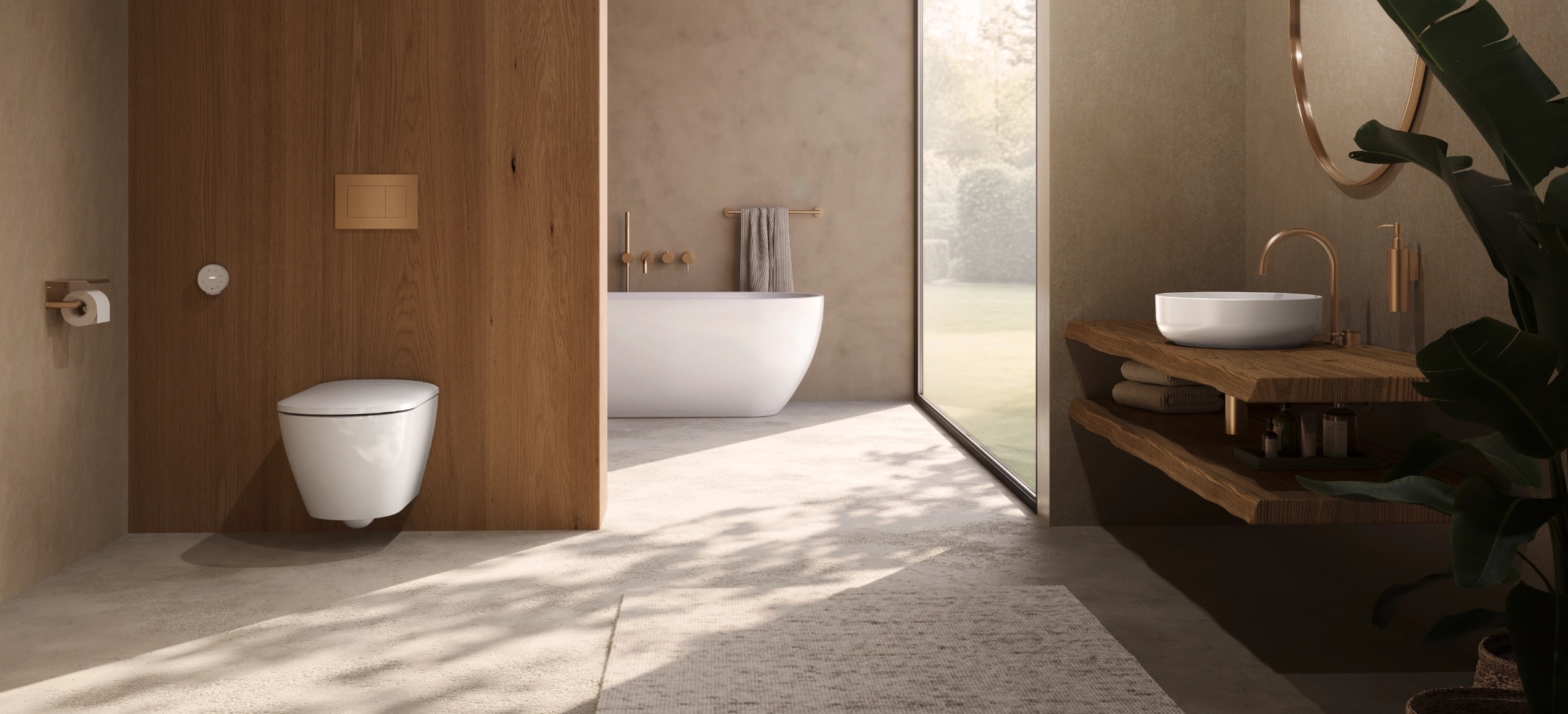
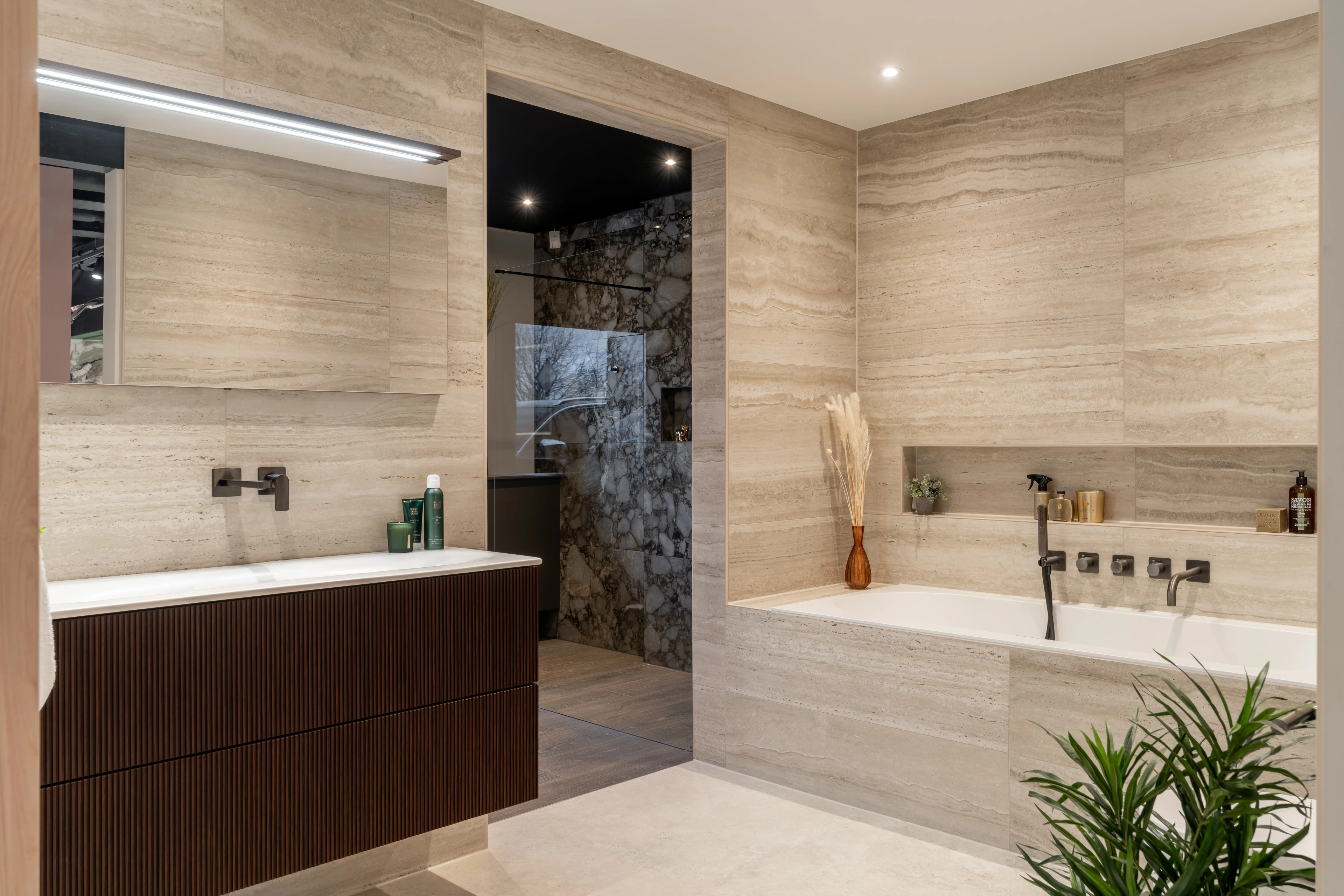
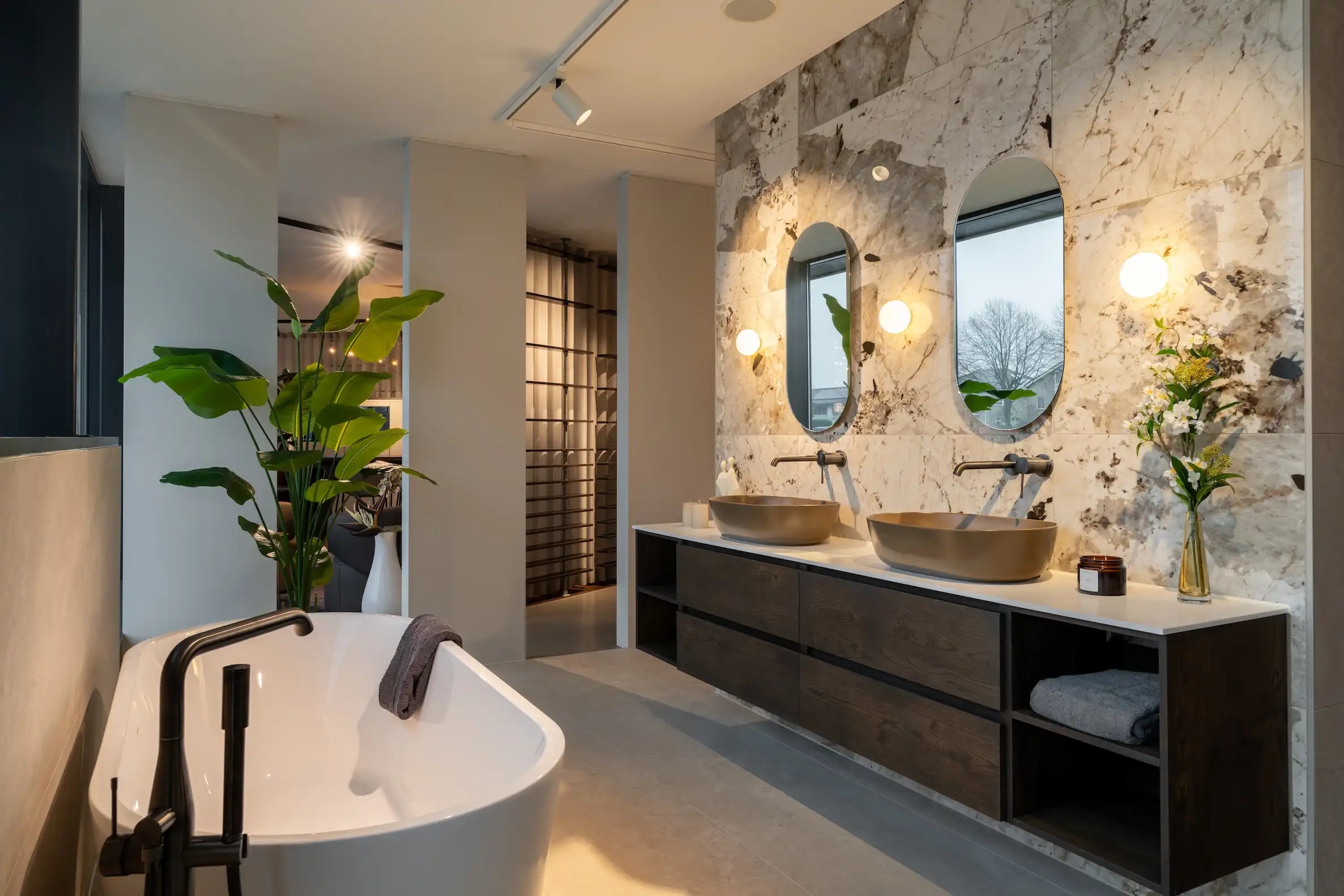
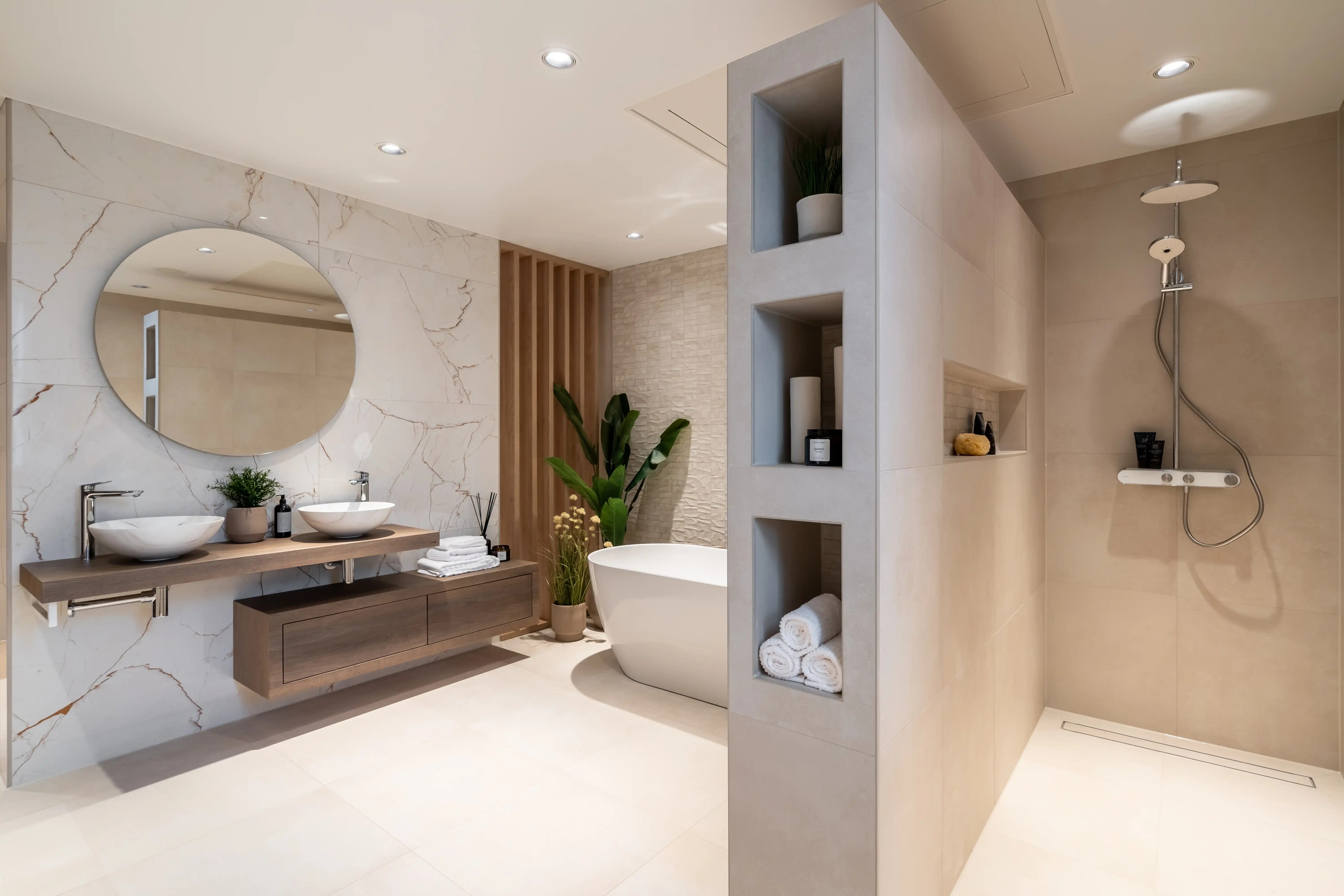
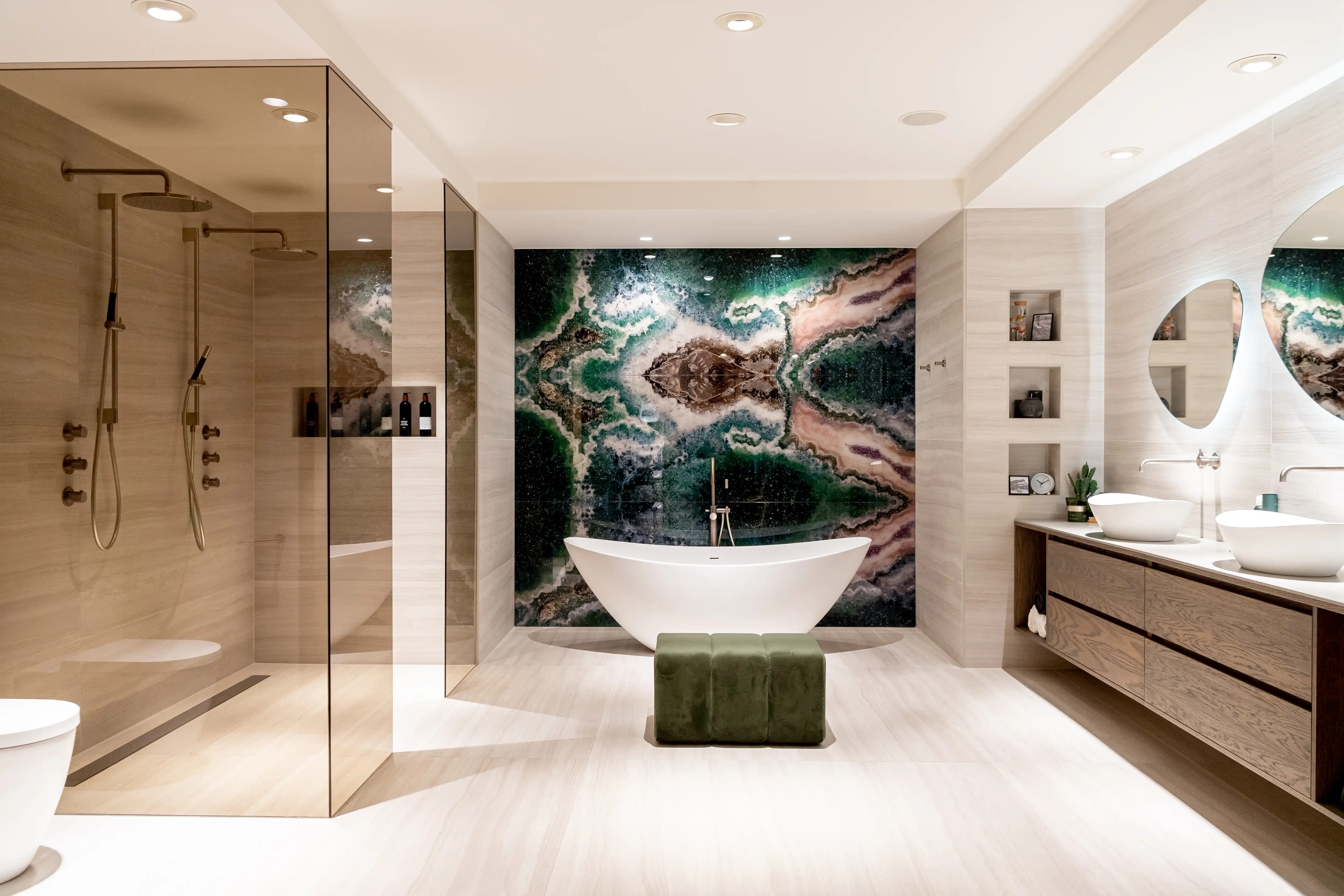
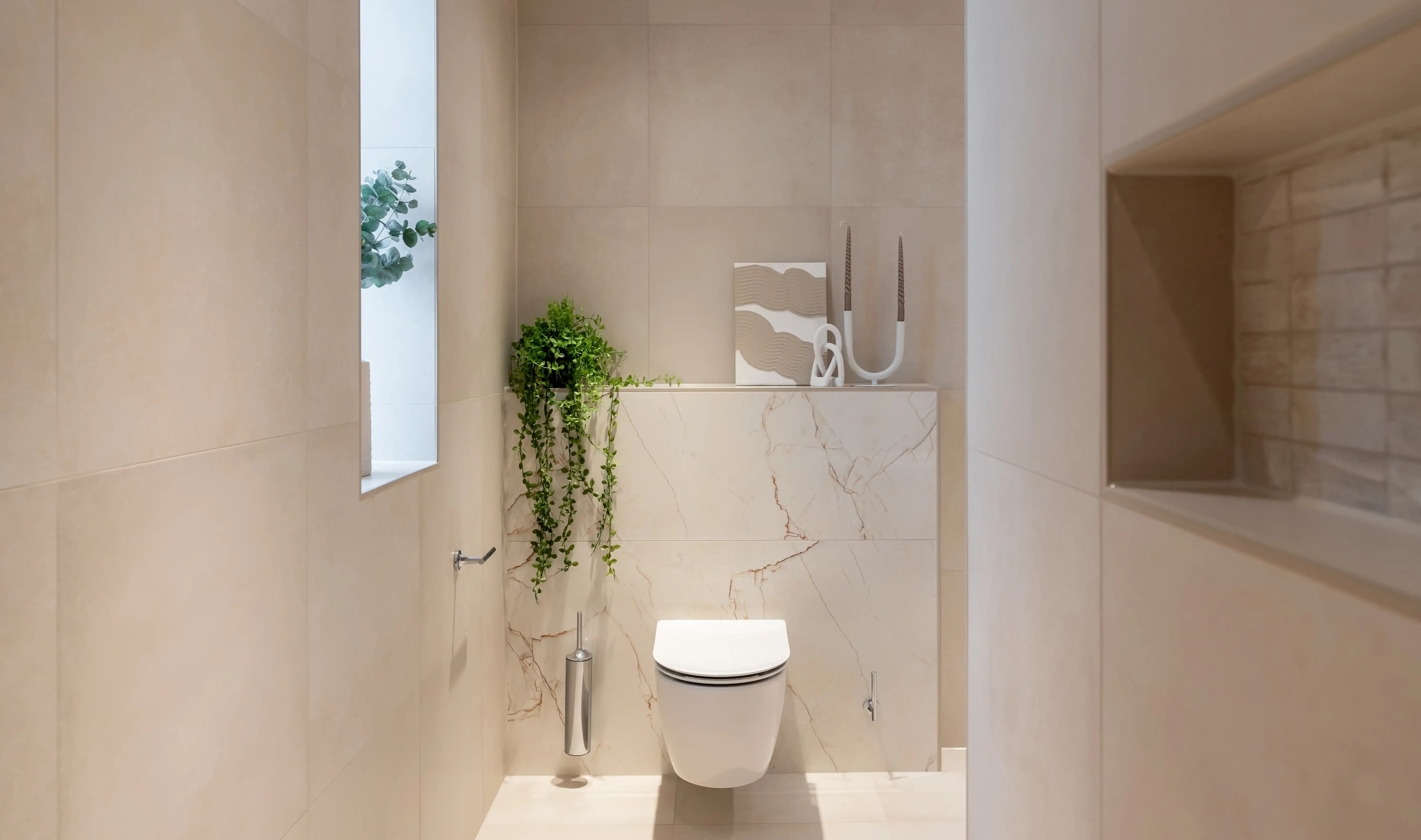
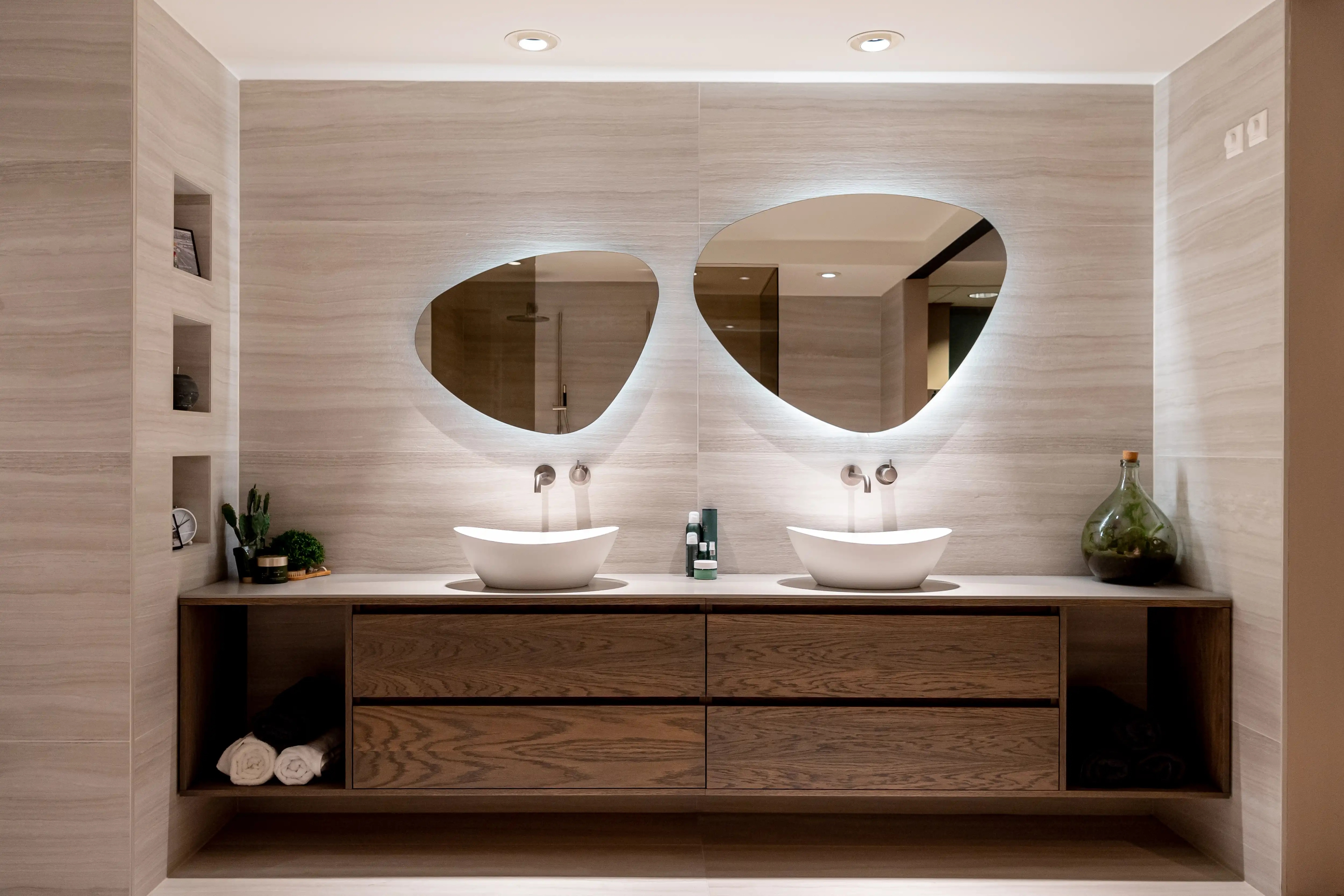
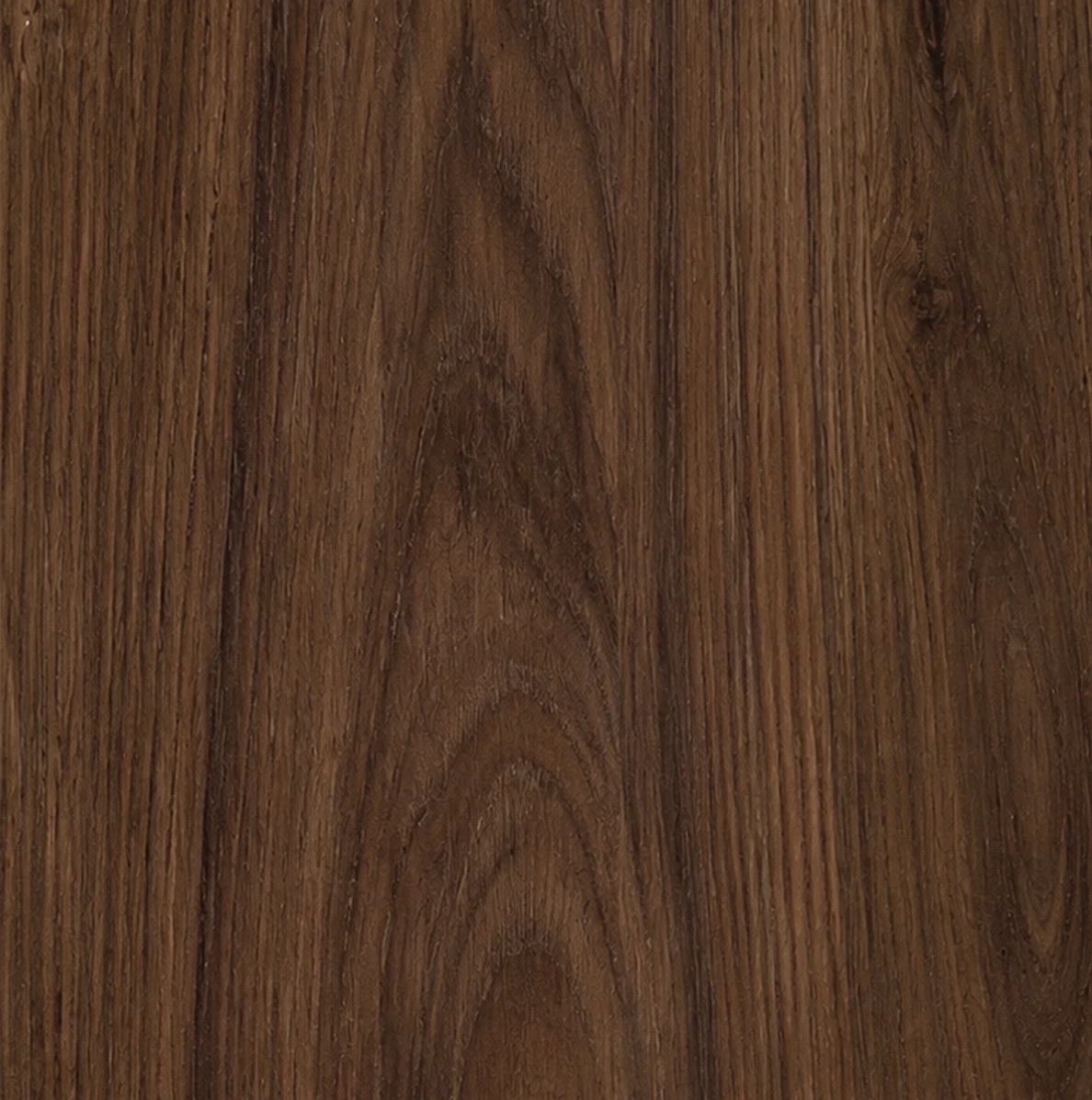
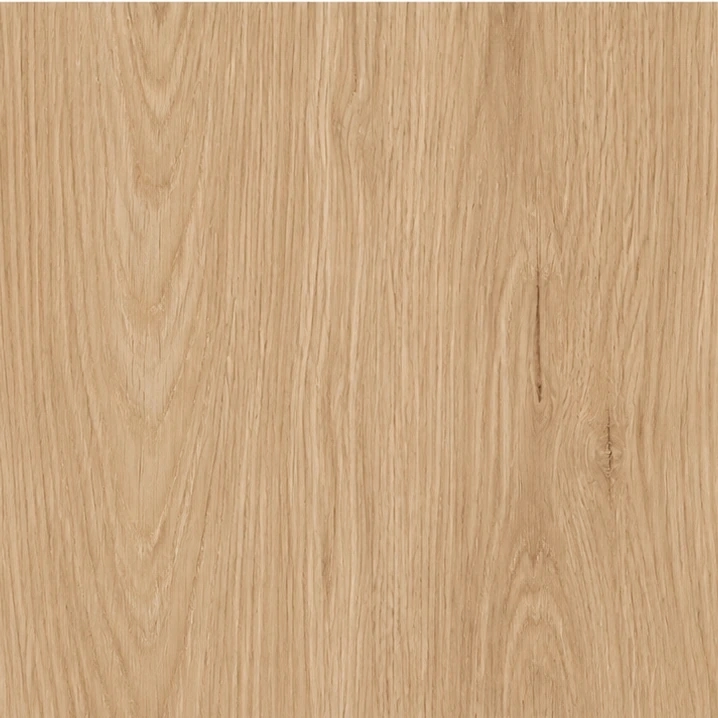
Warm, muted colors form the foundation of a Japandi bathroom and create a calm, soft atmosphere without making the space feel flat. Think off-white, sand, beige, greige, and taupe, combined with light or dark wood tones.
If you want more contrast, you can add dark gray, walnut, or smoked oak. Matte wall finishes and surfaces with a subtle texture enhance the natural character and ensure that light is softly diffused throughout the space.



Japandi-Style Tiles and Wall Finishes
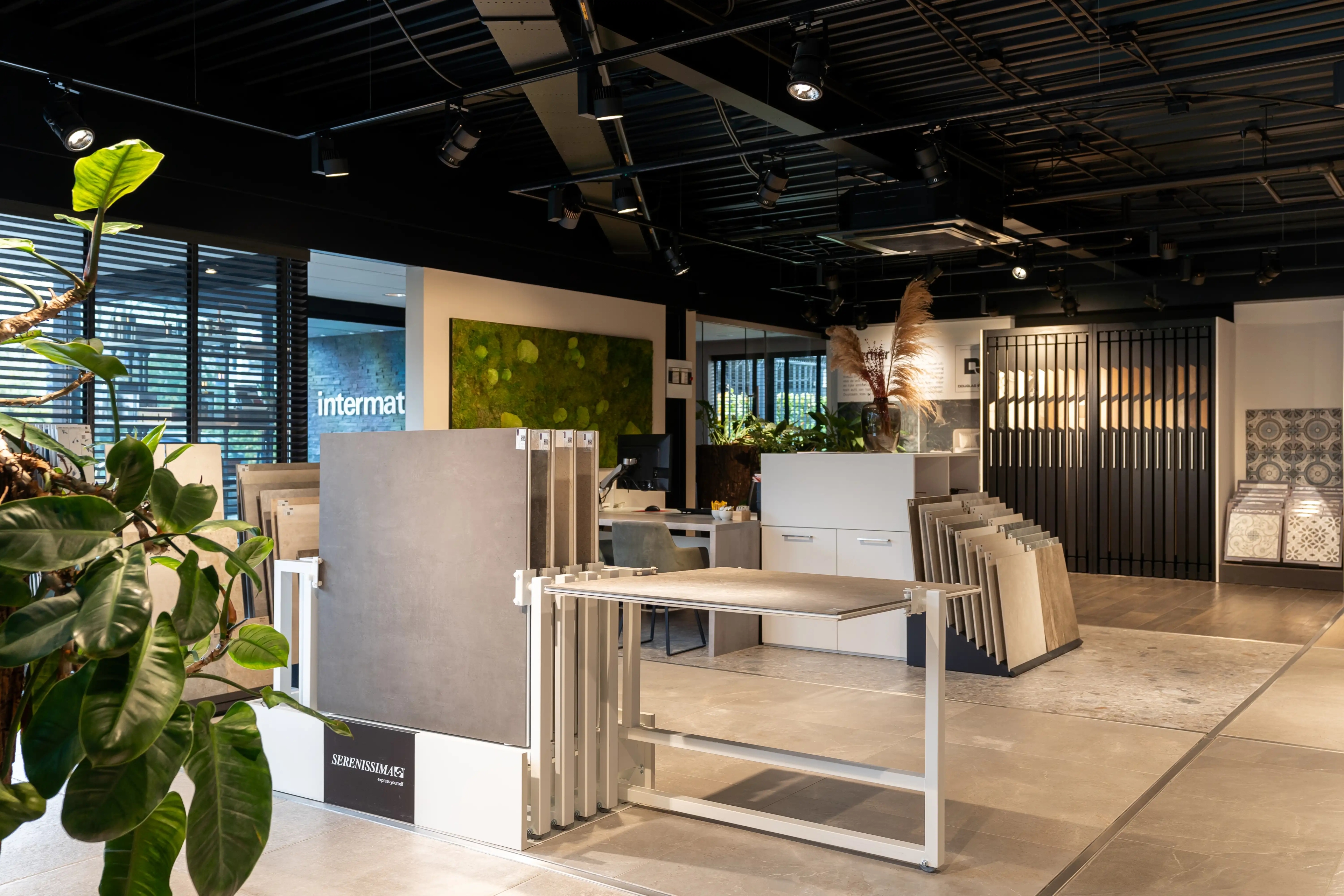
Tiles play a major role in defining the look of a Japandi bathroom. Large matte bathroom tiles in shades of sand, beige, and greige provide a calm foundation for the floor and walls, while natural stone-look and textured tiles add more dimension. Wood-look tiles are a great choice for areas where you want to combine the warmth of wood with the practical properties of ceramic. It’s best to use bold textures on just one wall, in a niche, or in the shower, so the overall look doesn’t become too busy.
Travertine-look tiles are a great choice for a Japandi bathroom. The warm sand tones and subtle color nuances create a natural, serene look. In the video below, you’ll discover how these tiles add atmosphere and character to the bathroom.

Bathroom furniture and fixtures with clean and soft lines
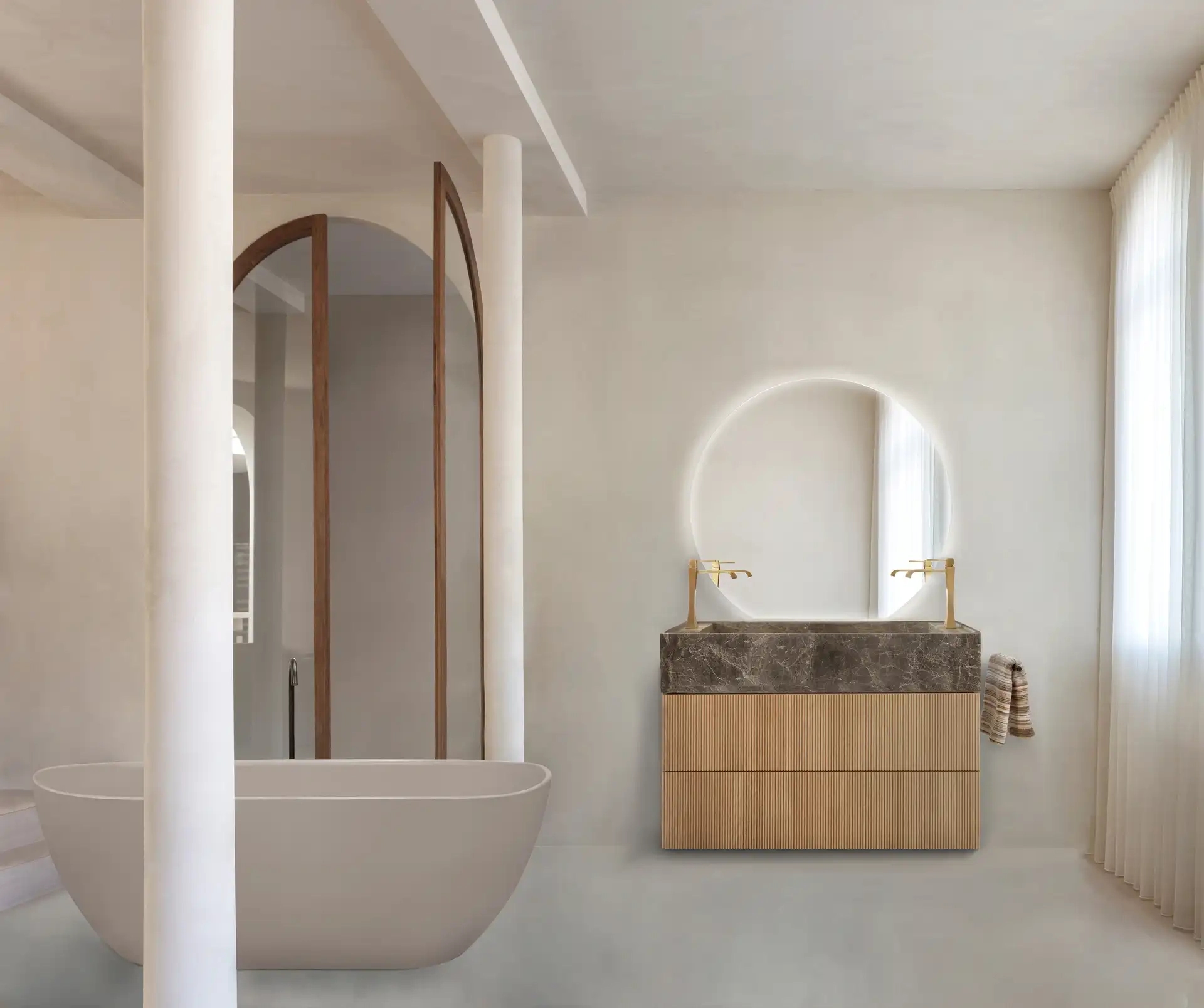
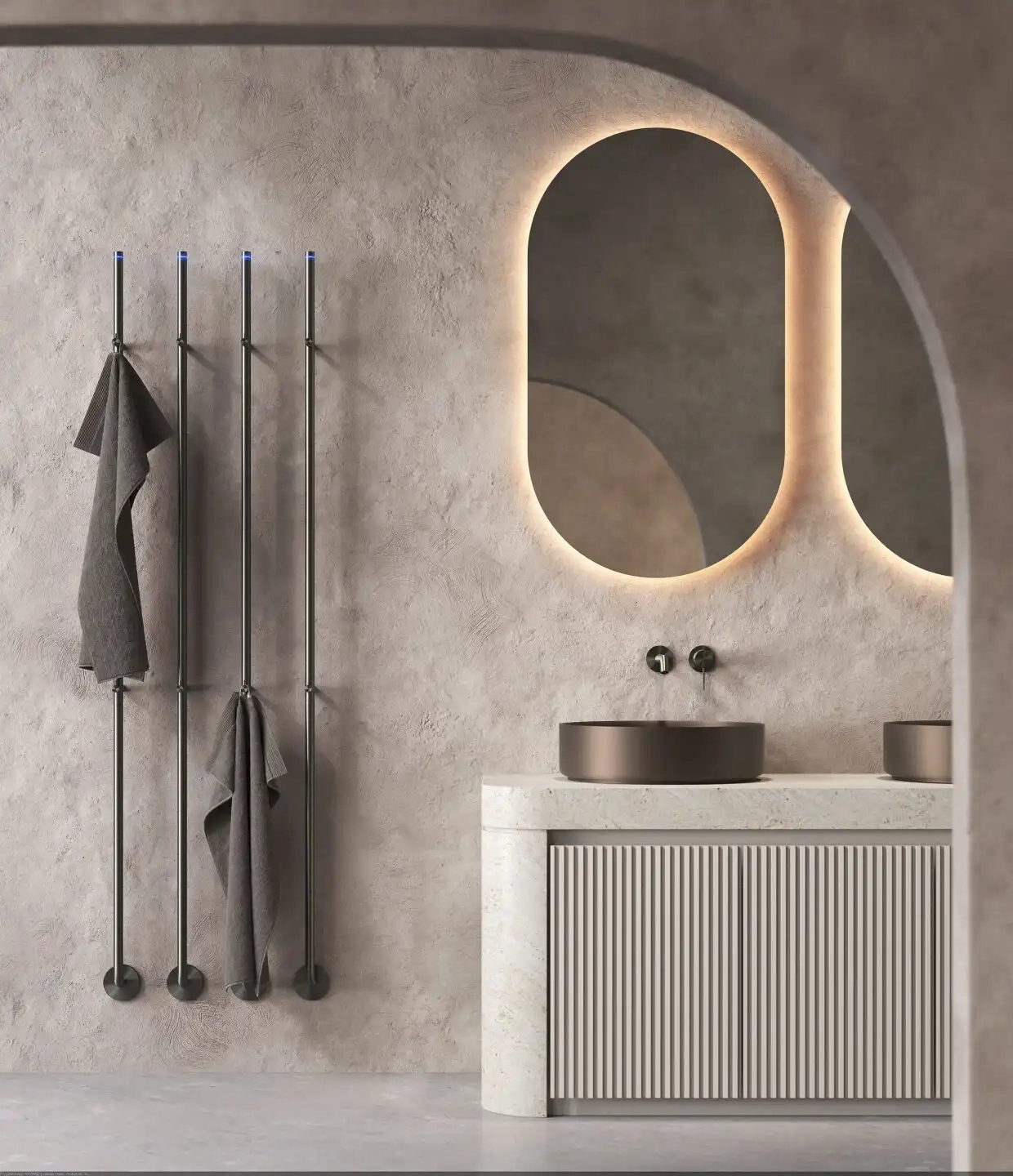
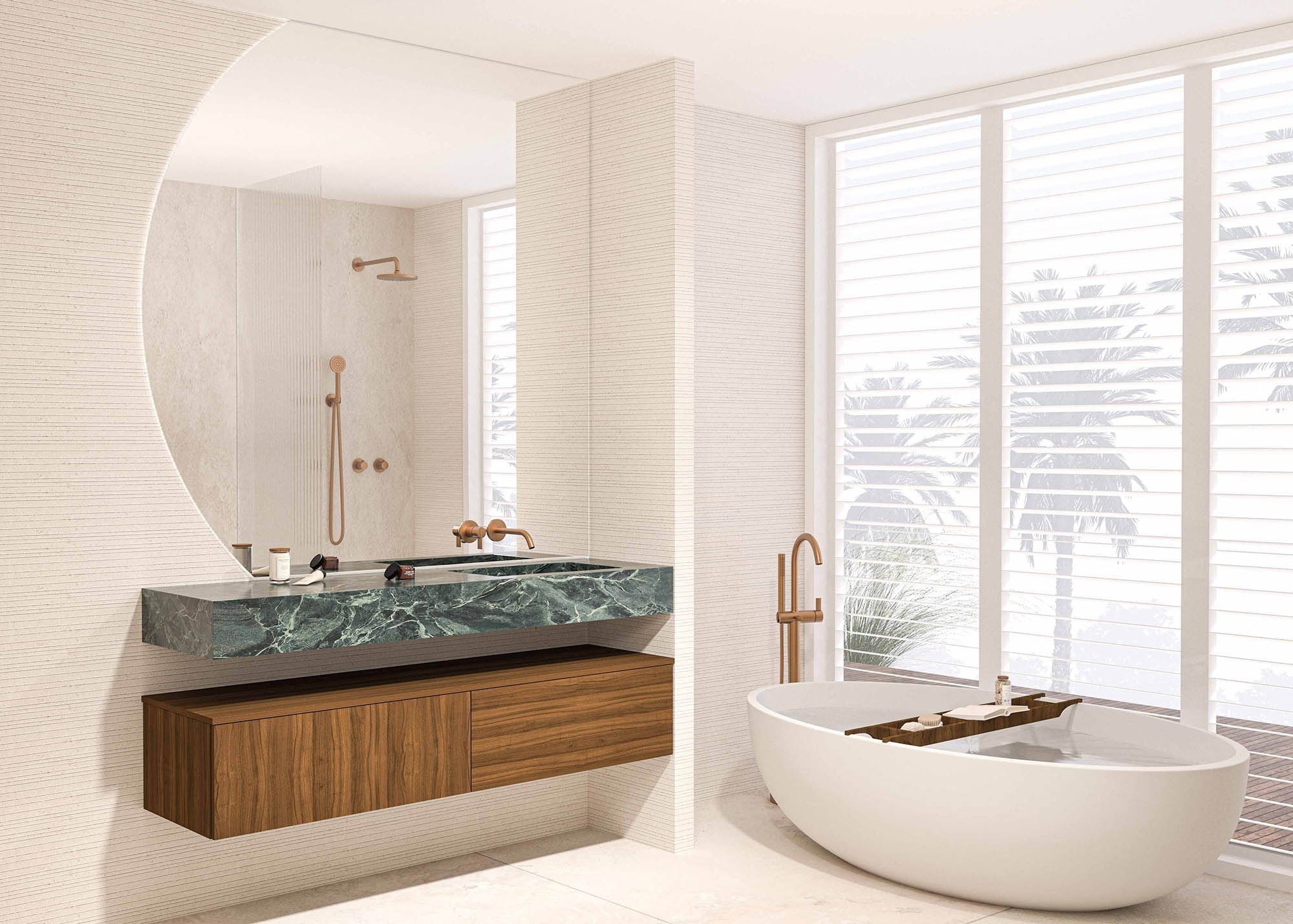
In a Japandi bathroom, clean lines are often combined with soft, organic shapes. A wall-mounted vanity in wood veneer or solid wood adds warmth to the space and keeps the floor clear. Handle-free fronts or subtle wooden details complement the simple lines well. For example, pair the cabinet with a round or oval sink in matte ceramic or solid surface and an organically shaped mirror. The contrast between straight and rounded shapes softens the design without adding extra decoration.
Faucets and accents ranging from brushed stainless steel to matte black
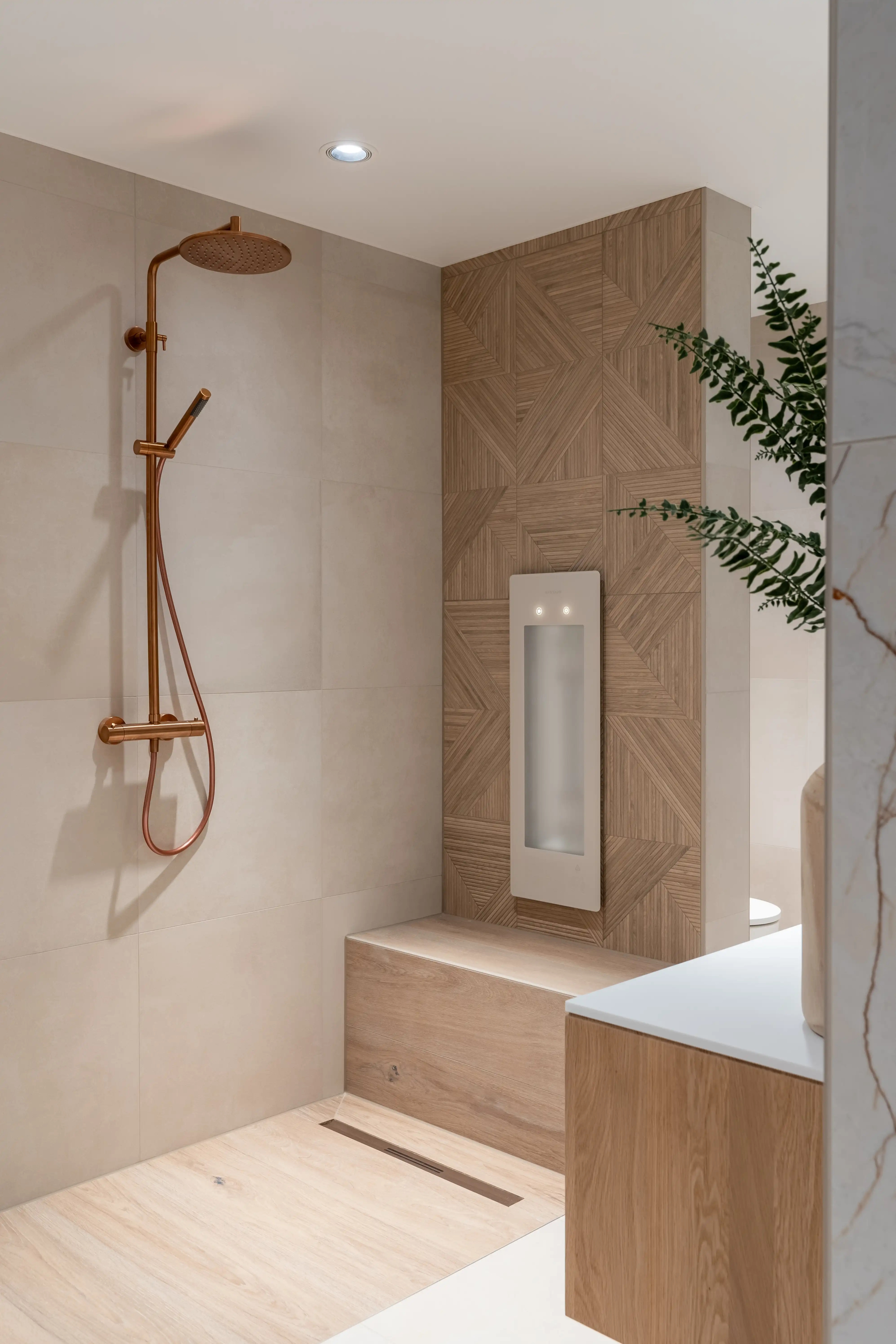
Matte and brushed faucets complement the natural materials and soft colors of a Japandi bathroom. Brushed stainless steel or nickel pairs beautifully with light woods and beige tones, while gunmetal or brushed bronze adds more warmth. Within our bathroom brands, you’ll find various collections of faucets, fixtures, and shower solutions. Use the same metal finish for the sink faucet, shower, control panel, and accessories to visually tie the different elements together.
Layout, Storage, and Lighting
A Japandi bathroom calls for a layout with ample space to move around and smart storage solutions. Wide drawers, a tall cabinet, and built-in niches keep toiletries and towels out of sight, while a wall-mounted vanity leaves more of the floor visible. Outlets can be built into the cabinet, allowing electronic devices to be charged out of sight. Not every bathroom has room for a built-in niche. Fortunately, there are other ways to neatly store shower products. Discover our smart and stylish alternatives to a shower niche.
Combine functional basic lighting with indirect lighting under the cabinet, behind the mirror, or in a niche. Warm light beautifully highlights wood tones and matte surfaces. The combination of natural materials, soft lighting, and a serene design gives a Japandi bathroom the feel of a luxury spa. Want to take this wellness feeling even further? Discover our tips for wellness in your own bathroom.
Japandi Bathroom vs. Scandinavian Bathroom
Japandi and Scandinavian design have a lot in common, such as a calm foundation, natural materials, and a focus on functionality. Scandinavian bathrooms are often lighter in color and combine white and soft tones with light woods. Japandi adds warmer earth tones, darker woods, and more visible material textures to this mix. Rounded and organic shapes are also often given more prominence. As a result, a Japandi bathroom still looks minimalist, but is generally warmer and more natural than a purely Scandinavian bathroom. Check out our other bathroom styles for more inspiration and compare different design directions.

Design your Japandi bathroom at Intermat
A Japandi bathroom stands or falls on the combination of materials, colors, and shapes. In our showrooms, you can view tiles, wood finishes, bathroom furniture, fixtures, and various faucet finishes side by side. Together, we’ll explore which combinations suit your space, lifestyle, and daily needs, and incorporate them into your bathroom design.