Wood, PVC, or ceramic tiles in the bathroom?
Choosing a new bathroom floor? You have several options. Maybe you like the warm look of wood, want the comfort of PVC, or prefer the practical qualities of ceramic tiles. But which material is suitable for a damp room like the bathroom? We’ll compare the options and help you make a choice.
A wooden floor in the bathroom
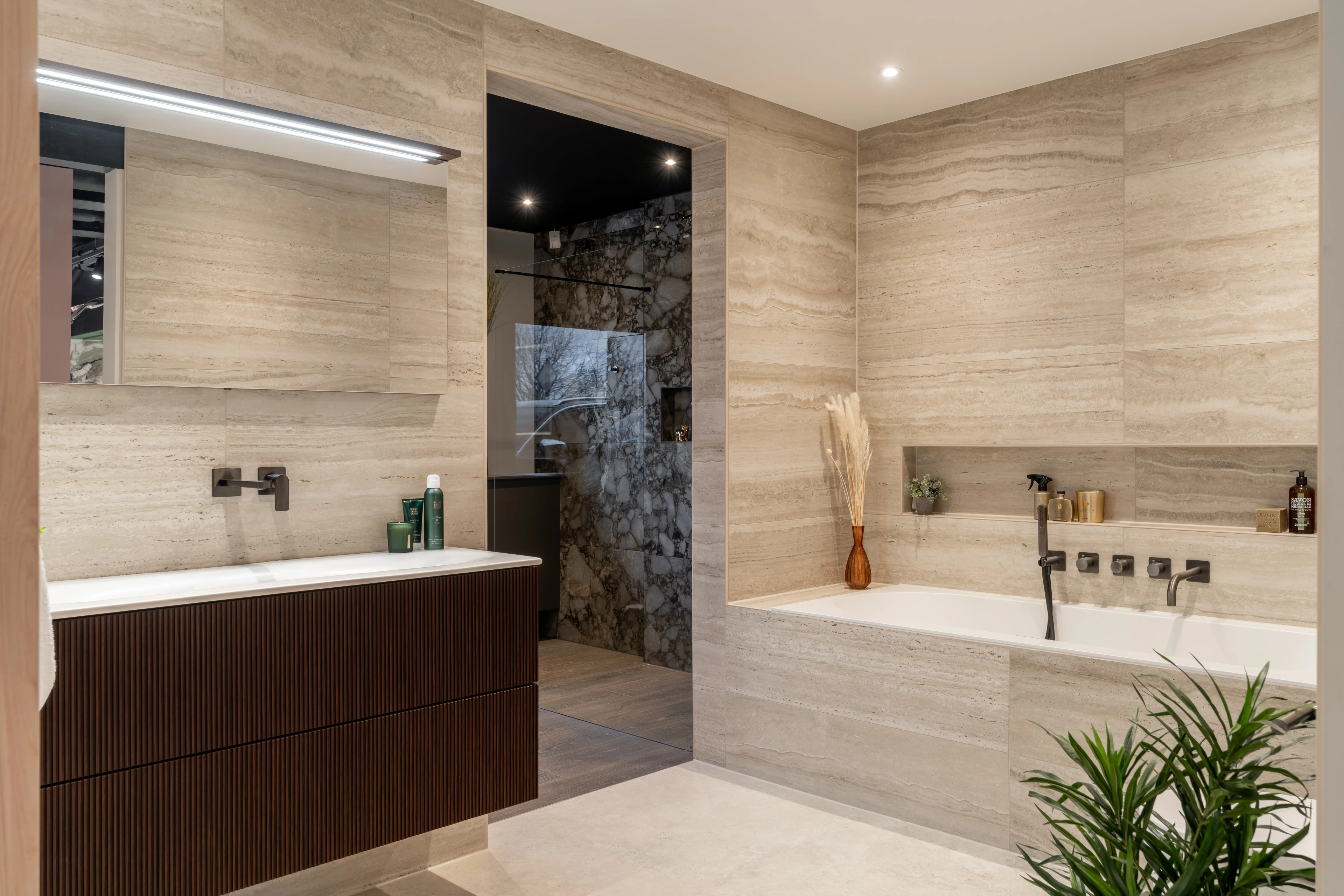
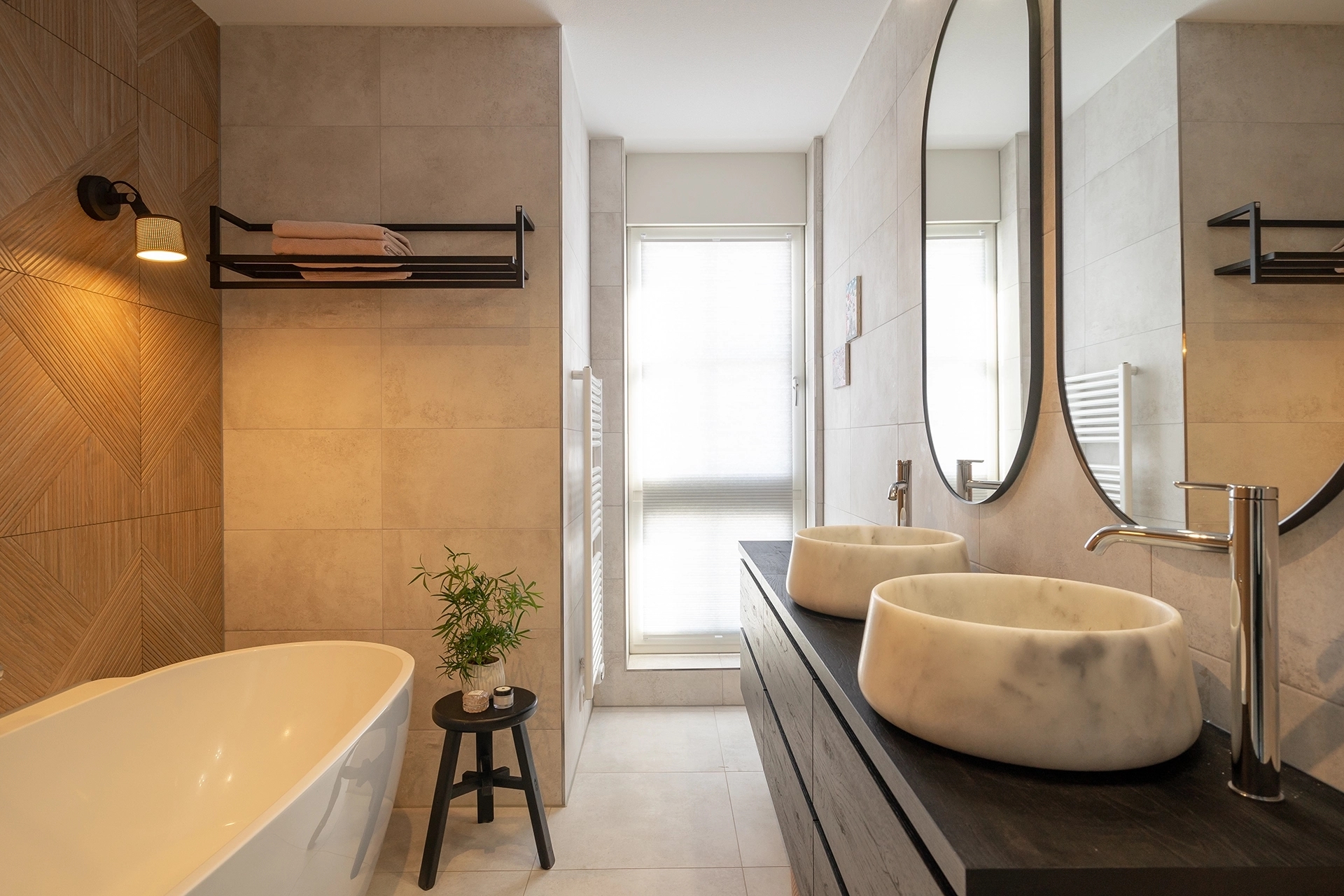
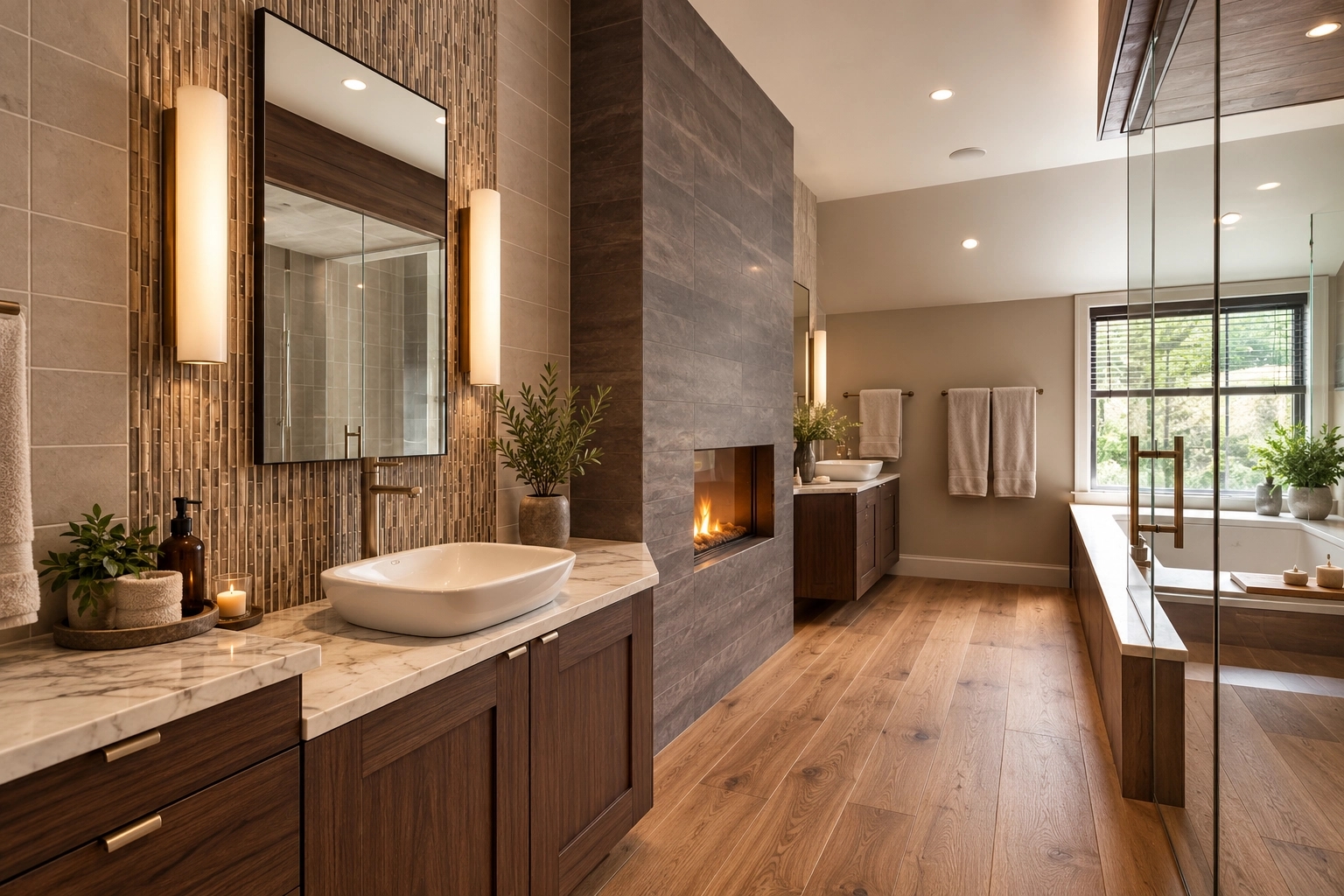
Wood gives a bathroom a warm and natural look. A wood floor really shines, especially when paired with muted colors, natural stone-look tiles, and soft lighting. Still, real wood isn’t the most obvious choice for a bathroom. The material reacts to moisture and temperature changes, which can cause it to expand, shrink, or warp.
Would you still like to use real wood? In that case, the type of wood, finish, and ventilation are important. You must also prevent water from pooling on the floor for extended periods. For a shower floor, a standard wooden floor is therefore not a suitable solution. Fortunately, there are alternatives that let you achieve the same warm look without the sensitivity of real wood.
PVC as an alternative to wooden bathroom flooring
Are you looking for a wood-look floor that feels comfortable underfoot? Then PVC might be an interesting option. PVC is available in various wood colors and patterns, allowing you to combine the look of a wood floor with a low-maintenance material. Plus, PVC generally feels warmer and softer than ceramic tiles.
However, not every PVC floor is suitable for the bathroom. Particular attention must be paid to the seams, edges, and connection to the subfloor. The material itself may be water-resistant, but that doesn’t automatically mean the entire floor is waterproof. Therefore, choose only a system that the manufacturer certifies as suitable for the specific space, and have the floor installed carefully. PVC is usually not the best choice for the immediate shower area.
Ceramic tiles for a practical bathroom floor
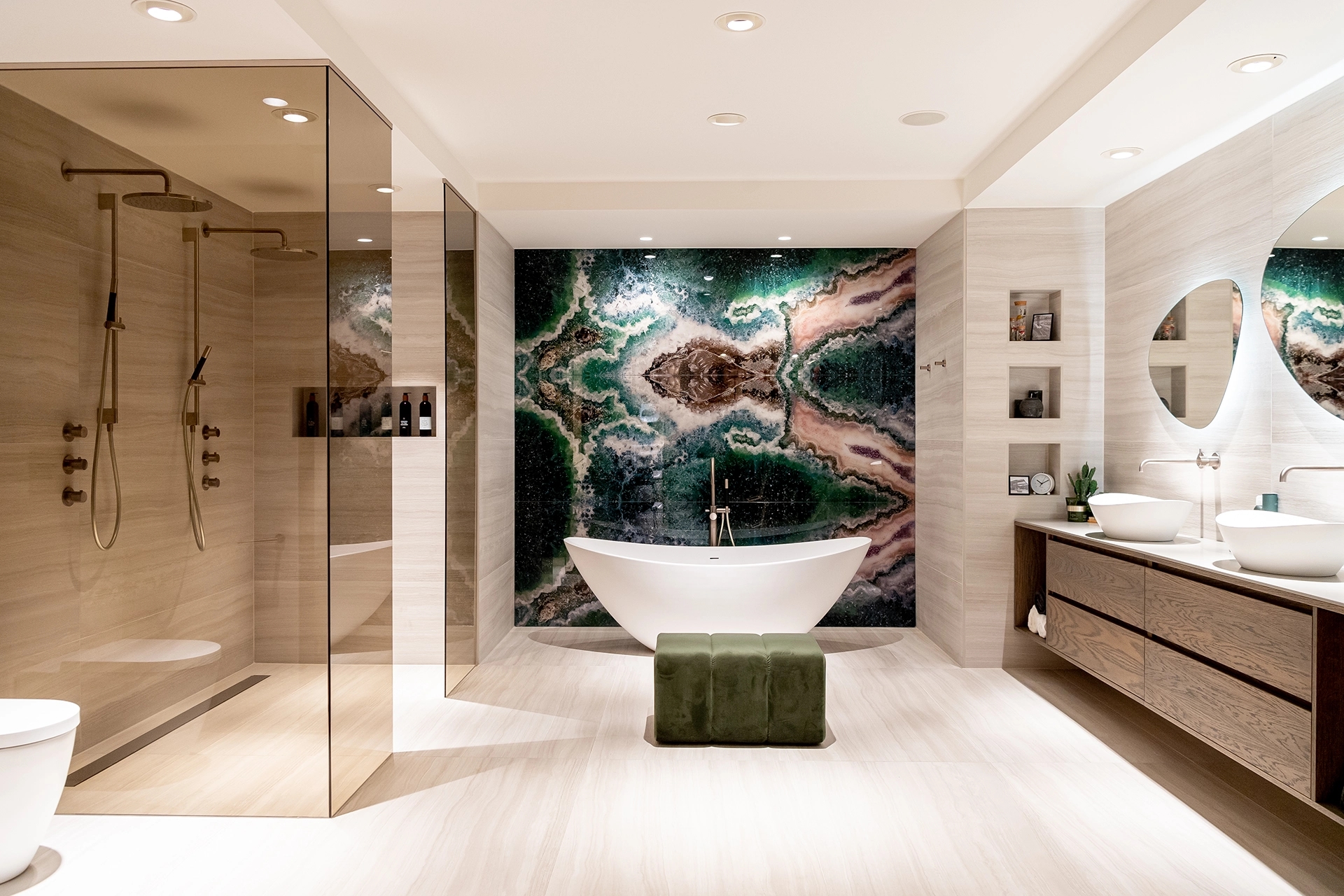
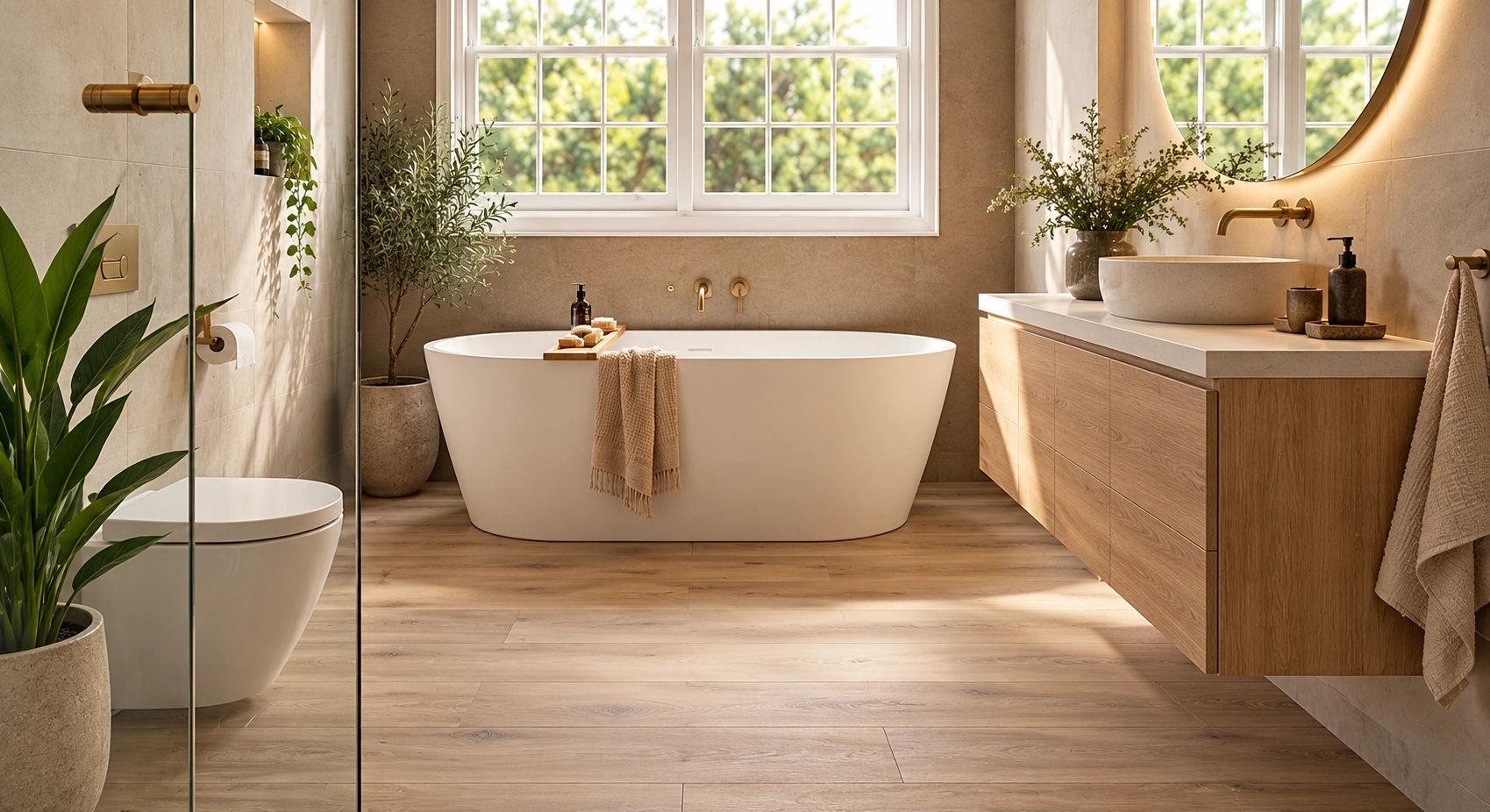
Ceramic tiles are a popular choice for the bathroom. They are highly resistant to moisture, durable, and easy to clean. They are also available in many different colors, sizes, and finishes. Think of subtle beige floor tiles, a rugged concrete look, or tiles with a natural stone texture.
A major advantage is that ceramic tiles can also be used for shower floors, provided the tile has sufficient traction and the floor is installed correctly. They also work well with underfloor heating. Without heating, however, the surface may feel slightly colder than wood or PVC.
The warm appeal of ceramic parquet
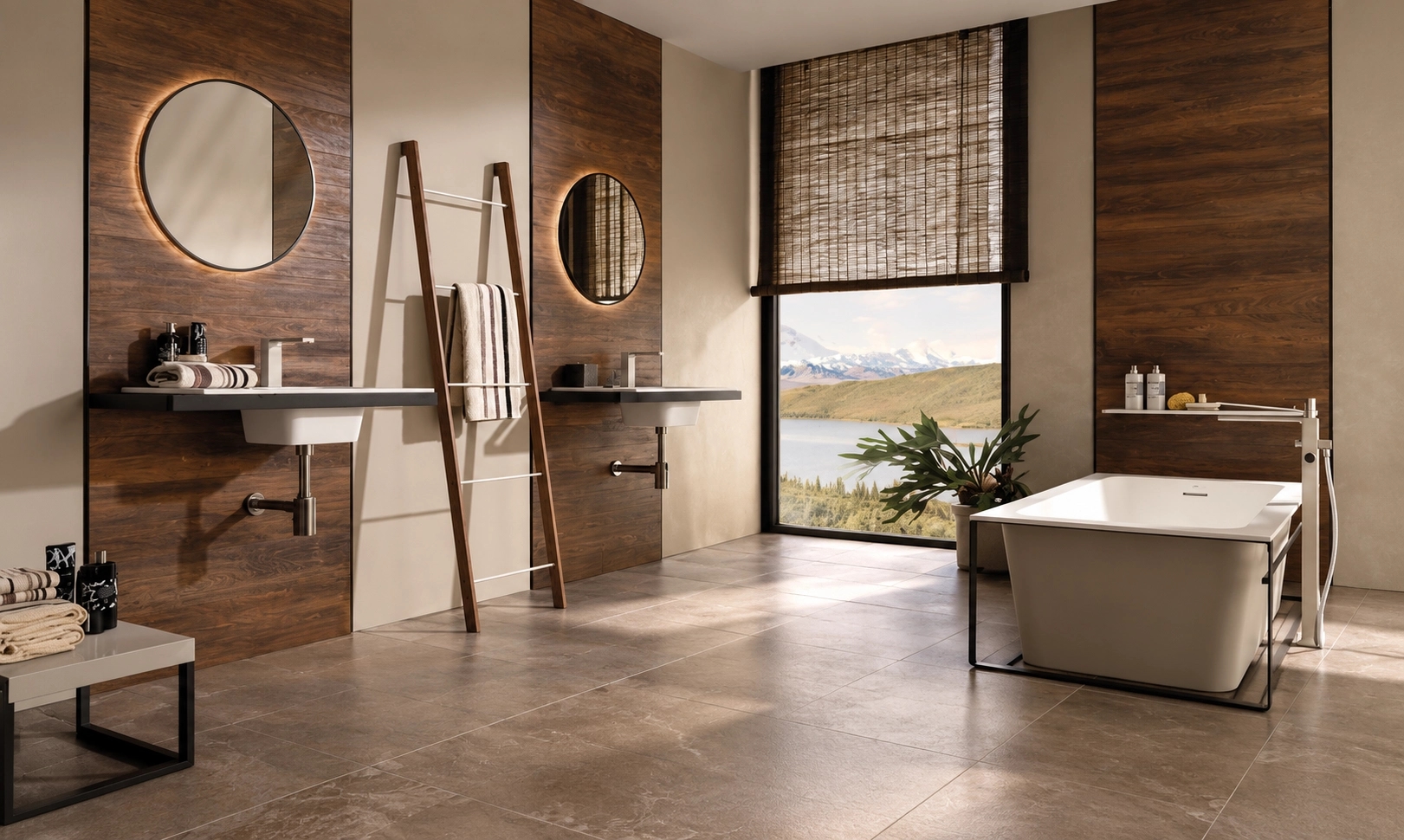
Are you a fan of wood flooring, but would you prefer ceramic tiles in the bathroom? Then ceramic parquet is a great solution. These are elongated ceramic tiles that look like wood planks. The wood grain, color variations, and texture give the floor a natural look, while you enjoy the practical benefits of ceramic.
Ceramic parquet is available in various wood tones, from light oak to warm, dark colors. You can also choose from different laying patterns, such as straight plank layout or a herringbone pattern. This makes a wood-look floor a perfect fit for both a modern bathroom and a warm Japandi-style interior.
Which material is the best fit for your bathroom?
The best bathroom floor depends on your preferences. If a warm, inviting look is important to you, wood-look PVC and ceramic parquet are great options. Do you want to extend the same flooring into the shower? In that case, suitable ceramic floor tiles are usually the most practical choice.
Also consider maintenance, compatibility with underfloor heating, and how the flooring complements the rest of the bathroom. At Intermat, you can explore a variety of colors, textures, and tile finishes. Our advisors are happy to help you choose a floor that complements your bathroom design.
Frequently Asked Questions about bathroom flooring
Lees meer
Trends & tips die je niet mag missen
Bekijk alle stories